I no longer trust “we the people,” because of the powers influencing them. Media and government schooling form their general ideas on reality and governance. Therefore, it’s not a case of the voter choosing the politicians. Instead, the system is conditioning and conforming the voter to the authorities’ desires.
In democracies, the people are kept occupied working and paying taxes, too busy to acquire information outside the approved sources. You will find they know and care far more about the next iPhone than political philosophy. Of those who hold some interest, 95% just toe the party line, holding the same opinion as the primary media source they listen to. They lack both the desire and time to expand their horizons.
Media’s purpose is to conform people’s thought to a preferred goal, which is why Republican and Democratic voters both firmly hold their parties’ general stances, reciting the same talking points. The people do not originate ideas; their thoughts are fed to them by the media so they can consume, digest, and parrot back whatever they are served. When it comes to politics, we rarely think for ourselves. We are told what to think.
Watch PBS, MSNBC and read your local newspaper for six months, and you will receive a particular view and understanding of the world. Then listen to The Mike Church Show, The Blaze, and The Daily Wire, and you will get not just another perspective but a whole different world of facts and events. The world people believe they live in can be entirely different depending on their news sources.
We enjoy seeing the enemy humiliated, which describes why those engulfed in politics love their preferred media sources; they keep returning for more like a drug addict. Networks ensure their “experts” align with the worldview they and their audience desire. The people who watch PBS, BBC, and so forth expect a specific perspective to be presented. Fox News watchers demand the same. In doing this, we both encourage and assure we are misled.
In their book Democracy for Realists: Why Elections Do Not Produce Responsive Government, professors Christopher H. Achen and Larry M. Bartels argue, based on substantial research, that voters do not decide the party platform and agenda. Instead, the parties control the “ideologies” of the voters. When the party the voter identifies with changes its position, the individuals also change theirs. They discovered the individual would quickly adopt the views of their group; they will ignore or change their own opinions over time to fit in with the collective they identify with. Achen and Bartels wrote “group memberships largely drove policy views, not vice versa.”
In the middle of the nineteenth century, Philip C. Friese wrote, “The primary use of party is to create public opinion.” The intent of national parties is not to represent people at the local level but to form a powerful conglomerate able to garner economic support and sway political power. A party’s media outlets proclaim what is permissible and who the enemy is to its detainees. Due to our biases, we invite such proclamations and readily adopt them.
Achen and Bartels point to overwhelming evidence that our political ideals are based on loyalty to our group, affecting how we view events and reality. We even con ourselves into thinking our party is closer to our stances than is the case. We bend their position to our liking. This may explain why we are so hopeful of new candidates and disappointed when they don’t fulfill their promises (or what we think they were promising us).
Achen and Bartels found voters’ ideologies to be just a mechanical reflection of what their favorite party leaders have instructed them to think. Even “well-informed” voters vote according to their “social identity,” which explains why politicians are always categorizing and creating new group identities and issuing political commands and causes to those groups. Loyalty to the group outweighs the preferred policy of the voter, who will simply adapt to the party as it morphs.
A centralized government must control a large and diverse population, so to function they institute groupthink. They demonize the individual and encourage a collectivist mentality. H.L Mencken observed:
“All government, in its essence, is a conspiracy against the superior man: it’s one permanent object is to oppress him and cripple him…One of its primary functions is to regiment men by force, to make them as much alike as possible and as dependent upon one another as possible, to search out and combat originality among them.”
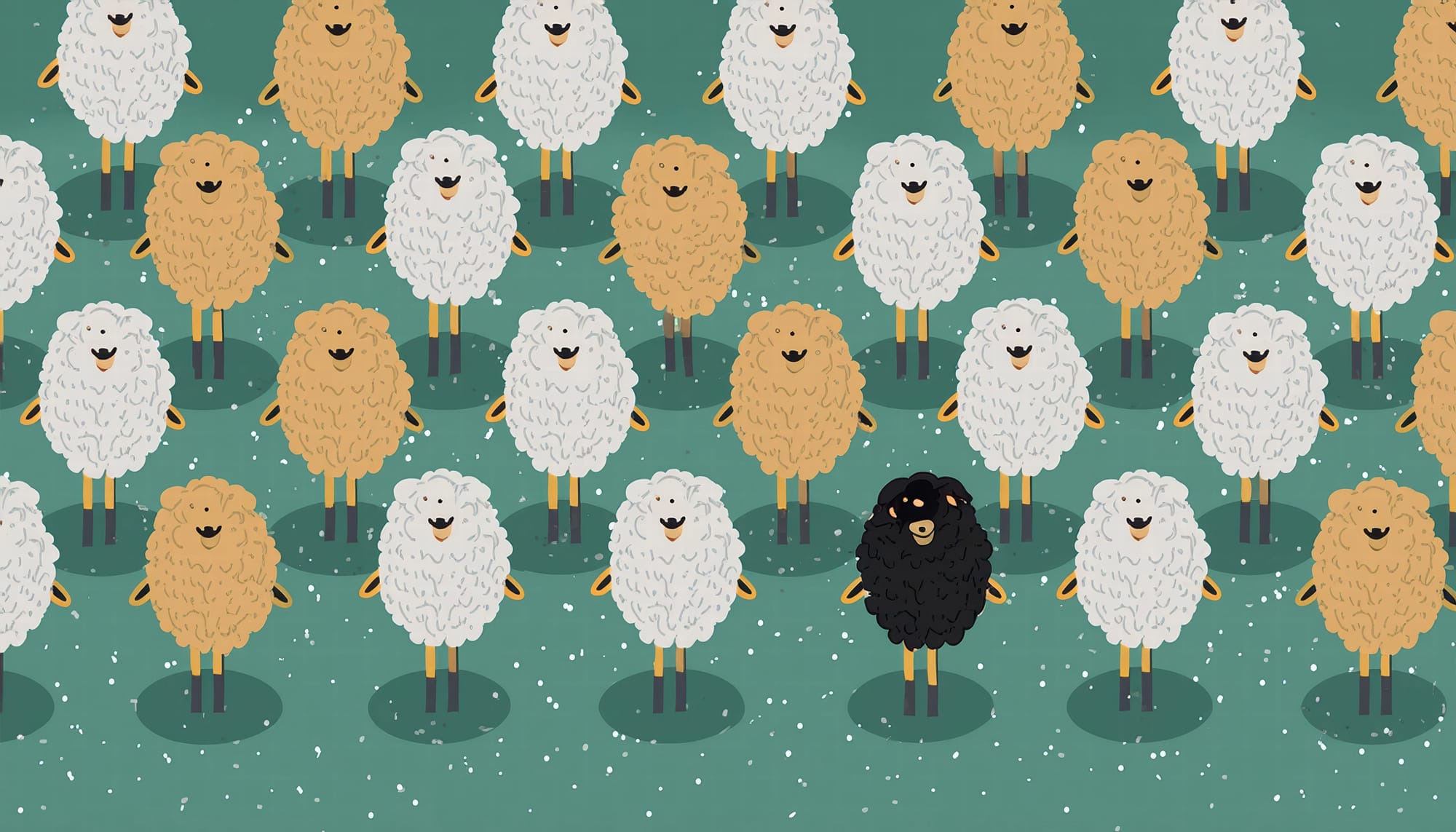
To the government, we are just a mass of animals with various interests needing to be corralled. It would be impossible to manage us as individuals; it is much easier to herd us into groups and keep us within our designated collective. To ensure continued strife among us, politicians will, in ever more inventive ways, create previously unknown categories of people they can set against each other. These groups will gain support from politicians in return for them becoming one mass, one identity, able to be directed and moved as a unit.
Across the nation, whenever a new collectivist issue arises, organizations, businesses, people, etc. buy new bumper stickers, recite new slogans, and display signs letting everyone know they are on board with the new fad. They are willing to be herded in any direction the group is heading. The subject does not matter, it can be something they condemned previously, but once the herd has adopted the issue and is being ushered along, they will follow as directed.
Watch any news coverage of an election, and they will categorize voters and areas into herds they are supposed to follow. For example, this county has many suburban women who will vote this way. This urban and African-American section will heavily favor this candidate. We become conditioned to follow along in our prescribed herd and “interests” in order to be set against one another. For example, blacks are supposed to think and vote a certain way. If they do not, if they stray from their pack, they are no longer part of the group. If you’re black and don’t vote for him, Joe Biden said, “you ain’t black.” Black libertarians and conservatives have lost their blackness in the sight of a collectivist society. They are Uncle Toms or traitors when they stray from their racial/political roles. Likewise, sins are no longer individually committed but attributed to the herds; we expect whites to engage in self-flagellation due to past sins committed by their designated racial group.
Let’s reasonably assume Western democracies allow more freedom to their citizens than communism does. If so, we can view citizens under democracy as groups of cattle on a free-range farm. And citizens under communism are cows on an industrial farm since the government controls their lives to a demonic degree. In both instances, our handlers drive us from one place to the next, keep us moving in groups, gently guiding us for our “good,” but fencing us nonetheless in what are acceptable grazing areas.
I believe we should not seek to follow the herd but become individuals. It is okay if the herd goes a certain way and you agree, but don’t unthinkingly do so just because everyone else is. Roman Emperor Marcus Aurelius is reported to have said, “The object of life is not to be on the side of the majority, but to escape finding oneself in the ranks of the insane.”
National parties promote a herd mentality (the only way to create power blocs in a democracy), and we begin to view minorities outside the collective as dangerous. We understand our herd as we might a family—a collective providing safety, friendship, and protection. We find comfort, membership, meaning, and so forth within the group we are part of. Over time, this tendency grows, leaving behind individuality as we are incorporated into our new family. Within this bubble, we receive self-fulfilling encouragement from other like-minded members; we become more distant from outsiders and protective of our tribe. We encourage each other to stay in the herd and help in demonizing outsiders.
The individualist thus becomes a threat, a discord in the collective. They will find themselves disdained by the mob and can either resist peer pressure or succumb. If they persist in refusing to conform, they will continually suffer encroachment on their liberty and have their finances pickpocketed and will be ostracized for their non-conformity.
Since any political action taken by the herd is ipso facto the correct one, all sorts of abuses against the individual can be justified. The majority always hold the moral high ground, in their own minds at least, simply by virtue of being the majority. Over time tolerating dissent is no longer a viable option since the dissidents are preventing utopia. It is no longer a question of acceptance, but of punishing the wicked. Outsiders become an evil we must stamp out; heretics in need of enlightenment, or they will face the righteous wrath of the majority.
Nonconformists banned from social media platforms immediately assume political or evil intentions on the part of these companies. However, they do not necessarily desire to limit free speech, but are operating from the collective psyche. They are within a bubble, within the herd mentality setting boundaries on free speech. Free speech is protected unless it could endanger the collective. Voices coming from over the fence are dangerous; they are not familiar to the herd; they are not safe; they are the sounds of wolves who come to endanger them. Those within the bubble will naturally circle up to protect themselves from the outside predator. They act as their master/farmer would have them do; they protect the herd, their family.