
I have never given a great deal of thought to underwear. Since no one else actually sees my boxers except my wife, the purchase of underwear has always been something of an after thought. As an aside, after 48-years of marriage, my wife’s interest in my underwear has generally waned except when she declares that I should not store them on the bedroom floor.
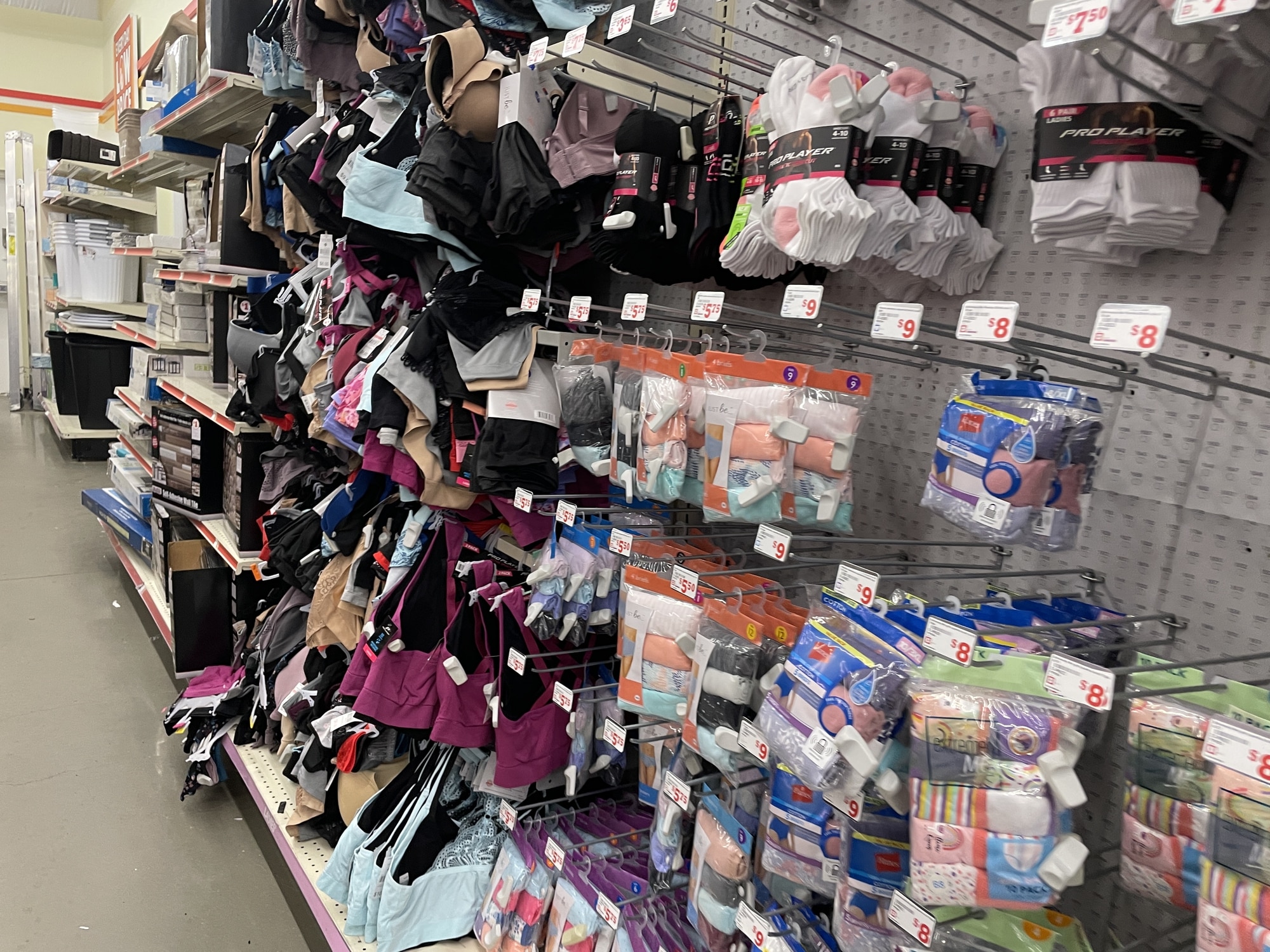
I recently went to a department store for what I thought would be a quick effort to stock up on some new boxers and discovered that all the men’s underwear were locked up behind glass. After spending ten minutes looking to find a saleswomen to unlock the case, I was informed that she would have to walk the underwear to a cashier in order for me to make the purchase. She explained that the homeless men who used to live under a nearby underpass would enter the store and steal underwear, so they had to initiate a strict purchasing protocol. Seeing me shake my head, she scoldingly explained that “those poor people do not have access to laundry services.” Frankly, not willing to get into a discussion about whether I should buy boxers or briefs, white or dark, cotton or blend with someone else’s wife, I thanked her for her ridiculous defense of petty theft and just left that store.
I am a reasonably compassionate person who worries about those less fortunate than me, but I am also far less likely to accept inconvenience and added expense as a result of someone else’s choices. Survey data from municipal leaders, including the U.S. Conference of Mayors, consistently indicate that nearly 70% of cities cite substance abuse as a leading cause of homelessness among single adults (and a primary driver in over 12% of homeless family cases). Furthermore, longitudinal studies reveal that up to 77% of unhoused adults have a prior jail or arrest record, with up to 67% (and between 62.9% and 90% in broader reviews) of chronically homeless individuals having experienced incarceration in jail or prison, primarily for offenses related to drugs and theft. These are not necessarily model citizens.
When state programs fail to resolve underlying addiction, it leads to rule violations and dropouts—and randomized trials show that 50% to 70% of participants in traditional Continuum of Care programs fail to remain stably housed and return to living on the street within two years. Ultimately, taxpayers are forced to underwrite persistent self-destruction. True compassion respects human dignity by requiring personal accountability, and replacing coercive state welfare with voluntary, conditional mutual aid. The homeless should not be insulated from the results of their decisions, and I should not be coerced into shouldering their burden.
Chronic homelessness, and the municipal policies surrounding it, imposes severe involuntary costs and property rights infringements on productive, law-abiding citizens. When local governments permit the open occupation of public sidewalks, parks, and right-of-ways for encampments, they effectively convert taxpayer-funded infrastructure into unpriced, unmanaged commons and environmental degradation, public safety hazards, and rampant property destruction will result. Business owners and homeowners bear direct private costs in the form of diminished land values, lost commercial foot traffic, heightened private security expenses, and physical property remediation. Furthermore, state-managed attempts to address homelessness through subsidized housing, unconditional welfare transfers, and publicly funded social services represent an aggressive reallocation of capital funded through coercive taxation, which dilutes real wage value and distorts market incentives. Rather than enforcing core negative rights such as protecting private property, upholding contracts, and protecting the public from trespass or public nuisance, the regulatory state instead subsidizes street dependency while forcing non-consenting taxpayers to absorb the collateral economic and social decay.
From a strict market and public choice perspective, contemporary state-managed homeless programs fail because they socialize individual costs while insulating government decision-makers from market accountability. As highlighted by critical policy analyses from organizations like the Manhattan Institute and the Cato Institute, conventional frameworks—such as unconditional “Housing First” models and government-funded harm reduction initiatives—will frequently backfire by creating severe moral hazards. By decoupling assistance from employment readiness, treatment, or personal accountability, state subsidies insulate individuals from the natural economic and social consequences of chronic dependency. Rather than resolving underlying crises of severe mental illness and substance abuse, expanding municipal welfare programs often acts as a magnetic pull for unhoused populations while administrative costs and bureaucratic bloat systematically balloon.
The failure of government programs are obvious. Even when compared strictly to low-income housed individuals, homeless individuals still face mortality that is 2.1 to 3.2 times higher, demonstrating that the physical condition of unsheltered/homeless living imposes risks beyond poverty alone. The average life expectancy for unhoused adults is estimated at 42 to 52 years, compared to approximately 77 to 79 years for the general housed U.S. population—a gap of roughly 25 to 35-years. The massive spike in relative risk stems primarily from unintentional injuries (including substance overdoses), traffic-related accidents, violence, exposure, and acute complications from unmanaged chronic illness or severe psychiatric conditions. Despite claims that more money must be appropriated, that level of failure does not come cheaply. When combining direct federal targeted spending (over $10 billion), state grants, and county/city municipal operating budgets, total government spending on homelessness services in the United States reaches nearly $25 billion annually.
Why do these programs fail so badly? Because state interventions rely on continuous, guaranteed tax revenue rather than voluntary contracts or performance-based metrics, public agencies face zero competitive pressure to resolve root causes or curb street vagrancy. $25 billion per year is a large number of public sector jobs that would be lost if the problem of homelessness was solved. The public spending creates any number of disincentives.
Simultaneously, when municipal governments fail to enforce public order laws, they convert shared infrastructure—such as public sidewalks, parks, and transit hubs—into an unpriced, unsustainable commons.
The government’s failures and resulting negative externalities are systematically shifted onto law-abiding residents and private commercial enterprises, who are forced to bear a double burden: A fiscal toll through the coercive extraction of tax revenue to underwrite expanding, ineffective programs. A private remediation expense through direct, uncompensated out-of-pocket costs required to offset neighborhood decay: including elevated private security fees, biohazard cleanup, theft, structural property damage, depressed real estate values, and severe commercial revenue losses driven by diminished foot traffic.
To eliminate state coercion, taxation-funded market distortions, and ongoing infringements on private property rights, homeless policies must pivot entirely from state-managed, welfare-driven interventions tied to its continued participation in a failed War on Drugs, toward voluntary, market-driven arrangements.
First, local authorities must cease the unpriced appropriation of public space and respect absolute property rights by preventing the conversion of public rights-of-way into lawless commons, while rigorously upholding private property boundaries by fully prosecuting trespassing, squatting, and theft and thereby restoring security and eliminating the defensive remediation burdens imposed on citizens and private enterprises.
Second, state intervention must abandon both unconditional “Housing First” mandates and taxpayer-funded harm reduction schemes that socialize the costs of destructive behavior; true accountability requires that social assistance rely not on state redistribution, but on voluntary, contract-based mutual aid that respects personal responsibility.
Third, social services must be entirely decentralized and privatized, shifting compassionate aid away from state bureaucracies and municipal contracting toward private charities, mutual aid societies, and faith-based organizations that operate on voluntary funding and subjective contractual accountability.
Finally, governments must eliminate institutional and legal barriers to individual self-sufficiency by abolishing restrictive zoning laws, land-use regulations, and mandatory building codes—allowing free-market supply and price signals to deliver low-cost housing like single-room occupancy units—while repealing occupational licensing laws that deny individuals the fundamental right to sell their labor freely. Additionally, the government’s War on Drugs must cease and thus remove criminality as a hurdle for the homeless to overcome.
Ultimately, the persistent crisis of chronic vagrancy represents not a market failure, but a classic institutional failure of state intervention. By overriding price signals, subsidizing dysfunction, and treating public spaces as unmanaged commons, municipal welfare bureaucracies inevitably generate the very decay they claim to solve. True alignment between individual dignity and public order requires restoring market discipline: privatizing welfare through voluntary charity, strictly enforcing private property rights and public order laws, and deregulating land-use policies to let market supply meet real demand. Until cities stop shielding both administrative agencies and beneficiaries from the incentives of personal accountability, taxpayer capital will continue to be consumed by expanding administrative apparatuses while private commerce and community security suffer the fallout.
What an absurd failure of government that forces anyone to look for a store that is nowhere near an underpass in order to buy some underwear!