
Unrest and upheaval are spreading across the Western world. Violence, looting, and destruction are occurring in European cities such as Paris, Lyon, Marseille, Rome, Barcelona, Berlin, Frankfurt and Cologne with a brutality last seen in 2020 in American cities such as Minneapolis, Portland, Seattle, Chicago, New York, Los Angeles, and Atlanta.
The state and its police are no longer able or willing to guarantee security and protect citizens’ property. At the same time, governments are intensifying efforts to silence unwelcome criticism and restrict freedom of speech. High-profile arrests, show trials, and imprisonments of critical voices have become routine. In Poland, a constitutional crisis has even erupted, which many describe as an “attempted coup,” with widespread suspicions of European Union influence behind it.
If one wants to understand and meaningfully interpret what is happening in Europe, one must ask: Which ideologies and ideas are driving people?
Over recent decades, the ideas originating from Marxism have spread widely in the Western world. Less in their original form, and more as a more or less covertly propagated overthrow of existing economic and societal conditions—a so-called culture war.
Old-style communism has failed before everyone’s eyes, is discredited, and has relatively few remaining adherents. Even those rejecting capitalism cannot deny that the market system, characterised by a system of private property and law, has brought prosperity to people and, contrary to all warnings from the political left, have not impoverished them.
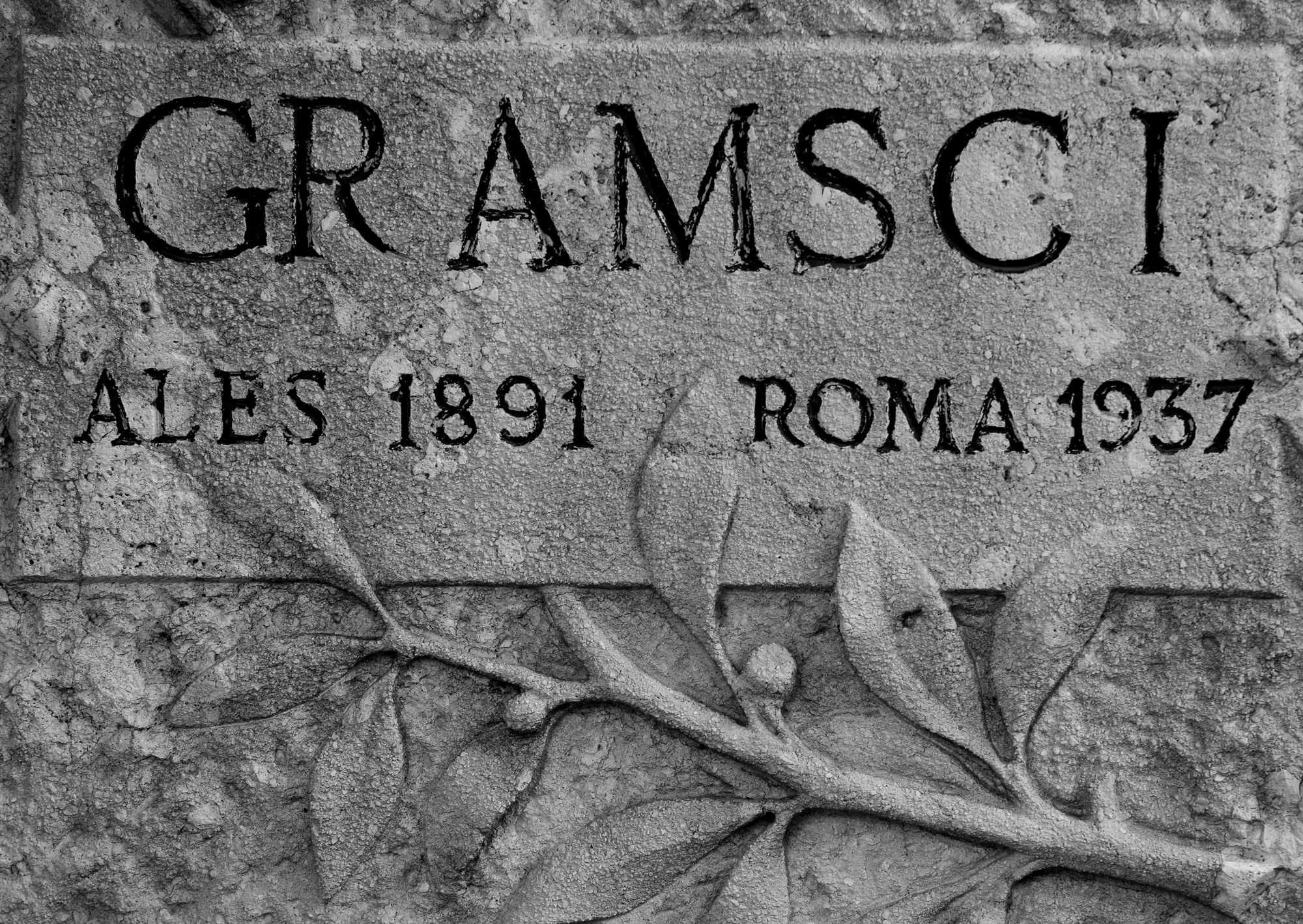
For this reason, communists have long pursued the strategy of the culture war. Antonio Gramsci, an Italian Marxist and co-founder of the Italian Communist Party, described in his Prison Notebooks (Quaderni del carcere) how power is to be achieved through cultural hegemony—thereby outlining the culture war.
Gramsci’s core thesis was that the ruling class retains power not only through force (police, army), but above all through cultural and ideological dominance—that is, when it determines what is regarded as “normal,” “reasonable,” “self-evident,” good and right. Schools, universities, media, churches, and everyday life are the most important arenas in which the hegemony of Marxism must be established, according to Gramsci.
The communist overthrow should therefore not rely on a direct revolutionary uprising. Here, Gramsci took a different path from that proposed by Karl Marx and Friedrich Engels, who actually called for a violent overthrow. Instead, one must literally conquer the cultural institutions and the minds of the people, Gramsci noted. Only in this way can power relations be changed in the long term and old-style communism installed. This is precisely what is meant by the slogan “long march through the institutions.” Whoever controls culture and everyday thinking, the cultural Marxists argue, rules society—even without the open use of coercion and violence.
Part of the strategy of the Marxist culture war is to divide society and provoke conflicts; between old and young, man and woman, parents and children, people with different skin colour, entrepreneurs and employees, rich and poor.
There is no question: the communists have made great progress with their culture war in the West. They have conquered the state—their preferred instrument of power—and have extended its reach into all areas of the economy and society: education, old-age provision, law and security, transport, law and order, money and credit, energy, and the environment.
Almost everywhere the state has risen to become the most powerful actor, and communist-minded programs are being implemented step by step: through increasing expropriation (rising taxes and levies), restrictions on property via regulation and laws, manipulation of market price formation, pushing back the free market system, inflating the currency, etc.
Above all, an important form of the leftist culture war consists in making large parts of the population dependent on the state through social transfers, awarding contracts to private companies, granting pension payments, debasing the currency and eroding savings, and, of course, through indoctrination in schools and universities.
Yet the damage caused by this creeping ‘nationalization’ of economy and society is becoming ever more obvious. Economic growth is disappearing, real incomes are stagnating or even shrinking, the cost of living keeps rising, job opportunities are declining, unemployment is increasing, money is steadily losing its purchasing power, and uncontrolled mass immigration is eroding security and national identity, and so on. This in turn splits societies into two groups.
One group takes to the streets, protests loudly and violently against “the prevailing conditions,” organizes street battles, campaigns of destruction, and creates fear and intimidation. It thereby prepares the ground on which the communist overthrow thrives. This group—one may safely assume—is organised by Marxist zealots (or fellow travelers) who are now also deliberately linking up with Islamist groups and recent immigrants. The aim is (still) more state (power), expropriation of owners, and the suppression of any political opposition. Shared enemies are capitalism and the United States.
The other group consists of people who have developed growing doubts about the ruling system of government and who believe that the lamented ills were brought about by the ruling governments in the first place. These are those who are turning away from the established (old) parties and towards other political forces. It is to be assumed that this group is not uniform and pursues quite different goals. Most of them probably want a “better state”; only a few want a “smaller” state or no rule at all. What unites them is the desire to halt the economic and cultural decline of their community.
How will the culture war end? It is probably not an exaggeration to say that everything depends on whether people recognize or not that the culture war against the West—against its values, traditions, and Christianity—is an attempted communist overthrow.
If the insight prevails that the universally lamented grievances are the result of the culture war against the West (whether disguised as “green politics,” “woke-ism” or “threat of war”), then there is indeed hope that European societies can still reverse the trend and turn things for the better.
If, however, the real causes of the West’s economic and cultural decline remain unrecognized, that is if the communist mindset is not driven out of people’s minds, then things will probably become very bad indeed; the societies of the West may even fall into chaos and tyranny.
The decision on how the culture war against the West ends will not be made in the streets. It will be decided (quite literally) in the minds of the people. The economist Ludwig von Mises already pointed this out unambiguously. He wrote in 1922:
“Ideas can only be overcome by ideas. Socialism can only be overcome by the ideas of capitalism and liberalism. The decision can only fall in the battle of ideas.”
A timeless insight: It is ideas that enable people to understand events—or that conceal them from them.
The culture war against the West has already severely damaged the civilizational mindset of many people. Their value framework—which includes, for example, personal responsibility, diligence, family, property, the pursuit of truth, Christian faith, etc—has been destabilized. The crisis of the West, the direct consequence of the decades-long culture war, is therefore first and foremost a spiritual one.
The outcome of the culture war will decide whether people in the Western world can preserve and increase again their prosperity. Whoever wants prosperity and peace must therefore work to ensure that the culture war against the West won’t be won by its enemies. Victory is possible, but not guaranteed.