
Don’t Like Militarized Police and Mass Incarceration? Blame Progressivism.

by | Jan 24, 2017

Don’t Like Militarized Police and Mass Incarceration? Blame Progressivism.

by | Jan 24, 2017

Talking about racism won’t end these problems.

Our cities are saturated with militarized law enforcement officers. An extraordinarily high number of American civilians are killed by police each year. The U.S. prison population is the largest in the world. And we are only beginning to understand why.

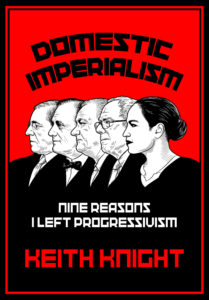
In recent years, scholars such as Naomi Murakawa and Marie Gottschalk and activists in the Black Lives Matter movement have broken from the civil rights generation’s obeisance to the Democratic Party, and from the left’s reflexive assumption that “law and order” Republicans are exclusively to blame for this situation. Instead, they have persuasively argued that much of today’s criminal justice regime originated in policies forged by liberal Democrats in the second half of the 20th century, in particular under the presidencies of Lyndon Johnson and Bill Clinton.

Yet even this new and welcome historical analysis of militarized policing and mass incarceration does not go deep enough.


Read the rest at Reason.

Our Books

Recent Articles

Recent

The Surveillance State Found Its Philosopher

The Surveillance State Found Its Philosopher

There is a line in the Fourth Amendment that was supposed to settle this. The right of the people to be secure in their persons, houses, papers, and effects against unreasonable searches and seizures shall not be violated, and no warrant shall issue but upon probable...

read more
Mousetrapped: Trump Takes the Bait

Mousetrapped: Trump Takes the Bait

The mousetrap motif plays a major role in tales and literature, from Shakespeare’s Hamlet who set one to find his father’s murderer, to Agatha Cristie’s famous play, The Mousetrap, that opened in London’s West End in 1952 and is still running today 30,000 performances...

read more
Copernicus at 500

Copernicus at 500

Famed for his contributions to the hard sciences—most notably his theory of heliocentricity—the sixteenth-century astronomer Nicolaus Copernicus was also an acute analyst of monetary policy. To that end, Ralph Benko has done us all a great service with this new...

read more

Pin It on Pinterest

Share This