Populism trades long-term institutional stability for the short-term high of mob rule, eroding the rule of law to feed its own ego. By reducing complex social realities into a toxic divide of “us versus them,” it turns democratic governance into a zero-sum war.
When the gap between a populist leader’s perceived reality and the actual functioning of the world becomes too wide, the system eventually snaps, resulting in the “bust” phase of a political or economic cycle. It would appear that in the case of Donald Trump and the MAGA movement, we are well on our way toward such a bust.
Since the high-profile, public disputes with Pope Leo XIV and now Canadian Prime Minister Mark Carney, President Trump’s rhetoric has continued to rely heavily on a conflict-driven approach. When challenged by moral authorities, foreign allies, or domestic institutions, his baseline strategy has been to escalate the confrontation, framing complex policy disputes as zero-sum, personal battles.
Critics, political analysts, and observers point to several key remarks that highlight this adversarial pattern.
Following Pope Leo XIV’s public appeals for peace regarding U.S. military strikes on Iran, Trump claimed Leo was “not doing a very good job” and claimed credit for Pope Leo’s selection.
On the topic of acquiring Greenland, Trump warned European NATO members and Denmark that “they have a choice. You can say yes and we will be very appreciative, or you can say no and we will remember,” refusing to rule out the use of force before backing down under pressure.
Facing media reports questioning U.S. ammunition stockpiles, Trump declared that the journalists and defense analysts reporting on the shortages were “actually treasonous,” claiming “they would rather see the United States LOSE a War that we’re easily WINNING than see me WIN!”
In leaked communications surrounding territorial disputes, Trump remarked that he “no longer felt an obligation to think purely of Peace,” illustrating how quickly his rhetoric shifts to coercion when his goals are contested.
These remarks underscore a consistent trait in Trump’s political style: when met with disagreement—whether from world leaders, media outlets, or the Vatican—his instinct is to frame the dispute as a personal challenge, elevate the rhetoric, and attempt to force the opposing party into submission.
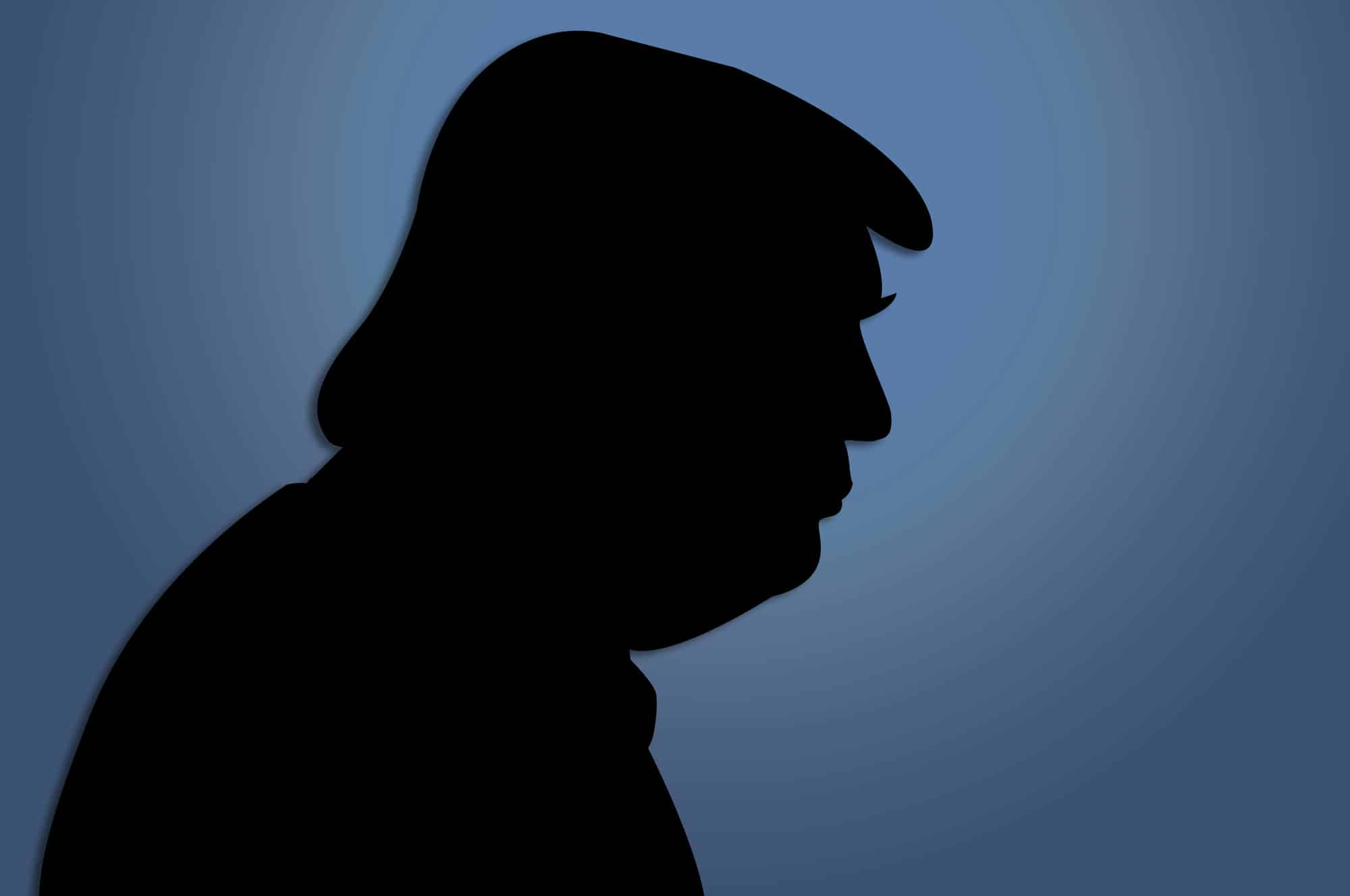
The recent escalations in Donald Trump’s rhetoric and imagery have reignited intense debate among clinical psychologists and political analysts regarding the mental framework of such leadership. At the core of Trump’s actions is a pattern of grandiosity, characterized by an inflated sense of self-importance and a need for constant admiration. It is worth noting that many mental health professionals adhere to the rule which suggests it is unethical to provide a formal diagnosis of a public figure without a personal examination. However, a public figure’s behavioral patterns can be observed and commented on. In Trump’s case, the externalizing of blame and the demand for absolute loyalty are frequently analyzed as markers of high-conflict personality.
So how did the United States end up with Donald Trump as its leader?
From the perspective of economist Friedrich Hayek and the Austrian School, certain factors create a movement that makes the trade-off for a leader like Trump feel not only rational but necessary. Hayek famously distinguished between two types of order: spontaneous, bottom-up order (like a free market) he called Cosmos and planned, top-down organization (like an army or a DEI department) called Taxis. Hayek argued in The Mirage of Social Justice that when the state tries to impose “Social Justice” or “Equity,” it is attempting to turn a Cosmos into a Taxis. To many people, DEI and “wokeness” feel like an aggressive imposition of top-down commands over their personal speech and work lives.
Many people stop trusting the rules and the system when they feel that “impersonal rules” have been captured by a specific ideology to socially engineer their behavior. They look instead for a leader who promises to use that same sort of top-down power to dismantle the “woke” bureaucracy. Hayek also believed that much of our wisdom is “negative knowledge”—knowing what not to do based on past disasters. When the memory of how totalitarians used “retribution” and “loyalty tests” to hollow out society fades, people begin to view those same tactics as “bold leadership.” Additionally, voters often operate on “rational ignorance.” It is time-consuming to study the long-term dangers of dismantling the rule of law. It is much easier and more emotionally satisfying to support a “savior” who promises to “punish” the people you feel have mistreated you.
In The Road to Serfdom, Hayek wrote a famous chapter titled “Why the Worst Get on Top.” He argued that collectivist movements usually require a “common enemy” to maintain cohesion. Ultimately, the identity politics of the “left” inadvertently “taught” the public to view political life as a zero-sum struggle between groups. Once the “left” established that group identity is the primary unit of political currency, it was inevitable that the “right” would adopt the same tactics. If politics becomes about “group rights” rather than “individual rights,” the majority group will eventually organize as a tribe to protect its own interests. That is a hallmark of MAGA’s “America First” and cultural protectionist rhetoric.
I believe we can conclude that identity politics “opened the way” for MAGA by legitimizing group-based conflict and undermining the abstract rule of law. By making the “group” more important than the “individual,” the left created the very intellectual and psychological tools that the MAGA movement then used to mobilize its own base. Both sides could be seen as falling into the “fatal conceit”—the belief that they have the knowledge and right to force society into a specific, predetermined shape. This leads to a loss of the “middle ground” and the ability to reach consensus. Negotiations always seem to fail. The allegation that Trump is a “great negotiator” is based on a “ghost written” book and not actual results. Those of us with extensive negotiating experience know that while HCPs often believe their aggressive stance makes them “tough” or “strong,” psychological research and game theory suggest their long-term outcomes are frequently sub-optimal.
Bringing politics in the United States toward a more legitimate process—one that respects personal freedoms —requires a shift in how we view the role of the state itself. The effort requires that we move power away from a centralized “top” back toward the individual. Rather than investing authority in high-conflict personalities we must elect leaders who are committed to reducing the size and scope of government.