
On October 9, as Ukraine’s negotiating team was meeting with American envoys Jared Kushner and Steve Witkoff in Miami, President Donald Trump announced a deal with Russia that would see the United States provide sanctions relief for Russia to sell diesel to the American and global market. Moscow agreed to lift its export ban on diesel fuel and immediately supply 300,000 tons to the American and global market, followed by another 500,000 in November, then a further 1,000,000, and, eventually, another 3,000,000.
The Ukrainian team was blindsided and reacted with fury. They left the U.S. without attending the planned second day of talks, and one senior Ukrainian official promised, “We will burn [Russian] refineries.” Hours later, Ukraine reportedly struck a Russian oil refinery.
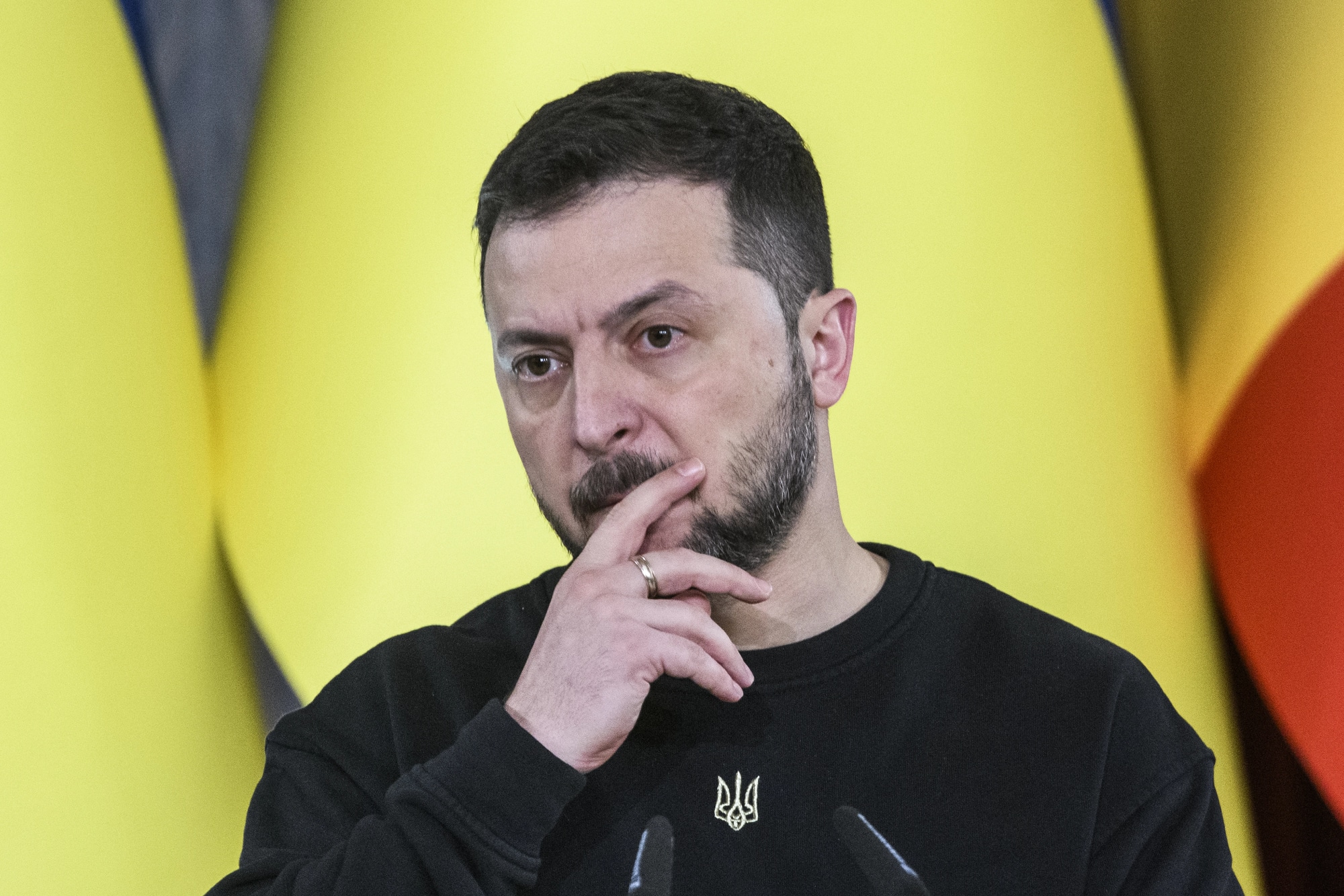
Wishing to see fuel prices “coming down…fast” before the midterms, Trump went into a rage. “Do whatever you want, but don’t hit the diesel fuel,” Trump says he told Ukraine’s President Volodymyr Zelensky. “So, what does he do? He goes and hits refineries…He’d better damn well stop.”
While the president was thundering, his envoys were quietly issuing a much more dangerous warning. Back in Miami, Witkoff and Kushner warned the Ukrainian team that crucial intelligence-sharing could be cut off if Kiev doesn’t fall in line with Washington’s demands to stop striking Russian refineries.
The warning came, not only through diplomatic channels, but also through military channels. Though Zelensky says that he was not warned that intelligence could be cut off, he says, “They told my generals…But to be honest, did we get any messages that it can be stopped? My generals told me that on the level of military people they’ve got this information. They’ve got information that it can be stopped.”
When Kiev was struck by Russian ballistic missiles on the night of October 12, Kiev wondered if the United States had carried through with its threat. “Regarding this strike,” Zelensky said, “unfortunately, there was no warning from our partners.”
Ukraine’s Foreign Minister Sybiha said Ukraine continues to receive U.S. intelligence and that the failure was the result “of, special type of the weaponry which was used by Russian side.” According to a Ukrainian Air Force spokesman, though Ukraine received no warning for the single strike, they did get warnings for the “next three waves of attacks.” The U.S. early warning system “appeared to be working again,” sources told CBS news.
However, the next night, when Kiev was once again hit with ballistic missiles, Zelensky again said his government had “once again” received “no advance warning from our partners.”
Soon, it became clear that it was not just the U.S. early warning system that was misbehaving. So were the SpaceX Starlink and Starshield systems.
When an angry Donald Trump had called on Ukrainians “to get a new president because Zelensky, he said, cannot make a deal, SpaceX CEO Elon Musk seconded the call, posting that “Zelensky has gone too far.”
Then, with no warning, the Ukrainian armed forces reportedly “lost partial access to Starlink.” Ukrainian officials say that SpaceX “had introduced a limit on some Starlink services within the country, disrupting combat drone missions for which the technology is crucial.” Ukrainian officials say that, at the same time, Starshield, which is controlled, not by Musk but by Washington, and which is used for offensive military purposes, was also restricted. The restriction on Starshield terminals, came “without warning,” according to the Ukrainian Ministry of Defense.
“We had massive attacks today, and it’s a pity that we also had difficulties…about Starlink and about intelligence and a lot of different surprises,” Zelensky told British Prime Minister Andy Burnham.
Ukrainian officials say that Starlink shut down when Russian drones reached certain speeds: usually 160 kph but sometimes as early as 80 kph. Soon, service was “partially” restored, but the upper end restriction was still in place. The Ukrainian Ministry of Defense says there is still a 160 kph restriction and that that speed limit is insufficient for intercepting some Russian drones. Before the interruption, Starlink operated without speed restrictions, and Ukraine is calling for that unrestricted service to be restored.
Axios reports that on October 15, Starlink and Starshield satellite services had been fully restored. There also reports that, on the same day, Ukraine resumed strikes on Russian oil refineries. On Saturday, Zelensky said that Starlink and Starshield were still restricted to drones reaching 161 kph.
The loss of U.S. intelligence and of Starlink would be painful for Ukraine. Jennifer Kavanagh, Senior Fellow and Director of Military Analysis at Defense Priorities, told the Libertarian Institute that “Ukraine depends heavily on U.S. intelligence for deep strikes and on Starlink for operations inside Ukraine. Cutting either would complicate and interrupt Ukraine’s operations.”
But it is important to remember that we do not yet know for certain that the interruption in U.S. intelligence sharing is deliberate.
Ukrainian officials fear that it is. They are reportedly suspicious that Trump is demonstrating what could happen if Zelensky does not follow orders.
U.S. officials have given different explanations for the interruption from “a technical malfunction in the system” to “bad weather.” But Ukrainian officials are dubious about the explanations and suspect Trump of “playing” with the intel to deliver a warning. “Multiple sources familiar with the matter” told CBS that “the U.S. may have intentionally withheld early warnings this week of Russian strikes on Ukraine.”
On October 16, reports emerged that two unnamed U.S. officials and a third unnamed Western official said that the restrictions on speed on Starshield terminals was ordered by people “inside the White House” but not by Trump. Making a confusing situation more confusing still, on Friday, Trump said the White House did not order the restrictions: “I just checked this morning—it wasn’t us,” adding “it wasn’t me.”
Kavanagh shared that “So far, we have no evidence that they’ve cut intel sharing.” Though some missile attacks were missed, she points out that “Ukraine has received early warning for multiple Russian attacks.” As for Starlink, she says “speeds seem to have slowed, but there are lots of reasons this might have happened.” She cautions that “we need more information before making any real assertions about what the U.S. has or has not decided on cooperation with Ukraine.”
American officials say the United States “has not cut back intelligence sharing with Ukraine.” Trump has also said, “We are helping them, and we are sharing intel.”
Ukrainians will have to anxiously wait and see whether intelligence sharing has been cut, reduced or returned. They have fought bravely for four and a half years. But, if the U.S. stops early warnings at a time when Ukraine has virtually no Patriot missiles, they may painfully experience how difficult it is to take on Russia without critical American support.