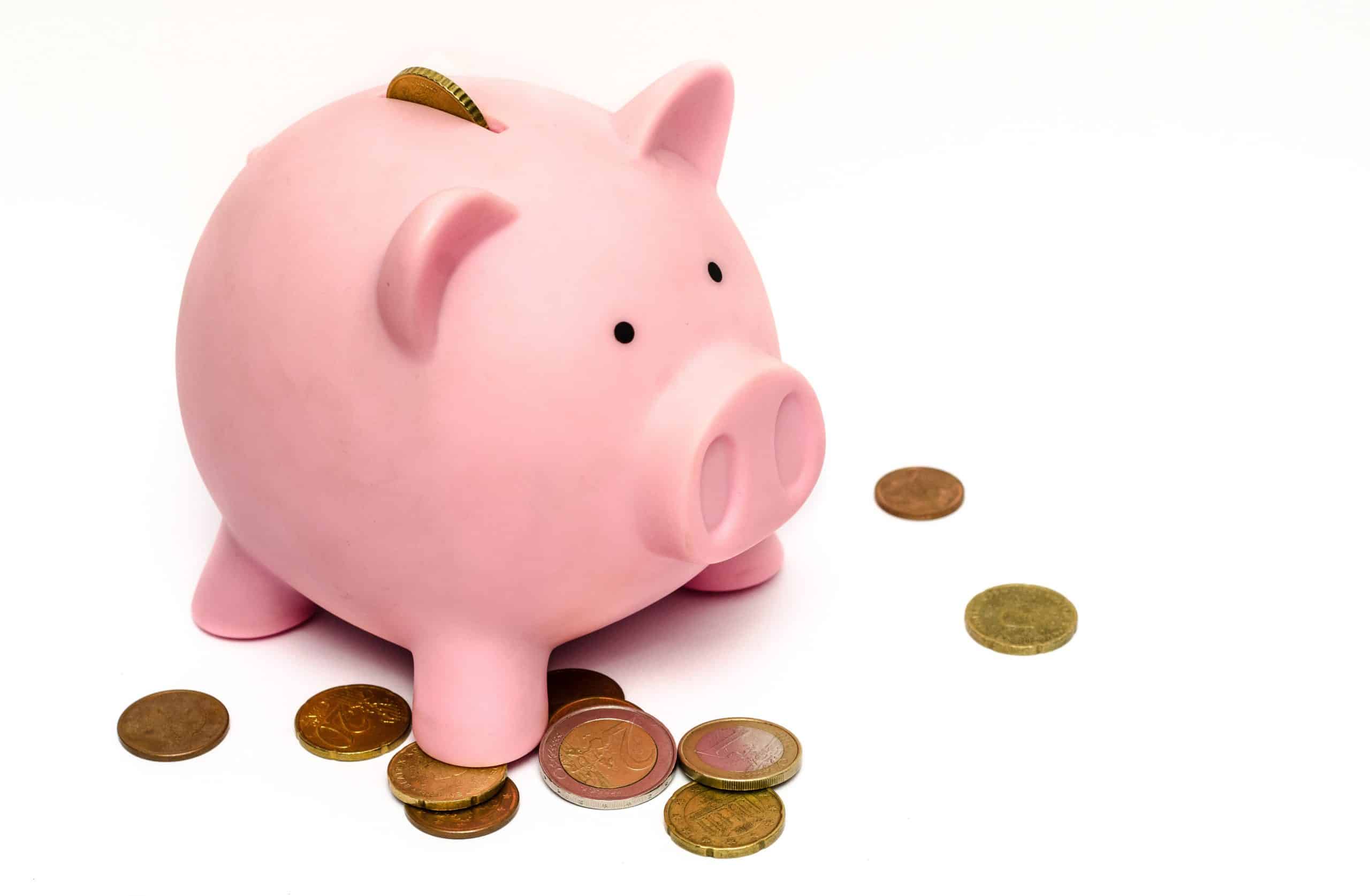
Something good is coming out of the covid lockdowns. Economist David Rosenberg released a special report via the eponymous Rosenberg Research, concluding “the pre-COVID-19 ‘norm’ of a 7% personal savings rate will morph into a post-COVID-19 norm of 10%.”
Rosenberg makes frequent TV appearances after he was chief North American economist at Merrill Lynch in New York from 2002 to 2009, when he was consistently included in the Institutional Investor All-Star analyst rankings. From there he spent ten years as chief economist and strategist at Gluskin Sheff.
Rosenberg doesn’t portray his prediction of a savings rate increase necessarily as a positive, instead writing, “for the 70% of aggregate demand called ‘the consumer,’ this will exert an everlasting drag on the pace of economic activity.” But, he quickly follows with, “Then again, it will also mean a deeper pool of savings for productive investment.”
Rosenberg’s first line sounds like John Maynard Keynes’s “paradox of thrift” theory, which claims that personal savings are a net drag on the economy during a recession. The second line sounds more like Ludwig von Mises, who wrote, “Capital is not a free gift of God or of nature. It is the outcome of a provident restriction of consumption on the part of man. It is created and increased by saving and maintained by the abstention from dissaving.”
Rosenberg makes a point that has been lost during this whole pandemic-turned-recession episode,
I mean, seriously, over half of American households did not have enough cash on hand to even get through three months of a job loss—quite remarkable when you consider we went into this mess with a 50-year low unemployment rate of 3.5%. Not to mention the corporate sector where, for some reason, the word “liquidity” became a dirty nine-letter word this past cycle.
Once there was a time when personal finance experts would say a household should have at least six months’ worth of liquid assets on hand just in case. The same advice applied to those starting a business. But, everyone and every business has operated like the government does, borrowing not just for stuff, but for day-to-day expenses. Thus, due to covid, everyone from unemployed waitresses to United Airlines is rattling their tin cups for a handout. And Uncle Sam is, albeit slowly, responding. This papering over of the crisis may stymie Rosenberg’s prediction. Let’s hope not. As Murray Rothbard explained in Man, Economy, and State,
All saving is directed toward enjoying more consumption in the future; otherwise, there would be no point at all to saving. Saving is abstaining from possible present consumption in return for the expectation of increased consumption at some time in the future. No one wants capital goods for their own sake. They are only the embodiment of increased consumption in the future.
In closing, Rosenberg views the savings issue through Keynesian glasses, writing,
And this got me thinking about how the future will be one of treating “savings“ as sacrosanct. Beyond a quarter or two of pent-up demand released in 2021, frugality is going to emerge as the primary theme. It is not the end of the world, either, unless you’re an advocate for a sustainable and vigorous economic expansion.
Mises saw it differently, writing in Human Action,
At the outset of every step forward on the road to a more plentiful existence is saving—the provisionment of products that makes it possible to prolong the average period of time elapsing between the beginning of the production process and its turning out of a product ready for use and consumption….Without saving and capital accumulation there could not be any striving toward nonmaterial ends.
Frugality first, then prosperity.
This article was originally featured at the Ludwig von Mises Institute and is republished with permission.