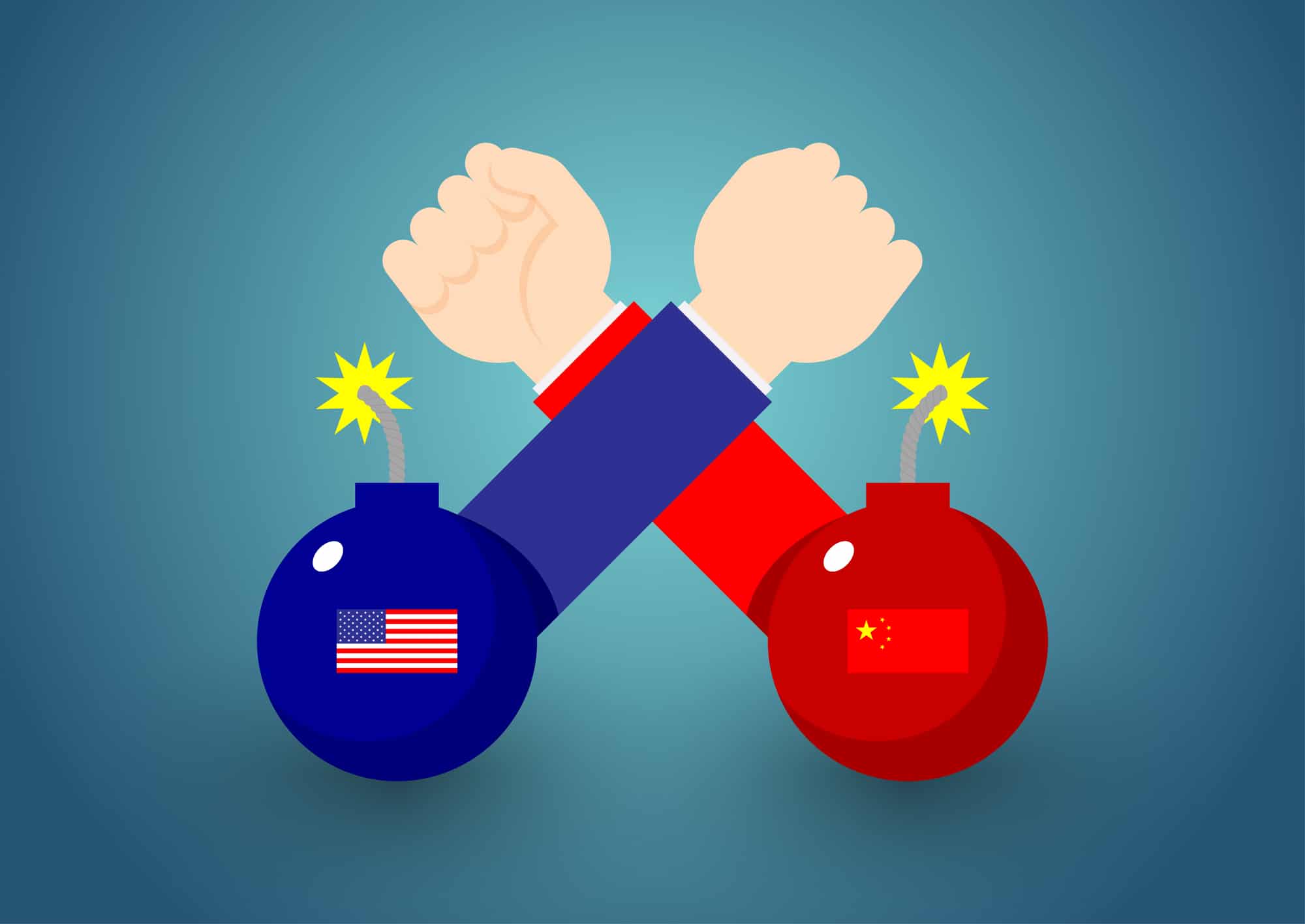
When Xi Jinping departed Washington at the end of September, the verdict was already plain. Another carefully choreographed encounter produced a short extension of the trade truce, a modest $30 billion reciprocal tariff arrangement on non-sensitive goods, some coal purchases, an AI dialogue, and the familiar language of “constructive strategic stability.” Ceremonial pomp, pandas, and mutual professions of personal friendship filled the space where real structural progress was absent. The outcome matched what I had advised readers to expect in the runup—namely, that the deeper frictions, technology controls, Taiwan, and Washington’s persistent urge to police Beijing’s commercial relationships, would remain unresolved.
Having given things a chance to breathe, now is a good time to look at what has transpired since Xi and Trump’s meeting and to look to the road ahead.
To begin with, Xi had hardly left Washington before the Treasury Department moved to designate Chinese and Hong Kong-linked entities under Iran-related authorities. First came the September 29 package targeting weapons procurement networks, including a Beijing-based Iranian representative and Hong Kong’s EC Mojo Technology. Then an early October round hit several shipowners and vessels accused of moving Iranian petroleum and petrochemicals.
For its part, Beijing’s response has been characteristically measured. Spokesmen have simply restated the longstanding position: China opposes unilateral sanctions that lack United Nations Security Council authorization or any basis in international law. For American readers it is important to appreciate that this formula is more than diplomatic boilerplate. For Chinese officials and much of the public, such measures still carry the historical resonance of the unequal treaties and extraterritorial pretensions of the nineteenth century imperial powers. Washington’s continued readiness to reach into Chinese commercial networks—even under the banner of Iran policy—keeps that sensitivity alive. The absence of louder protest after the summit suggests a deliberate choice to protect the fragile tactical space created in May and September rather than escalate over secondary targets.
Looking ahead, two near-term developments will further test whether that space can be preserved. The first is the November APEC leaders’ meeting in Shenzhen, where Trump and Xi are expected to meet again, followed by the December G20 in Miami. These encounters offer another opportunity for managed, low-drama engagement.
The second is Taiwan’s local elections on November 28. Here the political ground has already shifted. Under new chairwoman Cheng Li-wun, elected in late 2025, the Kuomintang (KMT) has moved decisively to restore more pragmatic cross-strait relations after years of heightened tension under the Democratic Progressive Party (DPP). In April 2026, Cheng led the first visit by a sitting KMT chair to the mainland in nearly a decade. She traveled to Nanjing, Shanghai, and Beijing, met Xi Jinping at the Great Hall of the People, and repeatedly affirmed the 1992 Consensus while opposing Taiwan independence. The trip was framed explicitly as an effort to restart dialogue, reduce the risk of conflict, and put relations on a more stable footing. Beijing responded with a package of preferential measures aimed at expanding exchanges. Cheng has continued to argue that Taiwan need not choose between confrontation and capitulation, and that institutionalizing peaceful interaction serves the interests of people on both sides of the Strait.
A strong KMT performance in the November local elections would reinforce those political incentives in Taipei. Combined with continued White House restraint on major new arms packages to Taiwan—an approach already signaled—and sustained emphasis on “constructive strategic stability,” these factors could keep the bilateral trajectory from sliding backward.
None of this resolves the deeper problems described at the outset, but it does provide a glimmer of hope that the relationship can continue its relatively positive trajectory.
The Washington summit provided limited deliverables and no breakthroughs. The subsequent sanctions show how easily the old habits reassert themselves. Whether the coming months produce further deterioration or a modest continuation of the current tactical calm will depend less on grand strategy than on whether both sides—particularly Washington—can resist the temptation to treat every secondary dispute as an opportunity for confrontation.
Stability is possible. It simply requires accepting limits that the American foreign-policy establishment has long preferred to ignore.
China is not seeking global hegemony. Its priorities remain domestic stability, territorial integrity, and economic development within its near periphery. The real danger continues to lie in Washington’s refusal to accept an independent China that can say no, and in the domestic political economy that thrives on perpetual rivalry.