
The U.S. Supreme Court today refused to hear eight separate cases that had presented opportunities to reconsider its doctrine of “qualified immunity.” That doctrine, created by the Supreme Court in 1982, holds that government officials can be held accountable for violating the Constitution only if they violate a “clearly established” constitutional rule. In practice, that means that government officials can only be held liable if a federal court of appeals or the U.S. Supreme Court has already held that someone violated the Constitution by engaging in precisely the same conduct under precisely the same circumstances.
“Qualified immunity means that government officials can get away with violating your rights as long as they violated them in a way nobody thought of before,” explained Institute for Justice (IJ) Attorney Anya Bidwell. “And that means that the most egregious abuses are frequently the ones for which no one can be held to account.”
Qualified immunity has come in for harsh criticism from the left and the right alike. And the outrageous facts of the cases rejected today help illustrate why: In them, lower courts had granted immunity to a group of officers who took an Idaho mom’s consent to “get inside” her home as consent to stand outside, bombarding it with tear-gas grenades; to Texas medical regulators who showed up at a doctor’s office and, without warning or a warrant, rifled through confidential patient files; and to a deputy sheriff who (while in pursuit of an unrelated, unarmed suspect) held a group of young children at gunpoint and then shot a ten-year-old in the leg while firing at a non-threatening family pet.
“Qualified immunity is a failure as a matter of policy, as a matter of law, and as a matter of basic morality,” said IJ Senior Attorney Robert McNamara, who was counsel of record in West v. Winfield, one of the cases denied review today. “It is past time for the Supreme Court to admit as much and start expecting government officials to follow the Constitution.”
The Court’s rejection of the petitions was not unanimous. Justice Clarence Thomas issued a dissent in the longest-pending petition, Baxter v. Bracey, calling for the Court to reevaluate the doctrine entirely: “I continue to have strong doubts about our §1983 qualified immunity doctrine,” Justice Thomas’s dissent concludes. “Given the importance of this question, I would grant the petition for certiorari.”
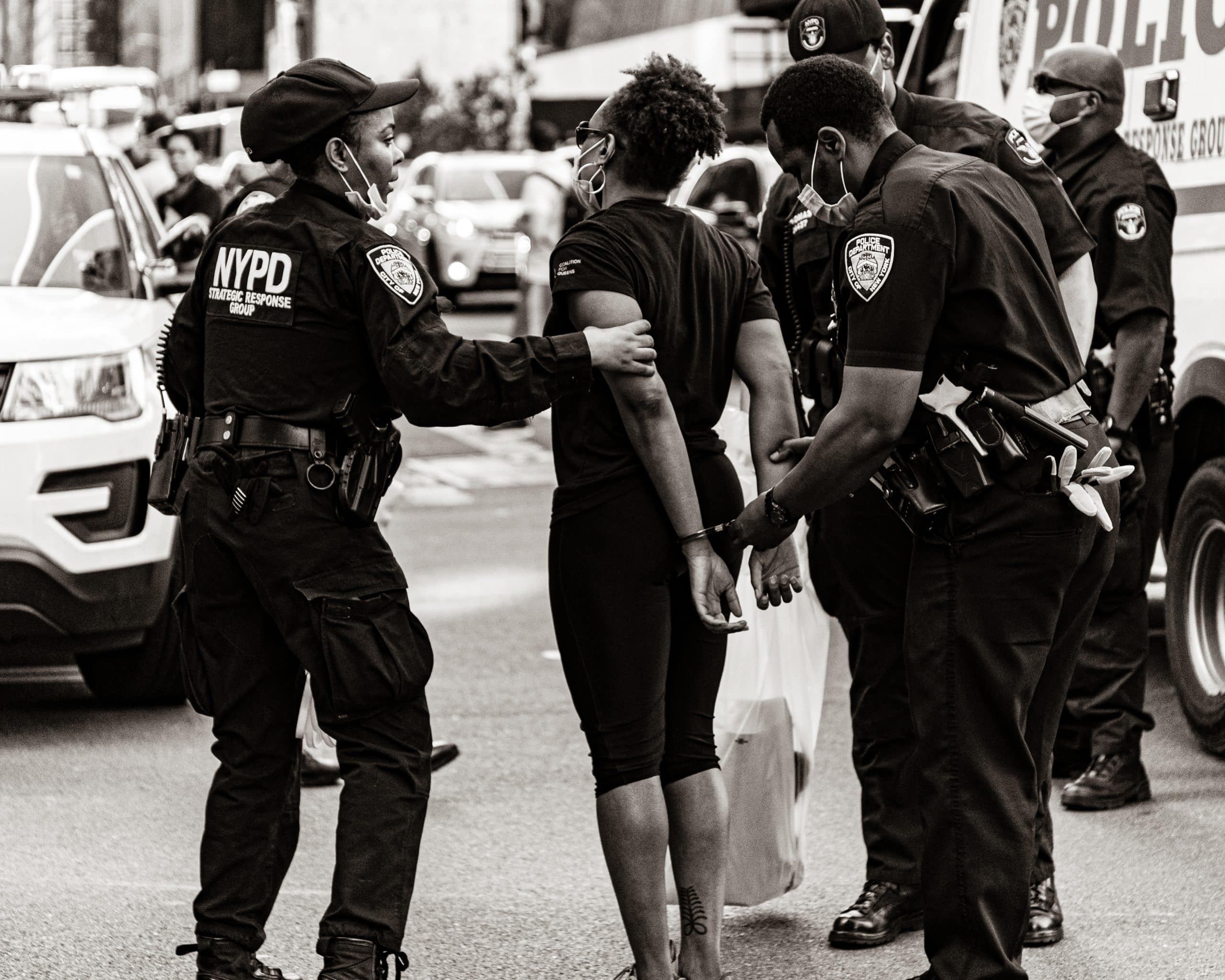
The drumbeat of voices calling for an end to qualified immunity and a return to basic government accountability has only grown louder in the wake of the killing of George Floyd by Minneapolis police officers. Articles in outlets ranging from USA Today to Fox News Channel to the New York Times editorial page all pointed to the slaying as a symptom of a broader culture of official impunity and called upon the Supreme Court to rethink its qualified immunity rules. Today’s decision means those cries will, at least for now, go unanswered.
“There is no shortage of outrageous qualified immunity cases for the Supreme Court to take,” said IJ Attorney Patrick Jaicomo. “It has refused to hear a case this year, but it can only avoid the issue for so long. The skewed incentives of qualified immunity guarantee that lower courts will continue to generate more examples of injustice, and we will keep bringing those examples back to the courthouse steps until we break through.”
The Institute for Justice, through its Project on Immunity and Accountability, actively litigates to remove barriers to meaningful enforcement of constitutional rights. Today’s decision denied review in one of IJ’s Immunity and Accountability cases, but a second, Brownback v. King, has already been granted review and will be heard by the justices next term. A third case, brought on behalf of a Colorado family whose home was destroyed by police in pursuit of a suspect who had no connection to them, will be considered later this month.
“The principle at stake is simple: If citizens must obey the law, then government officials must obey the Constitution,” concluded IJ President and General Counsel Scott Bullock. “The Constitution’s promises of freedom and individual rights are important only to the extent that they are actually enforced—and the Institute for Justice will work tirelessly to ensure that they are.”
John Kramer is Vice President for Communications at the Institute for Justice. This article was originally featured at the Institute for Justice and is republished with permission.