
“You kill people and break things for a living.”- Secretary of War Pete Hegseth in Quantico, Virginia on September 30, 2025
The primary male sex hormone, testosterone, has been in the news of late. Students of social science may be familiar with the series of twentieth-century prison studies which had as their conclusion that high testosterone levels among incarcerated felons were associated with a propensity toward personal and violent crimes such as rape and murder. Correlation is not causation, but statistics are statistics all the same.
Sports enthusiasts will know that testosterone has often been at issue in cases of professional athlete doping, where contenders are said to have gained an unfair advantage by ingesting exogenous substances intended to improve their performance. Anabolic androgenic steroids such as testosterone have been documented to increase speed and physical strength through inducing the growth of muscle in the body by triggering the production of proteins. The doping controversy is a fascinating one, involving debates over what constitutes cheating. All other things being equal, is it fair for some athletes to use performance enhancement drugs when others do not?
Training and nutrition are one thing, but more artificial modifications, which go beyond what is considered a normal athlete’s behavior as he does everything within his power to excel at his chosen sport, are frowned upon and indeed prohibited by the World Anti-Doping Agency (WADA), et al. Such organizations monitor athletes before, during, and after competitions to ensure that no one is winning through doping rather than a combination of natural ability, talent, and discipline. When testing reveals that athletes who competed and prevailed in tournaments had suspiciously high levels of testosterone or other substances which were not produced by their own body, then they are stripped of their titles, medals and awards. They are effectively denounced as cheaters, and new winners are pronounced from among the athletes who followed the rules to which all of them agreed in order to be able to compete.
The institutional antidoping apparatus is claimed not only to be keeping sports fair and meaningful but also protecting athletes themselves, who in the twentieth century were often made to ingest “supplements” by overzealous coaches in complete disregard for the well being of the competitors themselves. (The USSR and East Germany were notorious for this.) Doping may afford athletes an advantage in the short term, but it is also known to induce negative health conditions, including heart problems and infertility, in the long term.
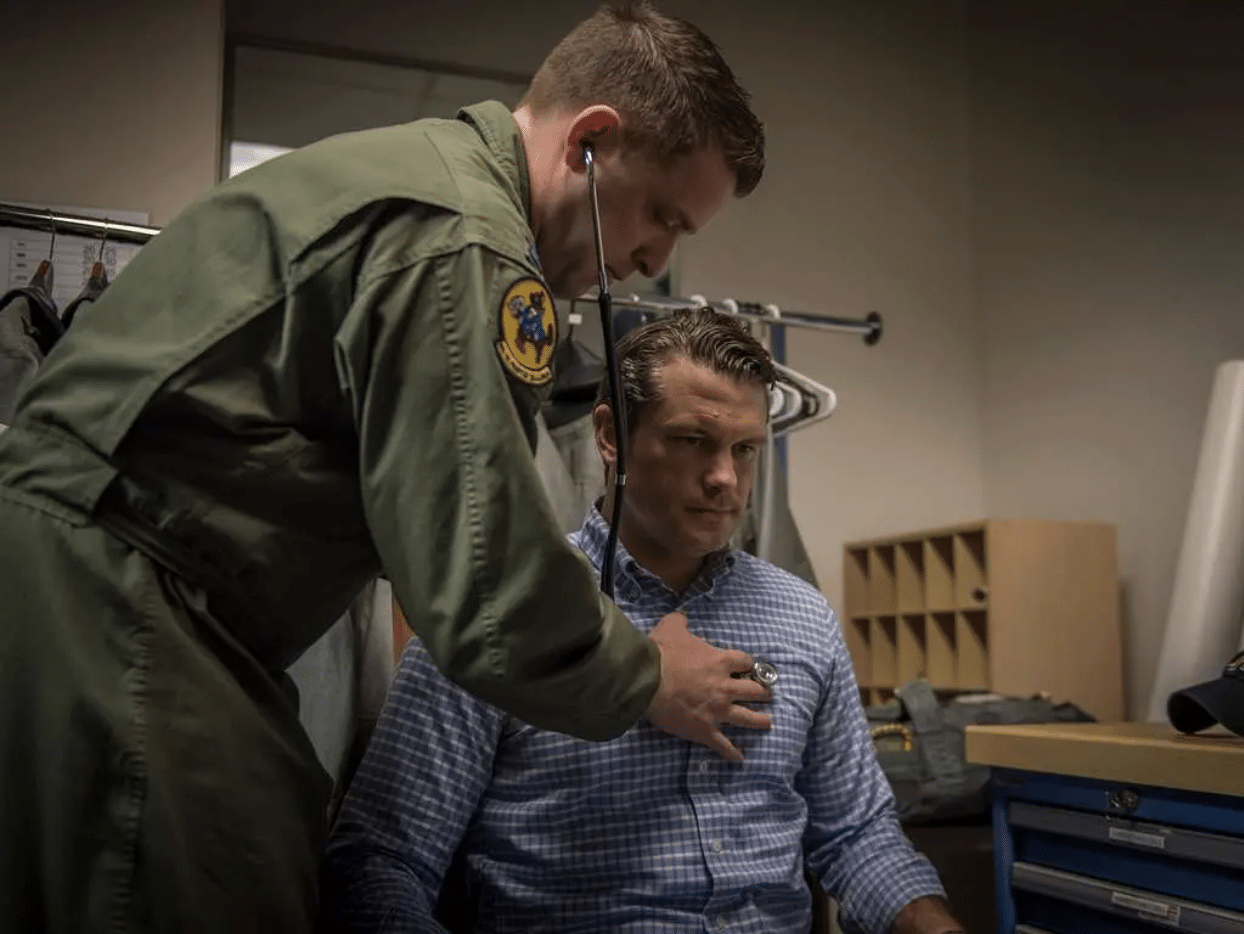
U.S. Secretary of War Pete Hegseth, who has posted many short videos of himself on social media working out with some of the troops under his command, regards testosterone deficiency as having reached the level of a crisis in the military. He recently touted the substance as an essential chemical in the body of the lethal warrior, invoking the agreement of Secretary of Health and Human Services (HHS) Robert F. Kennedy Jr., in support of this claim. Not long after increasing the admissible enlistment age of Army troops to forty-two, the secretary of war announced a novel testosterone testing policy. Under the new initiative, all troops over the age of thirty will be required by the Department of War to have their testosterone levels measured during their periodic health assessment, and they will be provided with the opportunity to undergo hormone replacement therapy, should they be diagnosed as low on the substance.
The range of testosterone in normal male human beings varies quite a lot, so it is unclear what metric will be used in diagnosing “deficiency.” One possibility would be to assess the current average level of troops and to establish a benchmark based on that data. However, in recent years, alarms have been sounded among some health-focused communities, including MAHA (Make America Healthy Again), Secretary Kennedy’s own initiative, that the level of testosterone in all males (not only soldiers) has diminished greatly as a result of a variety of possible factors, including plastics in the water, among other toxins said to be endocrine-disrupting chemicals. Of course, viewed from a purely evolutionary perspective, one would expect that a world in which people need be less and less physically involved with their surroundings in order to survive would not be one which would necessarily select for “high-T” individuals. Hardly any men today hunt for their means of sustenance, and much modern labor has become desk work requiring little in the way of muscle mass.
Secretary Hegseth’s many photo shoots of himself lifting weights or working out with troops suggest that his own view of the value of the importance of testosterone may be similar to that of “gym bros” or bodybuilders, who have long sought to increase their body mass and physical strength through the use of supplements ranging from protein powders to steroids such as testosterone, and other means as well. Subscribing apparently to the maxim “All’s fair in love and war,” Hegseth may even regard the doping controversies surrounding the ingestion of exogenously sourced testosterone by athletes as an argument in favor of providing it to troops. He has officially stated that “Our goal, as you know, is to never enter a fair fight.”
Testosterone, like its female hormone counterpart, estrogen, primarily controls the development of secondary sexual characteristics. As human beings grow older, and the optimum conditions for producing offspring no longer obtain, their relevant hormone levels naturally wane. That female soldiers will be included in the military’s new testing regimen strikes one as curious, given that women have always had much, much lower levels of testosterone than men. Female soldiers are soldiers, but they do not possess Y chromosomes, and their bodies do not naturally produce very much testosterone at all. This is one of the reasons why outspoken critics have decried, on grounds of unfairness, the inclusion of biological males in female sports. Were rationality to prevail, this dispute would be definitively settled by the very existence of the WADA’s prohibitions on doping, given the marked difference in testosterone levels between biological males and females throughout the years of their development into adults, and upon full maturation as well.
Skeptics about the military’s testosterone initiative, including a federal judge, have been pointing out how odd the proposed policy is on its face, and all the more coming from a Pentagon chief who upon assuming his office began immediately to purge the military of one class of persons well known for availing themselves of hormone therapy. Transwomen (who are biological males) and transmen (who are biological females) succeed in changing the outward appearance of their gender in part through ingesting large amounts of the primary sex hormone which what they regard as their confused body is said to be lacking. Transwomen and transmen tend also to dress the part which they wish to play, but that is merely cosmetic. Irreversible transformative measures such as genital surgery to remove the penis, undergo mastectomy, or create a pseudovagina or prosthetic penis, are sometimes also undertaken by individuals who have become convinced that they were born in the wrong body.
If what makes a female feminine is in part the predominance of estrogen over testosterone in her body, and if what makes a male masculine is the predominance of testosterone over estrogen, then reversing the concentrations of those two hormones will naturally have various secondary sexual effects on the body. Women who ingest large amounts of testosterone can increase their body mass, including musculature, and they may also grow facial hair, develop rougher skin, and overall begin to look more like a man than they did before. Men who ingest large amounts of estrogen can grow fatty breast tissue, develop softer skin, and begin to appear less manly and more feminine in other ways as well.
Secretary Hegseth famously announced early on in his tenure that the days of the “woke” military were over. No more DEI (Diversity, Equity, Inclusion) policies and, as he most colorfully put his policy against transgenders in the military: “No more dudes in dresses.” Hegseth stressed that, under his command, the military would be “laser-focused on lethality” and governed by a purely meritocratic code. If you are a good combatant, then you will be an asset to the military, seems to be Hegseth’s thinking. If you are not a good combatant, then you will not. In other words, there is a sort of logic here, and the policy may not represent abject misogyny or transphobia, as some feminists and trans activists would no doubt claim.
Biological reality is such that, on average, males are larger, stronger, and faster than females, which is why some traditionalists have argued that women should not serve as combatants at all, since allowing them to do so will be advantageous to enemy troops, assuming that most, if not all, of them are males. Those who support at least in principle the possibility of female combatants, however, insist that there are exceptions to every rule, and if a woman is powerful enough to survive basic training and to prove herself alongside her male peers, then she should have the opportunity to enlist as a grunt on the ground, should she wish to. Even according to those who hold more conservative views on who should be serving in combat roles, exceptional women, with demonstrated prowess in the needed skill set, including “killing people and breaking things,” as Hegseth so bluntly puts it, should not be forbidden from fighting, should they wish to serve in that capacity.
The new testosterone testing policy raises a number of issues. First, biologically female soldiers will obviously have uniformly low levels of testosterone. The sole exceptions among women would seem to be transwomen, who despite having passed as females and not abandoned the military during the anti-woke purge, might in fact be identified as biologically male through this procedure. (One person I know suggested that this may indeed be the underlying goal of the initiative.) But the very fact that a normal human female’s testosterone level never even comes close to that of a young boy, much less that of a man raises the question whether the same “deficiency” metric will be uniformly applied and the military medical establishment’s recommendation to undergo hormone treatment correspondingly more frequent in the case of biological females, for the simple reason that they lack Y chromosomes and, therefore, are not men.
Second, if females, by constitution, have rather low levels of testosterone, which has been deemed essential to military readiness, will all of them be persuaded to ingest more of the substance in order to become, in Hegseth’s view, better soldiers and, specifically, if they wish to prove themselves worthy of adopting or preserving a combatant role in the military? What happens when those women who ingest exogenously sourced testosterone begin to look like male soldiers? Presumably the secretary would have no problem with “butch” females serving in the military, provided only that they behaved as excellent warriors throughout history have done: more aggressive and daring, and ready and willing to kill on command. What Hegseth appears specifically to abhor is the feminization of biological males, which must, he believes, compromise their ability to fight and win wars.
Third, if soldiers have already proven their capabilities sufficiently to have made it into the ranks of combatants, then why should their testosterone be measured at all? If the military is to be governed by purely meritocratic principles, then what matters is not the concentration of any chemical in the blood, but the soldier’s ability to perform. The required testosterone testing, then, seems superfluous, or even irrelevant. The results of such a procedure will be that some people who excel in their roles may nonetheless be “informed” that they are deficient in testosterone.
One matter which seems to have been overlooked in discussions on the new policy (at least as far as I have seen) is that for years there has been a sexual harassment and assault crisis in the U.S. military. The Invisible War, a 2012 film (directed by Kirby Dick) which treats the topic of how many female enlistees have been sexually abused, by not only male peers but also commanding officers, might lead one to surmise that pumping males with more testosterone will, in addition to making them more lethal, also make them more likely to seek out sex with and perhaps even assault recognizably female persons. Biologically speaking, sex and death go hand and hand when it comes to testosterone, because the chemical may increase the general readiness to behave aggressively: to hunt down and kill the enemy, or to pursue and rape a coveted conquest.
Supporters of the testosterone testing policy will brush aside such a concern as refuted by the tried-and-true “correlation is not causation” trope. If, however, one of the reasons why men outside the military undergo testosterone therapy is precisely the reason for which they may also take Viagra, that is, to make them ready to have sex when they wish to, even when their body is nowhere near that of a sexually active twenty-year-old anymore, then no one should be surprised if some among the newly testosterone-infused thirty- and forty-year-olds exhibit an increased propensity for sex along with death.
It is difficult to resist wondering whether Secretary Hegseth himself may be among the already testosterone-enhanced men in the military, given not only his oft-professed lust for lethality but also his personal history of serial philandering. Whatever his own circumstances may be, something has motivated Hegseth to implement a policy very different from those of the past, and in all likelihood a variety of factors are operating simultaneously, including the usual profit potential for players in the octopoid MIC (military-industrial-congressional-media-academic-pharmaceutical-banking-logistics complex). When searching for the true raison d’être of a new and costly policy, a reliable maxim is: “Follow the money.”
The enthusiasm of some supporters of new policies is not always fully explicable in economic terms, and in many cases there may be a fair amount of straightforward bureaucratic deflection involved. Secretary Hegseth has often overtly blamed the weakness, softness and “wokeness” of the military under President Biden for various foreign policy fiascoes. In reality, the Pentagon under Hegseth’s direction has not seen a lot of success in any context involving anything approaching what might with linguistic propriety be termed a war. Hegseth claims a resounding military victory each time he directs troops to snipe unwitting and unarmed fishermen designated narcoterrorists in Caribbean waters, and he eerily appears to enjoy sharing short snuff videos of the vessels being obliterated, along with the human beings onboard. But such acts of extrajudicial execution in surprise attacks on unwitting and unindicted suspects have merely been rebranded for public consumption as war.
The disastrous and extremely costly war on Iran, on the other hand, appears to have been just as poorly orchestrated and executed as were the wars on Afghanistan and Iraq. Secretary Hegseth has not indicated to date any plans to send ground troops into Iran, where they would face the formidable soldiers of the Islamic Revolutionary Guard Corp (IRGC), the likely result of which would be lines of flagged coffins. There have been some U.S. casualties from Iranian bombs on military installations in the region, but those have not been the result of ground war contests between rival combatants.
The situation in Iran thus leads to the most fundamental question of all: Would higher testosterone levels have helped any of the troops killed in any recent U.S. war? The soldiers who lost their lives or suffered other injuries while serving in the Middle East in 2026 were not battling hand-to-hand with Iranian soldiers in anything even vaguely resembling the UFC cagefights which appear to reflect Hegseth’s dominant image of how wars are to be fought and won. Instead, the troops who “sacrificed their lives” for their country can be said without hyperbole to have been destroyed by their incompetent leadership. No amount of extra testosterone would have saved the soldiers slain from their tragic fate.
Likewise, testosterone-enhanced troops in the Global War on Terror, where soldiers on the ground were indeed sometimes killed in action as they rounded-up suspected jihadists and terrorized the inhabitants of lands illegally invaded, would likely have culminated in even more civilian casualties as hyped-up grunts placed in ridiculous and sometimes impossible situations tended to shoot first and ask questions later in both Afghanistan and Iraq. It was that very collateral damage, however, which caused the ranks of the jihadists to surge, as local men enraged by what they witnessed decided to team up with whoever was resisting the invaders, including Al Qaeda and ISIS. In other words, boosting the testosterone levels of U.S. ground troops already on edge would likely have resulted in even more of their deaths as the insurgencies would have been further galvanized by the production of even more collateral damage, violence leading naturally to more violence in acts of revenge.
Ultimately, the testosterone policy seems to be just another of a long list of “Do something, do anything!” ideas devised by enthusiastic albeit mediocre minds with, in this case, no apparent awareness of the vast scientific literature on the effects of the hormone. What is more, the “High-T Department of War” idea appears to be based on an image of combat rapidly becoming obsolete. Once upon a time, wars were fought on battlefields in one-on-one contests between rival combatants rather than today’s “contests” conducted by remote-control in quintessentially unfair fights where the killers risk nothing as they dispatch what are pronounced enemies by privately contracted analysts keen to find targets to eliminate in order to meet repulsive lethality quotas and thereby remain gainfully employed.
It seems safe to say that drone operators and analysts, whose job it is to hunt down and kill suspects but without ever entering into the bloody fray, much less setting foot on anything resembling a battlefield, will not be aided through the ingestion of testosterone in making their targeting decisions. Instead, they can be expected to become even more trigger-happy than before, and said to “excel” in an organization being run by a man who has gone out of his way to seek pardons for soldiers convicted in military tribunals of war crimes. The confused assumption that “Everything is permitted” to anyone who enlists in the “greatest fighting force the world has ever known,” as both Hegseth and Trump are wont to vaunt, completely ignores the series of failures post-World War II, when millions of human beings’ lives were terminated prematurely long before the implementation of a “Make Soldiers Manly Again” testosterone policy.
That the testing for testosterone will be mandatory but the prescribed hormone replacement theory voluntary strongly suggests that pressure will be placed upon troops nonetheless to be the best warriors that they can be, that is, by acknowledging their alleged “deficiency” and taking action to address the problem. As we learned from the Covid-19 crisis, once officials claiming expertise in “The Science” have spoken, people tend to listen to the powers that be and act accordingly. Optional or suggested treatments can transform easily into requirements. Indeed, the official policy itself presages what may happen, as it includes this statement: “targeted testosterone therapy directly optimizes Warfighter readiness.”Is the new testosterone policy, then, in fact intended to drive women from the military or to transform them into men, if they wish to stay?
Notwithstanding Hegseth’s own diatribes against the Joe Biden administration’s medical requirements on soldiers, the testosterone testing mandate is every bit as misguided as were the vaccine mandates during the Coronapocalypse. Lest anyone forget, the PCP testing industry flourished during the COVID period, enriching a variety of players in the biopharma sector likely to be involved in this new government-funded scheme as well. Under the direction of Defense Secretary Lloyd Austin, soldiers were told that they had to roll up their sleeves for an experimental treatment for a disease from which some of them had already recovered, or else lose their jobs. What will become of the troops who defy follow Secretary Hegseth’s order to provide a blood sample on request because they do not wish for their testosterone level to be tested and have no intention of undergoing hormone therapy, whatever the result might be?
The VA has been plying troubled soldiers with antidepressants, SSRIs, and antipsychotic agents prescribed off label as sleep aids for decades, despite considerable evidence that those drugs in fact increase the propensity to violence and may indeed be a contributing factor in the epidemic of suicides among both veterans and active-duty soldiers. With this new pharma-friendly testosterone initiative, it seems plausible that other performance enhancement drugs are already being queued up to be added to soldiers’ kits. Testosterone may be only the beginning of the chemically enhanced future of people who choose to enlist and are exhorted, if not ordered, to “Be All That You Can Be!”