
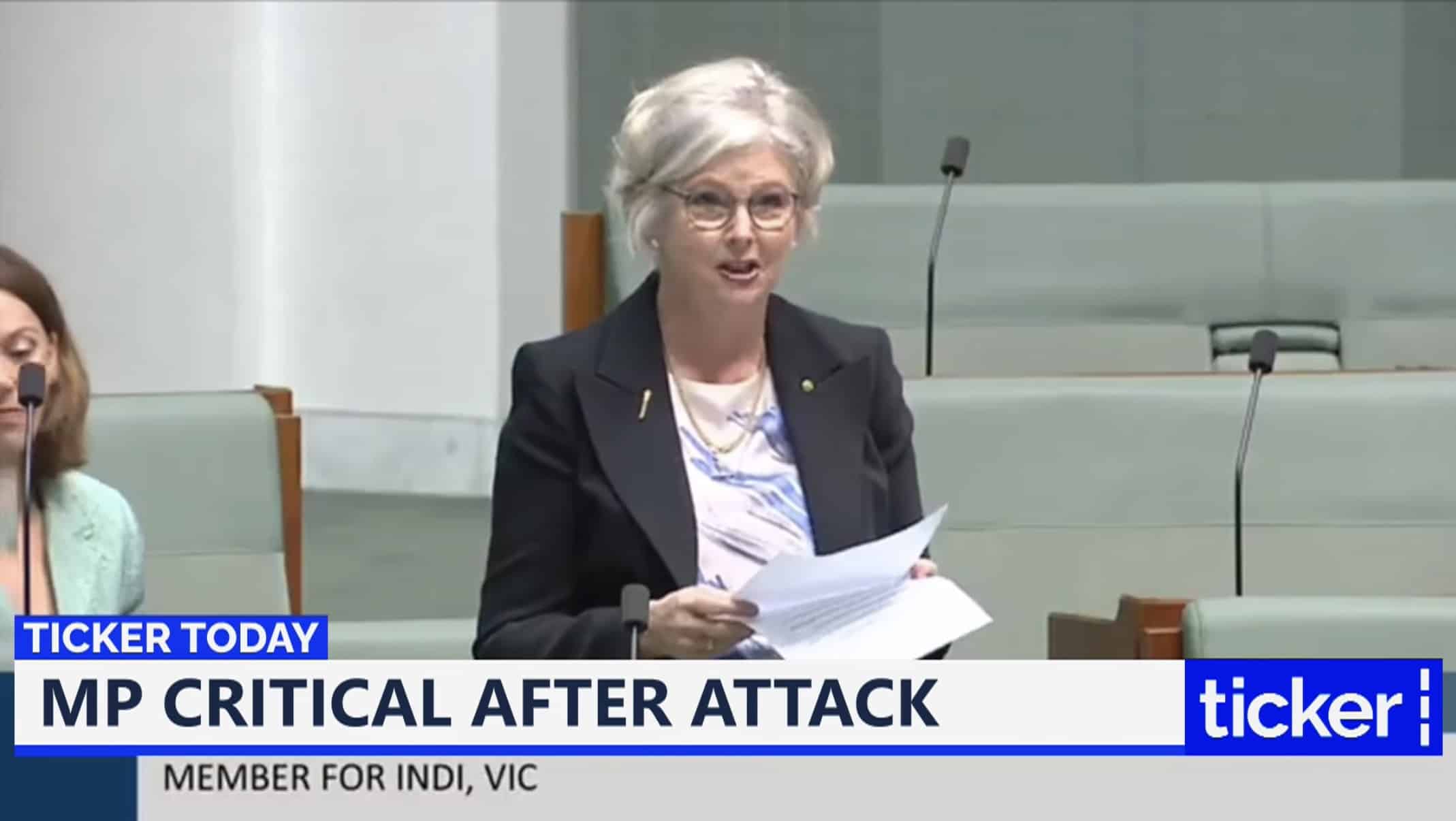
Independent Australian MP, Helen Haines, has lost both of her legs after being attacked by a man who drove his car repeatedly into her. The attack on the 65-year old woman may be a politically motivated assassination attempt.
The head of the Australian Federal Police, Krissy Barrett, has since stated that one person each week has been arrested for intent to harm politicians in Australia. How this is determined was not defined, but it’s assumed that a threat is a direct message of harm. And given the nature of modern censorship, criticism may also be considered as a threat.
Pauline Hanson, leader of the One Nation, has had repeated public death threats, and other violent intentions made against her, at rallies and in the media. She represents a nativist, rightwingpolitical party, which does not, generally, receive the same protected status granted to her left-wing rivals in current Australian discourse. The nature of political acceptance has an obvious bias towards the center-left while any form of radical politics is tarred as “rightwing,’ with the attachment of “extremist” included. For example, proponents of free speech or even libertarians are not and should not be tainted by any such label. But the use of “far right” may as well now mean “terrorist” in establishment messaging in Australia and the United Kingdom. And under the second Donald Trump administration in the United States, the opposite may be true.
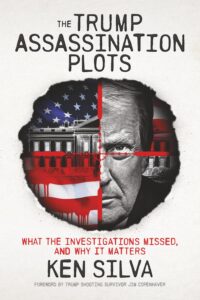
The assassination plots against President Trump have been celebrated by the extreme edges of his detractors. As a contentious rightwing figure, it’s considered permissible to openly hate him and call for his harm. The attempts on his life have only validated the perception that his opponents are “dangerous.
The murder of Charlie Kirk was an act of political assassination, and his martyrdom has solidified his importance to an ideology in ways that if he were alive never could. The people who cheered his murder despise free speech, and celebrate that a man whose words, unlike a politician’s, carried no actionable legal consequences could be killed for his opinions. Some of those are the same individuals who now condemn the attack on Helen Haines.
Unlike commentators like Kirk, politicians like Trump and Haines have powers through the government that carry very real consequences. Every vote they take or policy they implement is an act of violence requiring the direct or implied threat of force, even deadly force. Every regulation, taxation, and prohibition is made possible through the presence of armed agents who use real violence to ensure that policies are imposed. Their words transcend abstract beliefs to become tangible actions. Whether one agrees or not, political power means the use of force.
This reality stretches from foreign policy to seeminlgy altruistic acts of welfare. Layers of legal procedure and lawyerly language often ensure an indirect, seemingly peaceful imposition, but violence is nonetheless required. Unseen by many of the citizenry and even the political class are the individuals who have their rights violated, their property stolen, or their persons forcibly kidnapped and threatened with further violence. This imposition is performed by police officers who are often ignorant of the law themselves, obeying commands handed down to them without consideration.
The violence of the police and military are the material realities of political conversation. Whether one agrees with a particular law or not, the outcome remains the same. Political theory is the realization of broken bones and murder.
In 1994, New South Wales MP John Newman was gunned down by a gang member who was alleged to have acted on behalf of a political rival, Phuong Ngo. This incident could be considered a direct political assassination by a rival of Newman. In the case of Helen Haines’ attacker, a man known to her, he was in an erratic and inebriated state once he left the vehicle. According to some reports he was too intoxicated for police to question him immediately after his arrest. Many have jumped to the conclusions that her attacker was directly motivated by politics, rather than just being deranged.
How the larger society views and how the media portrays political violence is a fluid construct. As explained above, the enforcement of policy and execution of laws are not interpreted as inherently violent even if acts of aggression are required. Any individual harmed as a result (resisting or not) is seen as the party in the wrong. Even in unpopular wars, the military is still considered righteous and civilians killed abroad are an unavoidable consequence.
Politicians who demand the destruction of a city, the mass starvation of a population, or even the specific assassination of a rival are rarely ostracized, let alone punished when these threats become instruments of policy. In the case of assassinating political leaders, diplomats, journalists, and aid workers, the violence is broadly accepted without much debate. But if a family member of these victims were to seek revenge against a political leader involved in the policy, this would be labeled as illegal and illegitimate by the media and wider public. One act of political violence is legitimized by the “mob” while another is dismissed as inherently criminal or terrorism.
In the case of public health, individuals can be forced to remain indoors (or welded inside, in some cases like China), take medicine against their will, or be denied the ability to see dying loved ones, and “mob” opinions tolerates or glorifies such acts as in service for a “greater good.” Likewise for prohibitions against alcohol, cigarettes, or confectionary. The decision to enforce public health measures is an act of moral paternalism conjured up by people who view the general population as children who require armed agents as supervisors.
Layers of political procedures exist to grant an appearance of possible change. The same people who commit violence will then as easily not do so once a new framework is provided as a template. Objective morality does not exist, only the implementation of political will.
The political violence of the nineteenth and twentieth centuries has passed, and mass riots and violent tantrums are scattered in comparison to prior acts of dissent. Left-wing anarchists conducted numerous acts of terrorism, referred to as “propaganda of the deed.” Independence movements performed assassinations and bombings across the world, with the same “terrorists” forming “legitimate” governments once they achieved their political goals; South Africa’s African National Congress (ANC) and the Irgun and Stern Gang of Israel are just some examples. No matter how violent, a terror group can transcend its original criminality of being a non-state actor once it becomes a legitimized, political state. The violence of their actions and goals become credible, even if they kill even more people after the transition.
The attack on Helen Haines has become a rallying point in favor of further censorship and greater surveillance. It’s now an example of the dangers of free expression and unfiltered conversation which may radicalize individuals. The motives of her attempted killer are only assumed, and his political writings online indicate they even have overlap with Haines herself. The attacker is being framed as left-wing and pro-Palestine, but Haines is center-left and has expressed sympathy for the Palestinian plight, including calling for a ceasefire in Gaza. We are witnessing the speed of speculation by her political partisans.
Politics is violence; it always has been. The way most people understand this violence allows for its perpetuation and its encroachments on individual liberty. But every vote by a legislator or policy by an executive requires violence to make it happen. It’s only when people outside government resist those policies that they are categorized as criminals. The attack on Helen Haines, whatever the motivation, was immoral. But it’s only considered illegal because it was committed by a non-state actor. If Haines, as a politician, had participated in a larger scale attack abroad as part of a “military operation,” her violence would be lauded as legitimate.
Haines may be a victim, but so are all who suffer political violence, whether it’s perpetrated by non-state actors or the state itself. It’s only in your own mind where the distinction of legitimacy is drawn.