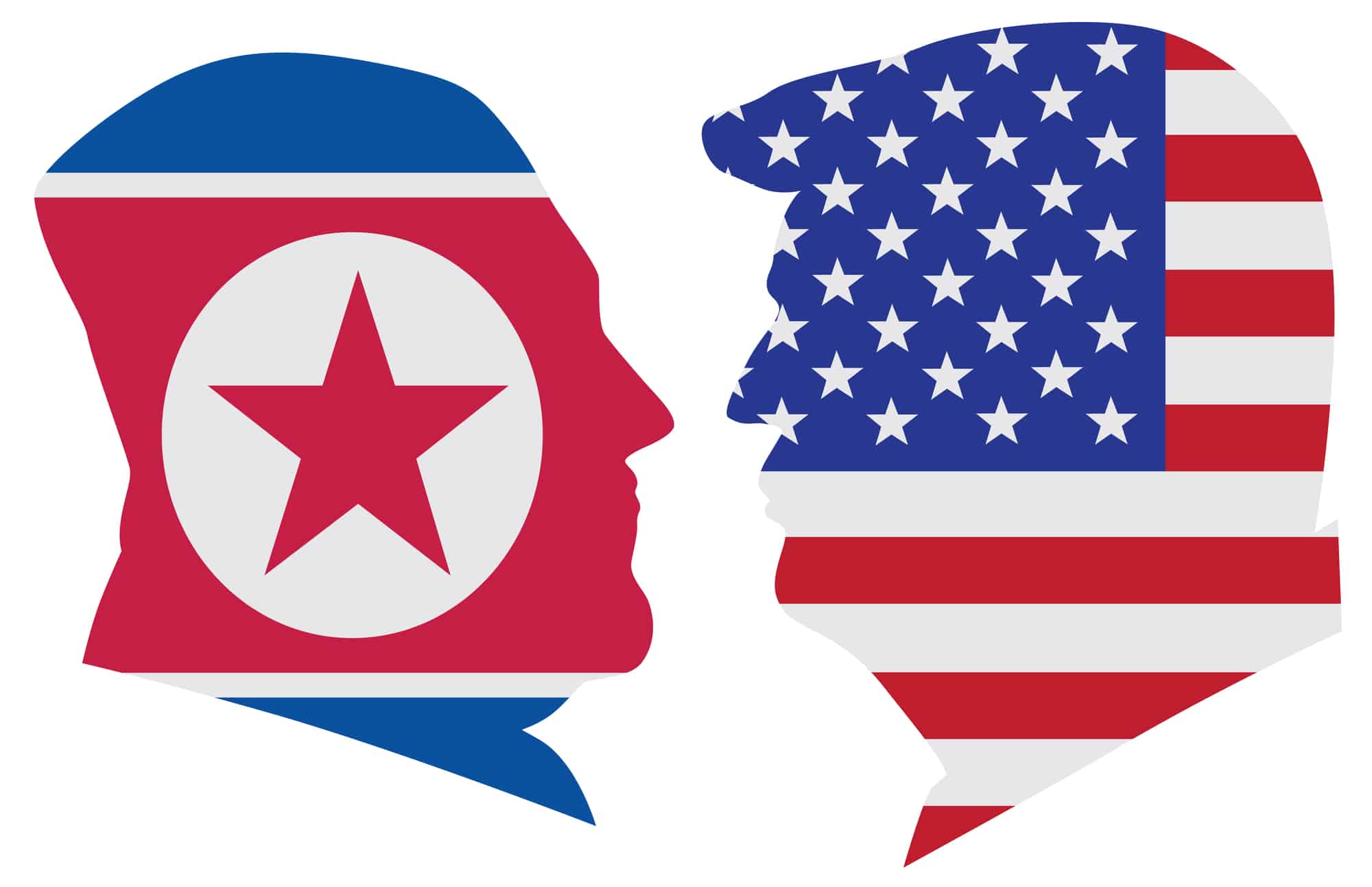
At the White House on August 19, President Donald Trump said he anticipates a face-to-face session with North Korean leader Kim Jong Un before December. Pressed on whether it would happen, he answered “Yeah, I will be,” and noted that the two men get along “very well.” He added, “The fact that I get along with him is a good thing, not a bad thing.” He then offered a figure no American official had ever stated publicly, asserting Pyongyang commands 57 “very powerful” nuclear weapons.
The comments trailed the sharpest concession Washington has extended to the North since 2019. Three days earlier, Trump posted on Truth Social that Secretary of War Pete Hegseth was instructed to “substantially reduce” the yearly maneuvers alongside South Korea, because they “send a signal that is totally inappropriate and hostile, to a Country that, as long as Donald J. Trump has been President, has been unthreatening and respectful.” Both capitals promptly cut Ulchi Freedom Shield down from eleven days to five, wrapping up August 21 instead of August 27 and swapping live maneuvers for simulations. Normally the drill fields something on the order of 18,000 personnel.
The gesture landed flat in Pyongyang. Kim Yo Jong, sister to the North Korean leader, said she had been “completely unaware” of any exchange between the two heads of state, while conceding that her brother “personally has good memories and feelings” for Trump. Trimming the exercises, in her telling, leaves untouched “the provocative and offensive nature of them.” A day afterward the regime fired close to a dozen ballistic missiles off its eastern coast. Testifying that week, South Korean Defense Minister Ahn Gyu-back put the North’s stockpile at 80 to 120 warheads, roughly twice what the American president had claimed.
Even so, conversation beats the alternatives. Hours the president burns flattering Kim are hours no one at the Pentagon spends mapping targets around Yongbyon. Victor Cha at the Center for Strategic and International Studies called the scaled down exercise “really the first concrete action he’s taken to try to entice Kim,” though he warned that “I think they’re going to bide their time and wait a little bit.” Brookings Institution scholar Andrew Yeo argued that Kim risks nothing by accepting. “Some say that there’s no reason why Kim Jong Un would want to meet Trump because he has Russia and China now in his pocket. But on the flip side, I feel like he has nothing to lose by meeting Trump because he has Russia and China in his pocket,” he said.
A photograph settles nothing, and Pyongyang’s reluctance is substantive, not logistical. The Stimson Center’s Jenny Town told Reuters that the North has erected “very high bars,” among them dismantling measures it regards as hostile and formal recognition of its nuclear armed status. “There is little incentive for him to rush back into negotiations where there is an expectation for him to concede anything,” she said. Foggy Bottom compounds the problem, professing that America “remains open to dialogue with North Korea without preconditions” in one breath and that it “remains committed to the complete denuclearisation of North Korea” in the next. Pyongyang understands that pairing perfectly well.
What the North calls hostile carries real weight. Pressure dates to 1950, when Harry Truman seized North Korean assets and shut down trade, and every administration since has stacked something new atop the pile. The United States labeled the country a state sponsor of terrorism in 1988, revoked that finding in 2008, and reinstated it in 2017. After the North’s first detonation in 2006, the Security Council began issuing resolutions now numbering roughly a dozen.
Presidents also built their own machinery by executive order, from Barack Obama’s 13551 and 13570 freezing assets and barring imports through 13687 and 13722, which the Arms Control Center notes “fully blocked engagement with the North Korean economy, the North Korean government, and the North Korean Worker’s Party.” Lawmakers piled on with the North Korea Sanctions and Policy Enhancement Act in 2016, the Korean Interdiction and Modernization of Sanctions Act a year later, and the Otto Warmbier Act in 2019. Some 28,500 American servicemembers have occupied the peninsula throughout this period.
Nothing shows the dead end better than Trump’s earlier presidency. He opened with “fire and fury” and a pressure campaign the Center for a New American Security account describes as having “drastically increased and sustained heavy sanctions against North Korea from 2017 to 2020.” Diplomacy followed in Singapore during June 2018, then Hanoi, then the walk across the line at Panmunjom in June 2019. The Hanoi talks ultimately proved to be fruitless. Kim asked that the resolutions hurting his economy come off in exchange for Yongbyon, and his counterparts demanded total disarmament first. By October the Stockholm sessions disintegrated within hours, and the file stayed shut.
Term two ran a similar script. While the president made friendly noises, the Treasury kept swinging. It sanctioned Korea Sobaeksu Trading Company in July 2025, then in November designated a group of eight North Korean bankers along with two institutions, and by March 2026 hit half a dozen people and a pair of companies over technology worker fraud that Secretary Scott Bessent said produced “nearly $800 million in 2024.”
Count the decades. Seventy-five years of confrontation, and Washington cannot point to a single durable peace agreement with North Korea. Diplomacy alone will not close that gap. The United States must pursue the only strategy that has never been tried, a full withdrawal from the Korean peninsula and the complete repeal of every sanction it has imposed on the North.
The Cold War is finished. North Korea poses no threat to Americans. The Pacific Ocean serves as a moat no army has ever crossed, and the American nuclear stockpile outmatches Pyongyang’s many times over. The idea that North Korea threatens the American mainland is risible. Let the sleeping dog lie and let a new era of peace begin.