
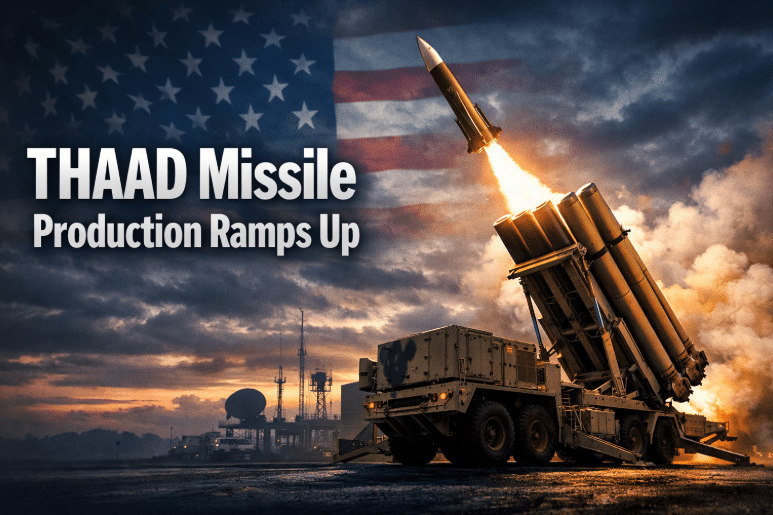
Lockheed Martin announced on January 29 that it will quadruple production of its THAAD (Terminal High Altitude Area Defense) missile interceptors under a new Pentagon framework agreement. Annual interceptor output will rise from about 96 to 400 per year. “Today’s agreement to quadruple THAAD production means we will have more interceptors available than ever before to deter our adversaries,” said Lockheed Martin CEO Jim Taiclet. The announcement comes as part of a flurry of recent munitions-production initiatives: it follows a deal to more than triple production of Patriot PAC-3 interceptors, and it arrives as Congress approved an $839 billion defense budget – about $8.4 billion above the Pentagon’s request.
Lockheed noted that the THAAD expansion still requires final Congressional funding before a binding contract can be awarded. Pentagon budget documents estimate each THAAD interceptor costs roughly $12-13 million. In July 2025, the Missile Defense Agency (MDA) already modified its THAAD production contract to raise its value from $8.35 billion to $10.42 billion, reflecting higher production targets. Lockheed executives say the company will invest heavily to support this scale-up. The press release notes Lockheed’s plan to invest multibillions over the next few years and build or modernize dozens of factories for THAAD, PAC-3, and other missile lines. Dawn Golightly, a Lockheed missile-defense vice president, said the company “remains committed to innovation and investment in interceptor production” as global threats rise.
The production ramp-up is driven by recent operational needs. U.S. THAAD batteries deployed in Israel and the Gulf fired over 150 interceptors during last month’s Israel-Iran conflict – roughly 25% of the entire U.S. THAAD stockpile. In response, the MDA this week authorized an extra $2 billion contract with Lockheed to replenish high-altitude interceptors. The rapid depletion of interceptors has reignited concerns about U.S. readiness. Analyst Bradley Bowman noted this replenishment reflects a “recognition of reality,” and added that industry could produce far more than the 37 THAADs Congress had requested for 2026.
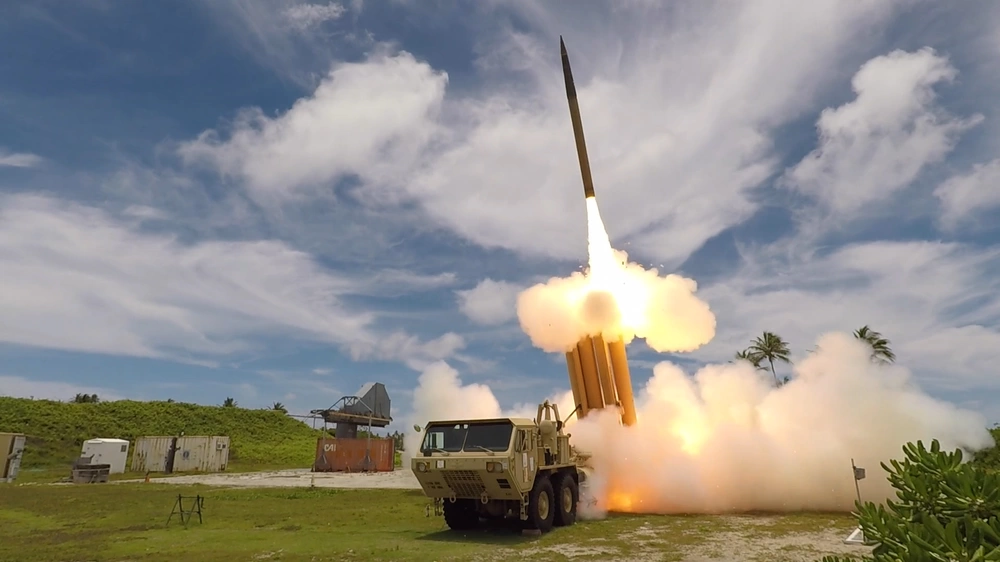
Lawmakers have moved quickly to send money to the defense industry even as civilian economic indicators sag. The $839 billion defense appropriation is roughly 10% higher than pre-pandemic levels. Outside analysts point out that ballooning defense budgets are driving the national debt higher. The Committee for a Responsible Federal Budget recently calculated that boosting annual military spending to $1.5 trillion would add about $5.8 trillion to the federal debt over ten years. Critics say this surge of spending prioritizes military contractors while other fiscal needs go unmet.
Lockheed’s THAAD expansion is part of an arms-industry boom beginning in 2025. The company said it will break ground on a new missile plant in Arkansas and spend roughly $5 billion next year expanding production lines for THAAD, PAC-3, and other missiles. Other primes are riding the wave: Northrop Grumman is accelerating production of its B-21 stealth bomber, and Raytheon secured a billion-dollar deal to build more SM-3 interceptors for the Navy. Overall, U.S. defense contractors report record backlogs. Industry observers note that factories are running near capacity supplying government orders, even as some question whether so much being spent so quickly is prudent.