Representation permeates much of life in the modern liberal state. Politicians make laws for millions of people, laws that every individual is expected to obey under the threat of force. Bureaucracies ensure compliance with these laws through varying forms of coercion, while judges settle disputes over alleged violations. The individual, however, remains largely on the receiving end of this process. One may vote, yet the political outcome will be the same anyway. As political philosopher Jason Brennan writes in Against Democracy, “Regardless of whether you choose to vote or not, and regardless of how you decide, the same result will occur. We might as well be willing the moon to turn purple.”
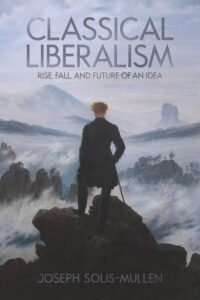
As a consequence, the sovereign self promised by liberalism has been buried under layers of representation. Individual autonomy in the modern liberal state is channeled, fragmented, and diluted until the subject supposedly represented is transformed beyond recognition. Instead of gazing down upon the world like Caspar David Friedrich’s wanderer, the individual now looks up from the abyss of representative democracy—tiny, powerless, and exposed to the masses and their representatives. With libertarian philosopher Robert Nozick, one might even ask: what, exactly, makes modern democracy no longer the tale of a slave?
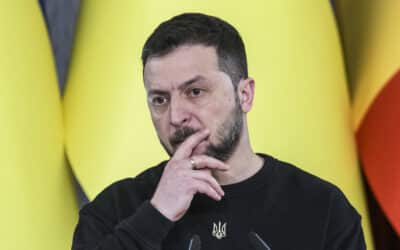
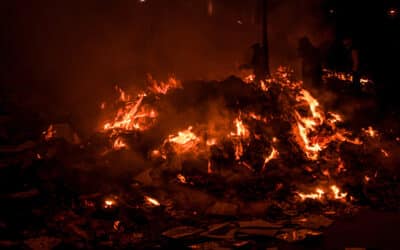
This resemblance becomes clearest in wartime conscription. The would-be liberal state of Ukraine provides a case in point, with numerous videos showing military officers chasing and seizing men in the streets. Here, the concrete individual suddenly reemerges from beneath the abstract layers of political representation, unfiltered and unmediated. In fact, it is the state that forcibly drags the individual back into political reality and demands direct participation and sacrifice. The convenient curtain of representation and delegation is torn away, revealing where sovereign power ultimately resides—and where it does not. As Carl Schmitt famously wrote, “Sovereign is he who decides on the exception.” The individual is now directly involved without representation, yet remains no more sovereign than before.
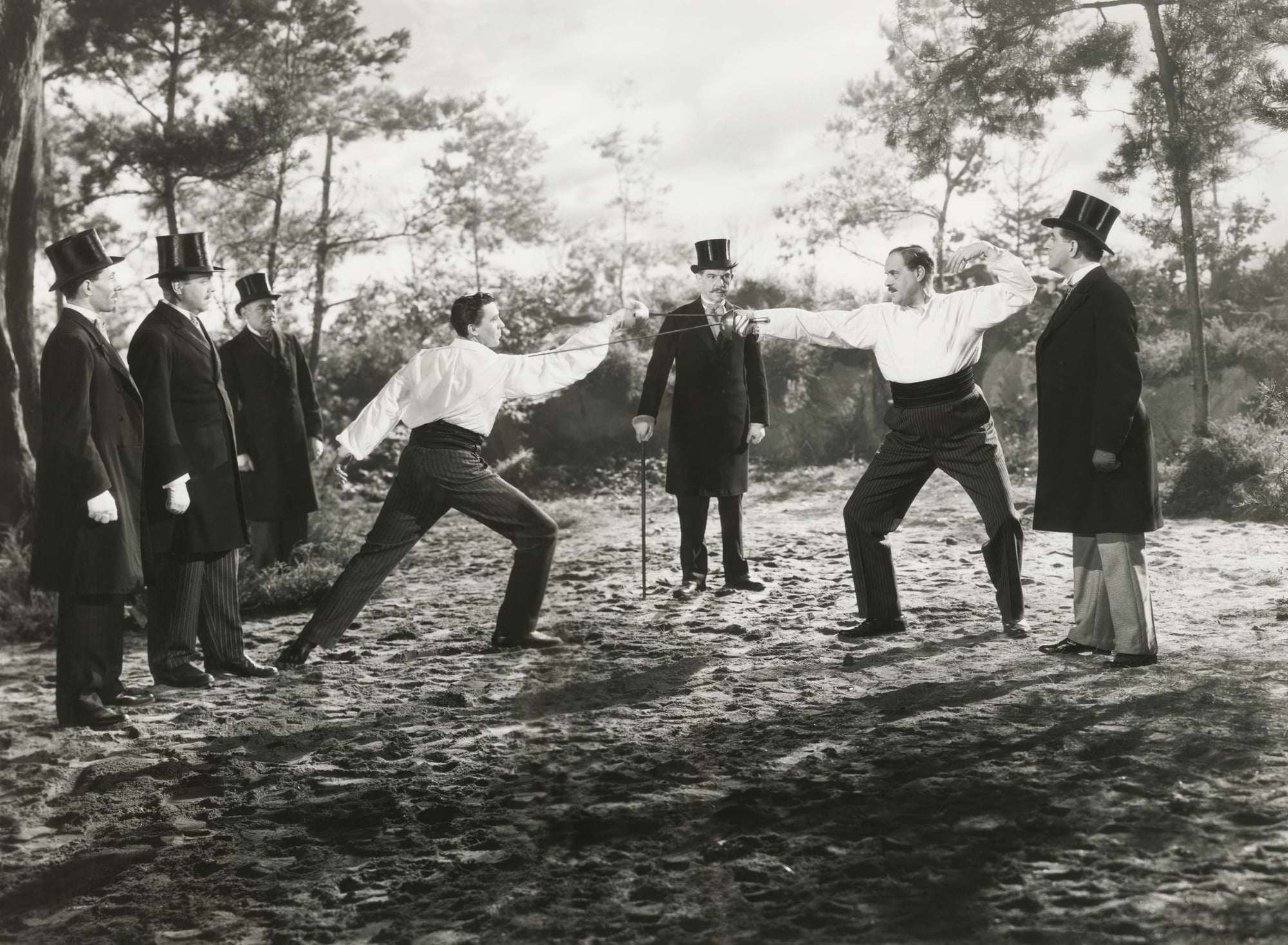
Mass warfare brings widespread death and destruction. Yet there was once a morally preferable alternative that has strangely been forgotten: single combat. “Why do you come out to draw up in battle formation? Am I not the Philistine, and you the servants of Saul? Choose a man as your representative and have him come down to me,” shouts Goliath to the Israelites, adding that the losing side would have to submit. By accepting the challenge, David avoids the immediate clash of the two armies, thereby protecting the soldiers—at least for the moment—“from the hell of war,” as philosopher Michael Walzer notes. However, single representative combat was not merely a biblical idea. Drawing on Greek, Roman, Frankish, and other historical or mythological examples, the influential just war thinker Hugo Grotius defended single combat and other forms of strictly limited fighting as the potential lesser evil to mass warfare. The rationale is simple, as the Frankish warriors put it: “Better for one to fall than the whole army.”
However, despite its apparent advantages, the idea was eventually abandoned and today tends to appear as little more than a historical curiosity. When world’s richest man Elon Musk challenged Russian President Vladimir Putin to single combat over Ukraine, some laughed, while others took it as further evidence of Musk’s madness. Yet what seems more ridiculous and insane is our willingness to accept that thousands of men kill each other instead of letting two individuals fight it out between themselves. From a moral perspective, it is clearly the current state of affairs that looks strange and deeply wrong, given its massive human toll. But also from a democratic perspective, it seems quite odd that the principle of representation that permeates modern liberal states comes to a harsh stop for those coerced into fighting their states’ wars. Even where states rely solely on volunteer armies, having masses of people fight and die on the battlefield still seems like a distortion of the representative logic that prevails in other areas. So why do we accept that as normal? Why do we accept as normal that states may settle their disputes through mass warfare rather than send some selected champions into the ring? In fact, limited representative combat would seem not only morally preferable, but also more consistent with the representative logic of modern democracy itself. That only makes these questions all the more pressing.
An answer to the above question might be that representation is not just a means to overcome practical problems. It is also a means of power and domination. Why else would the logic of representation suddenly be given up or at least heavily distorted when it comes to war? In ordinary political life, representation allows a relatively small group to exercise power over masses of people. Yet in war the principle can no longer be fully upheld, as it might require those in power and primarily responsible for their quarrels with other states to enter the battlefield and fight themselves.
In this sense, military theorist Carl von Clausewitz was right to see war as a continuation of politics by other means, whereas philosopher Michel Foucault was also right to reverse this maxim and understand politics as the continuation of war by other means. Taken together, both perspectives suggest that political life and war are characterized by the same asymmetrical power relation between the individual and the state. Just as the state treats the individual as an exploitable and manageable resource through taxation and countless laws in ordinary life, in war it often exercises the same power in its most ruthless form: by using the individual to kill and die. Thus, war merely extrapolates what is already there.
Representation helps make this relation acceptable by concealing in plain sight what might otherwise make us shiver. Yet in times of war, the underlying power structure becomes harder to hide. Then the individual who matters so little politically in ordinary life suddenly becomes indispensable.