
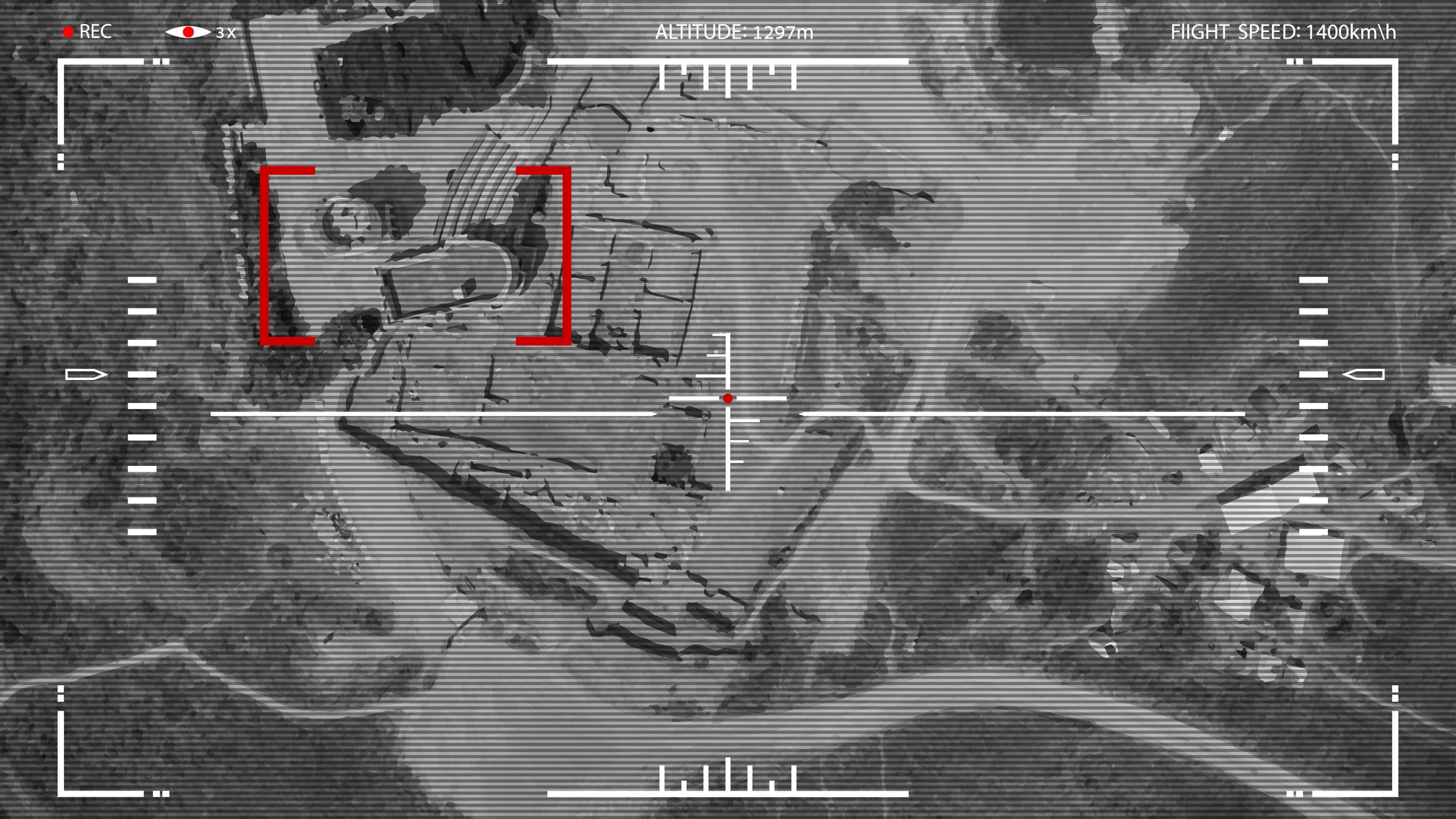
By eliminating the political cost of military casualties, drone warfare has enabled four successive American presidents to expand executive power and wage permanent, undeclared wars around the globe. The United States has carried out tens of thousands of drone and air strikes since launching its first confirmed attack outside a declared war zone in November 2002, killing an estimated 8,871 to 17,274 people across at least five countries according to independent tracking data.
Al Jazeera reported in March 2026 that since September 11, 2001, the United States has engaged in three full-scale wars and conducted air strikes in at least ten nations under four presidents. This vast apparatus of remote killing operates almost entirely outside democratic oversight, with independent monitors consistently finding civilian casualty rates far higher than official Pentagon estimates.
Any tally of strikes requires an important caveat. The government classifies most of these programs, and different datasets apply different counting rules regarding CIA versus Pentagon strikes, coalition operations, and how to verify local reports. The most authoritative datasets originate from the Bureau of Investigative Journalism, Airwars, the New America Foundation, and WarCosts.org.
The drone program cannot be separated from the broader machinery of targeted killing. Before September 11, an explicit norm against assassination had been in place since 1976, when President Gerald Ford issued Executive Order 11905 barring government employees from engaging in political assassination. Council on Foreign Relations senior fellow Micah Zenko documented that as early as September 17, 2001, President George W. Bush issued a Memorandum of Notification authorizing the CIA to kill members of Al-Qaeda on a “high-value target list” without further presidential approval. The number of kill lists within the government subsequently expanded to between four and seven.
Yet the aircraft that made this killing possible originated with one engineer’s obsession. Abraham Karem, born in Baghdad in 1937 and raised in Israel, is widely regarded as the father of the modern combat drone. He earned an aeronautical engineering degree from Israel’s Technion and built his first UAV, a glide decoy, for the Israeli Air Force during the 1973 Yom Kippur War. When Karem immigrated to the United States in 1977 he discovered existing military drones could fly for only two hours before crashing. He wanted them to fly for forty.
Working out of his garage, Karem constructed the Albatross, which by 1981 was flying for fifty-six consecutive hours, catching DARPA’s attention and earning him the nickname “DroneDaddy.” DARPA provided $40 million in funding in 1984 to advance the technology further into the Amber. After Karem’s company went bankrupt in 1990, General Atomics acquired his designs and engineers, eventually producing the MQ-1 Predator. The Predator accumulated more than one million flight hours before the U.S. Air Force retired it in 2018.
Israel was the first country in the world to deploy drones in a military operation. In 1969 the Israeli Defense Forces deployed camera-equipped toy airplanes to spy on Egyptian army positions along the Suez Canal. By 1982 Israel employed Scout drones during the First Lebanon War to identify and transmit target locations in real time. Since 1985 Israel has stood as the world’s largest exporter of drones, including sales to the United States.
The technology Israel pioneered soon found an aggressive adopter in Washington. George W. Bush authorized the first U.S. drone strike on November 3, 2002, and oversaw roughly forty-eight to sixty documented covert strikes. He established the legal and operational architecture that all subsequent presidents have expanded.
No administration became more associated with drone warfare than Barack Obama’s. The Bureau of Investigative Journalism reports that Obama launched ten times more strikes than Bush, with 563 covert strikes in Pakistan, Yemen, and Somalia alone. Obama’s first year alone produced fifty-four strikes in Pakistan compared to thirty-six total under Bush. The most controversial strike was the 2011 killing of U.S. citizen Anwar al-Awlaki in Yemen without trial or due process.
Donald Trump dramatically escalated drone operations in his first term while gutting transparency mechanisms. In 2017, Trump designated parts of Yemen and Somalia “areas of active hostilities,” removing the civilian casualty standard that had applied outside formal war zones. On March 6, 2019, he revoked Obama’s 2016 executive order requiring annual public reporting on civilian casualty data from counterterrorism strikes, calling the requirement “superfluous” and a distraction from intelligence work. Trump launched at least 161 strikes in Yemen and Somalia during his first year alone, more than triple the previous year.
Joe Biden dramatically reduced strikes, halting counterterrorism drone strikes without White House approval upon taking office and launching a broad policy review. U.S. military strikes dropped sharply during his first year compared to Trump’s last. Trump’s second term has already produced the most geographically expansive footprint of any presidency. WRAL’s PolitiFact verified that Trump conducted 573 air and drone strikes in the first year of his second term, surpassing Biden’s entire four-year total of 494.
The scale was new, but the justification was not. White House counterterrorism adviser John Brennan delivered the Obama administration’s most comprehensive public defense of drone warfare on April 30, 2012, at the Woodrow Wilson Center. Speaking in what marked the first formal acknowledgment of the CIA’s covert drone program, Brennan stated that “in order to prevent terrorist attacks on the United States and to save American lives—the United States Government conducts targeted strikes against specific al-Qa’ida terrorists, sometimes using remotely piloted aircraft.” He justified drone precision through a medical metaphor:
“…the ability, with laser-like focus, to eliminate the cancerous tumor called an al-Qa’ida terrorist while limiting damage to the tissue around it.”
The previous year, Brennan had outlined the broader doctrine:
“…our best offense won’t always be deploying large armies abroad but delivering targeted, surgical pressure to the groups that threaten us.”
The most direct critique is that drones are far less surgical than advertised. CENTCOM claims only 1,417 civilian deaths in Syria and Iraq from 2014 to 2021 while Airwars puts the figure at 8,000 to 13,000 for the same period. A landmark study determined that to kill twenty-eight targeted individuals, U.S. strikes killed an estimated 1,147 people.
CODEPINK founder and progressive activist Medea Benjamin argues that drone warfare fosters a “PlayStation mentality” because flight simulators and controls are explicitly modeled after video games. Benjamin documents the phenomenon of drone feeds from Pakistan being watched in real time at CIA headquarters, a practice reportedly nicknamed “Death TV.”
Pentagon-funded research determined that survey participants were significantly more willing to support military operations when told they involved drone strikes rather than manned aircraft or ground troops. Drones eliminated the primary political check on war and allowed conflicts to persist that would otherwise have generated backlash.
Drone warfare does not make American foreign policy right. It merely offers another venue for politicians to cause instability abroad without facing domestic consequences. The technology that promised precision has instead produced permanent war waged in shadows. The United States must return to a non-interventionist foreign policy that focuses on internal affairs rather than constantly stoking tensions across the globe. Twenty years of drone strikes have not made America safer. They have rendered war invisible and accountability impossible. The solution is not better drones but fewer interventions and other machinations against foreign nations.