
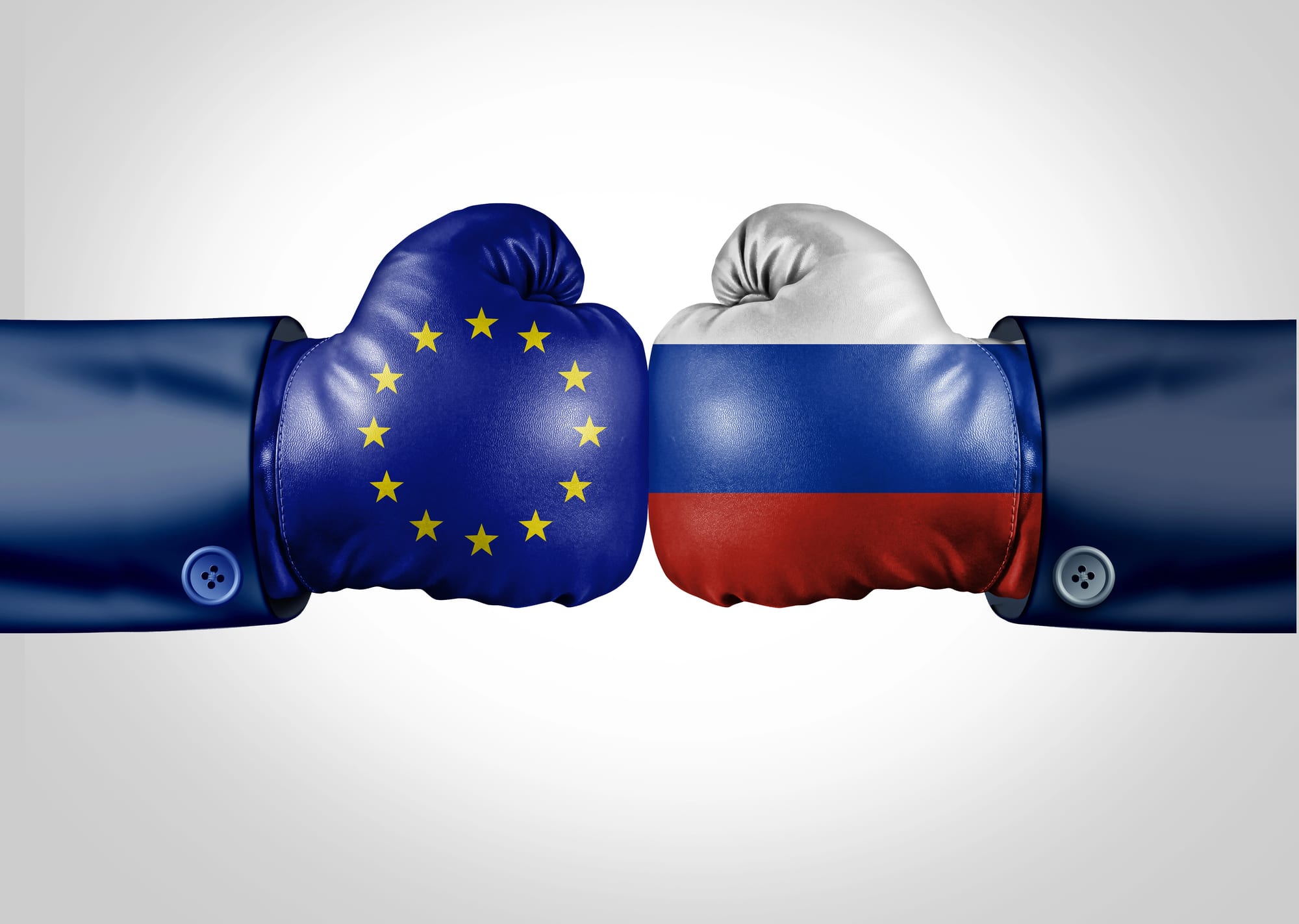
When direct negotiations between the United States, Russia, and Ukraine resumed in Abu Dhabi on November 10 and 11, European leaders were surprised to learn that, not only security guarantees for Ukraine were on the table, but a new security architecture for Europe.
They should not have been surprised. In the weeks before Russia’s February 2022 invasion of Ukraine, Moscow had clearly told them that the dangerous and broken European security architecture was a root cause of the war. While Europe went on about President Vladimir Putin’s ambition to reconstitute the Russian empire, they ignored that Russia identified the key cause of the war in the December 17, 2021 proposals on security guarantees they sent to the United States and NATO. That proposal stated that NATO had to “refrain from any further enlargement of NATO, including the accession of Ukraine” and that NATO “shall not deploy military forces and weaponry” on the territory of any country that joined NATO after the May 1997 signing of the NATO-Russia Founding Act.
That act was “based on” an “inclusive peace.” It promises that security in Europe is “indivisible,” meaning that the security of one state cannot be bought at the expense of the security of another. It also states NATO’s intention to refrain from “additional permanent stationing of substantial combat forces.”
The current European security architecture is not inclusive. It insists on the exclusion of Russia. It is based on the NATO military alliance that has expanded to Russia’s borders but excluded Russia.
The current European security architecture does not respect the indivisibility of security. NATO’s metastasizing security, especially into Ukraine, has been bought at the expense of Russia’s security.
And the current European security architecture leap frogged the prohibition on additional permanent security forces when it expanded to sixteen additional countries, including several on its borders and in its neighborhood.
Russia’s second key reason for the war was the protection of ethnic Russians in Donbas who had suffered a hammer blow to their political, religious, linguistic, and cultural rights. Moscow hoped, right up to the eve of the war, that that problem would be solved by the Minsk agreements.
Moscow said that failure to negotiate the demands of its security proposal would trigger “military-technical measures.”
When Washington told Moscow that negotiating NATO expansion into Ukraine was never even on the table, and when Ukraine refused to implement the Minsk agreements, the United States declined to pressure them to implement them, and Europe used them as a delaying tactic to arm Ukraine for war on Russia, that military-technical measure took place in the shape of the invasion of Ukraine.
For Russia, the war in Ukraine was a last resort, being fought as part of a larger struggle for a wider, inclusive security architecture. “The Ukraine settlement,” as a source in the Russian delegation said, “is just one aspect of this wide-ranging discussion and is subordinate to the main objective—the creation of a comprehensive and indivisible security architecture for the entire continent.”
So, with talks resuming in Abu Dhabi, Kremlin spokesman Dmitry Peskov explained, “It is obvious that, one way or another, the settlement in Ukraine will be linked to a new security architecture on the European continent. These are two component parts, and neither can exist without the other.”
To Europe’s dismay, the United States seemed now to agree. President Donald Trump told reporters that “There’s going to be an agreement. It’s going to be a big agreement, and it’s going to involve more than Ukraine…and I could even say it might involve all of Europe.” U.S. envoy Jared Kushner announced that discussions would include “the need for a broader European security architecture that can help establish the conditions for lasting peace.”
“Broader European security architecture” were the very words European leaders hoped they would never hear. They reacted with outraged resistance. NATO already provides a European security architecture, they insisted. The problem was that Russia broke it.
“The problem is that we already have a European security architecture in place,” European Union High Representative of Foreign Affairs and Security Policy Kaja Kallas complained, the discussions have “to be about how we make sure that Russia actually respects [their] obligations.” In his opening remarks to the meeting of the European Council the day after the Abu Dhabi talks, council president António Costa said, “There is no need to reinvent the wheel. Europe had a functioning European security architecture until it was first, gradually undermined, and ultimately destroyed by Russia’s invasion of Ukraine.”
But NATO is not a European security architecture. Russia is part of Europe, and it is not part of NATO. Its multiple requests to join NATO since the end of the Cold War were all spurned as the military alliance engulfed its neighbors but left it out in an architecture of exclusion whose foundation is conflict. It is that very feature of the architecture that Russia holds responsible for starting the war. So, to stop the war and to prevent the next one, that foundation needs to be fixed.
And, though Russia did break international agreements by invading Ukraine, it was not Russia who first broke the agreements. NATO broke the assurances of the NATO-Russia Founding Act. More importantly, the United States and NATO cracked the security architecture when they broke the promise made to Russia at the close of the Cold War that NATO would not expand east toward its borders.
Peace and security can come to Europe. But peace can come to Europe only when peace comes to Ukraine. And peace will only come to Ukraine when the wider security architecture of Europe is addressed. And, like it or not, Russia is part of Europe, so a European security architecture has to include Russia’s security concerns. And Russia’s security concerns include a rollback of NATO and, especially, a legally binding promise that it will never come to Ukraine.
So, European leaders should not be surprised to learn that Vladimir Putin “has scarcely budged on his core objectives” or that “Russia’s opening position on European security this week remained virtually unchanged from five years ago.” A paper circulated by Moscow still insists that “NATO countries must rule out the further expansion of their alliance,” especially to Ukraine, and that NATO pull its troops out of member countries that joined after 1997. Those are the promises Russia wants the West to keep and that will be integral opening positions in talks of a wider security architecture. Of course, Ukraine will also have to have its security concerns guaranteed. And Russia will also have to keep its promises.