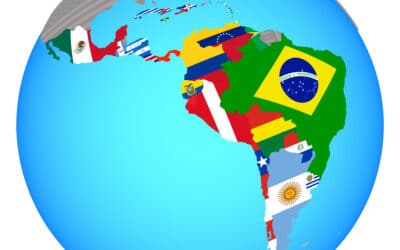
On January 3, 2026, American aircraft struck targets across Caracas while special operations teams seized Venezuelan President Nicolás Maduro and his wife, Cilia Flores, and flew both to New York on narcotics and weapons charges. President Donald Trump posted that the United States had “successfully carried out a large-scale strike against Venezuela and its leader, President Nicolas Maduro, who has been, along with his wife, captured and flown out of the Country.” He told reporters Washington would “run” the country until a transition could be arranged. Delcy Rodríguez, sworn in days later as acting president, called the raid a kidnapping and insisted Maduro remained “the only president of Venezuela.”
By the standards of American power projection, the operation succeeded. No Americans died. Venezuelan oil flows to Cuba were cut off to squeeze Havana, diplomatic relations between Venezuela and the United States have improved, and the oil sector is gradually moving toward more integration with the United States.
That is exactly the moment Washington should slow down. The International Crisis Group warned that a plan to govern remotely while sidelining the opposition risks leaving Venezuelans worse off. Scholars now debate whether Nicaragua is the next target. On July 19, 2026, Daniel Ortega answered the question himself, announcing he would make sure to prevent future elections from being corrupted by outside influence. “Here, the days of parties installed by the Yankees (United States) returning to power are over—never, never, never,” he said.
Ortega chose that taunt deliberately. The last time the United States installed a party in Managua, it stayed 21 years and left behind the family dictatorship that made his career possible.
Tensions between Nicaragua and Uncle Sam run deep. Washington’s quarrel with Nicaragua began with José Santos Zelaya, the Liberal president who took power in 1893, built railroads, expanded schools, and then negotiated with Germany and Japan over a rival canal after the United States chose Panama. When Zelaya executed two American mercenaries—Leonard Groce and Lee Roy Cannon, who were caught laying mines in the San Juan River to sink government troop transports in a revolt backed by American business interests— Secretary of State Philander Knox seized the pretext. Knox broke relations and called Zelaya’s rule “a blot upon the history of Nicaragua and a discouragement to a group of republics whose aspirations need only the opportunity of free and honest government.” Zelaya resigned weeks later.
Dollar Diplomacy followed. The New York houses Brown Brothers and J. and W. Seligman lent Nicaragua $1.5 million in 1911 against customs receipts collected by an American appointee, chartered a national bank under Connecticut law, and took the Pacific Railway. The Bryan-Chamorro Treaty of 1914 handed the United States perpetual canal rights, a lease on the Corn Islands, and an option on a naval base in the Gulf of Fonseca. When Costa Rica and El Salvador won rulings against the treaty at the Central American Court of Justice, Washington ignored the court, and the court dissolved in 1918.
The U.S. Marines landed in force in August 1912 to protect President Adolfo Díaz, the mining company bookkeeper who had served as treasurer of the revolt against Zelaya. In October they stormed Coyotepe and Barranca— two hills above the strategic railroad line at Masaya—on October 3-4, 1912. General Benjamín Zeledón, the last Liberal commander still in the field, was killed in the fighting, and his body was carried by oxcart past Niquinohomo, where a 17-year-old named Augusto César Sandino watched it pass—a scene that every Sandinista history marks as the moment of his radicalization. A legation guard stayed until August 1925.
That guard left in August 1925. Within months Emiliano Chamorro seized power, civil war resumed, and the Marines returned in late 1926. President Calvin Coolidge told Congress in January 1927 that Mexican arms and Bolshevik ambition drove the fighting. He sent mediator Henry Stimson, who met Liberal General José María Moncada at Tipitapa on May 4, 1927—producing a settlement keeping Díaz in office until supervised 1928 elections, disarming both armies under the Marines, guaranteeing the Liberals control of six departments, and creating a nonpartisan Guardia Nacional to be trained and commanded by American officers. Every Liberal general signed but one man refused the deal.
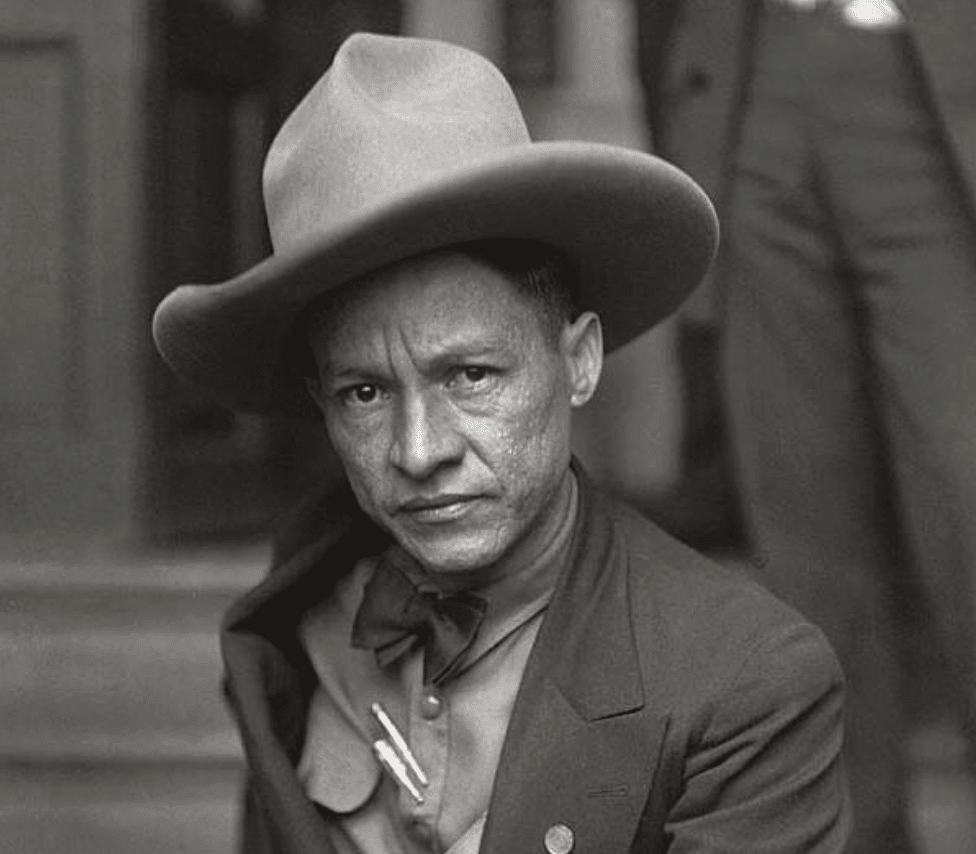
Sandino took a small band of supporters into the Segovias, seized dynamite from the American-owned San Albino mine, and issued his manifesto on July 1, 1927—a stirring nationalist document calling for the unification of Nicaraguans, Central Americans, and “the Indo-Hispanic race” in collective struggle against Yankee imperialism. On July 16 he attacked the garrison at Ocotal, where Major Ross Rowell answered with five De Havilland biplanes in what the Marine Corps records as its first organized dive bombing attack. Sandino learned fast. He stopped assaulting fixed positions and, as biographer Neill Macaulay put it, attacked only when the odds heavily favored him.
The Marines never caught him. They bombed his mountain camp at El Chipote for weeks, stormed it in January 1928, and found straw dummies. They destroyed peasant food stores in a subsistence farming region, including forty-five tons of corn in one 1928 operation. The Guardia shot prisoners under the fiction of escape. American diplomats dismissed Sandino as “an erratic Nicaraguan about 30 years of age with wild Communist ideas acquired largely in Mexico.”
Then the war came home. Senators Burton Wheeler (D-MT) and William Borah (R-ID) attacked what critics called Coolidge’s private war. On January 5, 1931, the U.S. Senate passed a resolution demanding full information on the intervention. Stimson, by then serving Herbert Hoover as Secretary of State, announced on February 13, 1931 that every Marine would leave after the 1932 elections, cutting the force from roughly 1,500 to 500 by June. He wrote privately that the goal was handing over the Guardia entirely, because “the United States Government must not be drawn into the position of policing Nicaragua indefinitely.” The Depression sealed it. On January 2, 1933, the State Department declared, “Today the United States marines leave Nicaragua. No American armed forces will remain in that country, either as instructors in the constabulary, as a Legation Guard, or in any other capacity whatsoever.”
Six years of fighting cost 136 Marine lives and produced nothing except the instrument of what came next. Anastasio Somoza García commanded the Guardia. On February 21, 1934, after Sandino dined with President Juan Bautista Sacasa, Guardia officers seized the general, drove him to the Managua airfield, and shot him. They then destroyed his farming cooperative at Wiwilí. Somoza forced Sacasa out in 1936 and founded a dynasty that ruled Nicaragua for 43 years, until the Sandinista revolution of 1979.
The blowback took a generation. Carlos Fonseca, Silvio Mayorga, and Tomás Borge founded the Sandinista Front in 1961, claimed Sandino’s name, and on July 19, 1979 toppled Anastasio Somoza Debayle—the third and last member of the dynasty. Washington answered by funding the Contras rebels. Congress answered Washington with the Boland Amendments, and the committees investigating Iran-Contra later recorded that, “Although the President continued to favor support of the contras, opinion polls indicated that a majority of the public was not supportive.” The war ended at the ballot box in February 1990, not on any battlefield, when Violeta Chamorro defeated Daniel Ortega.
Here sits the irony. Daniel Ortega, the Sandinista Washington spent a decade and a constitutional scandal trying to remove, returned to office in January 2007 and has held it since, with his wife Rosario Murillo serving as vice president since January 2017 and exercising co-equal power. American intervention built the Guardia that murdered Sandino and installed the dynasty his heirs overthrew, and American counterrevolution failed to stop the man who now rules the country without any meaningful opposition.
Nicaragua is one case, but the lesson runs through every intervention like it. Washington keeps mistaking the easy first move for the whole game. A raid takes hours. A protectorate takes decades and ends with somebody else’s colonel holding the rifle. A humble foreign policy that defends American territory, borders, and commerce without underwriting foreign governments is not a sign of weakness. It is the only approach that has ever kept this country out of wars it did not need and could not win.