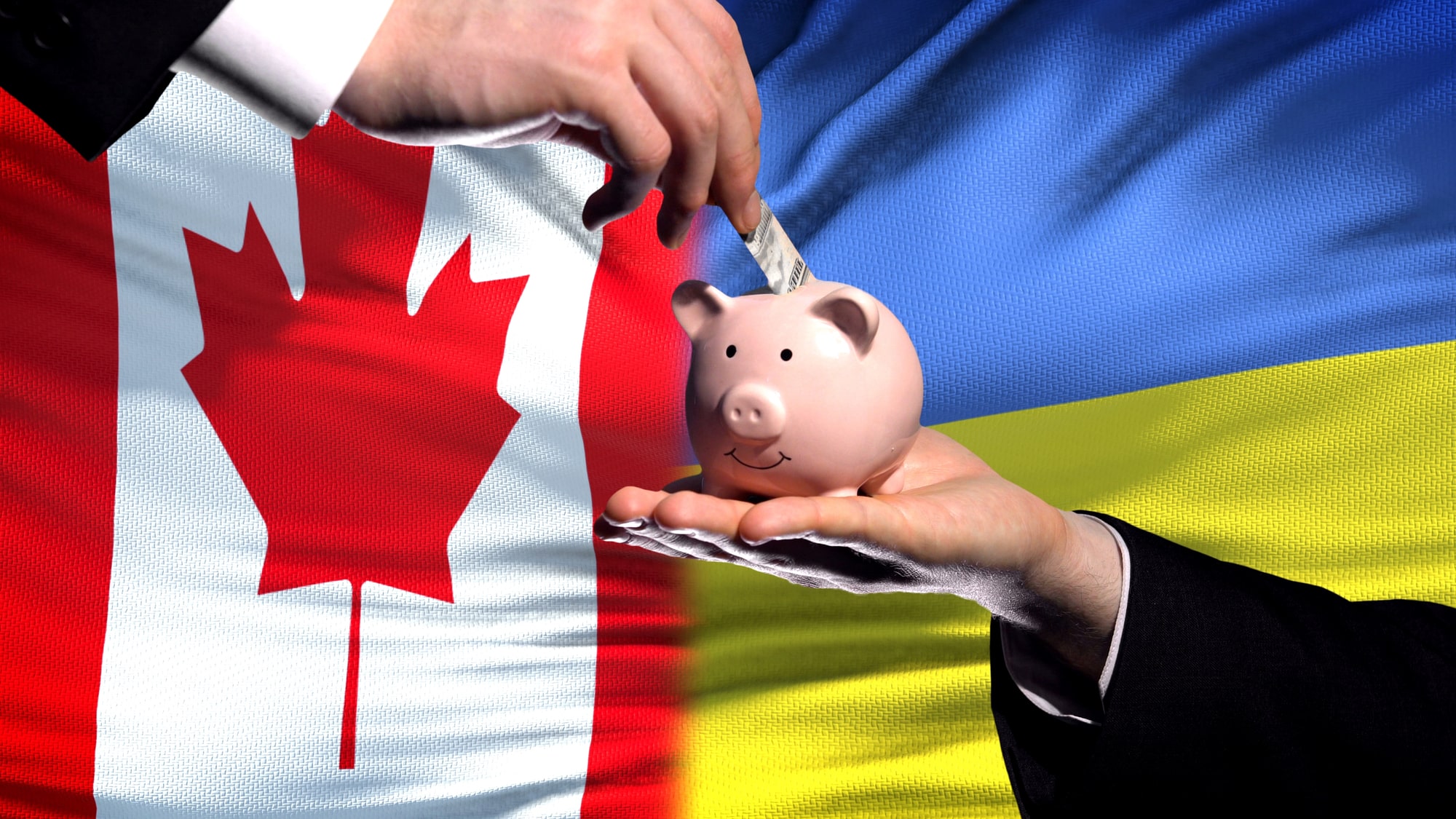
On September 10, Ukrainian President Volodymyr Zelensky landed in Canada where he and Canadian Prime Minister Mark Carney signed a 100-year partnership “elevat[ing] the relationship between their countries into a Comprehensive Strategic Partnership and confirming their aligned nature.”
Canada already has a special relationship with Ukraine. Before the war, Canada had the largest Ukrainian community in the Ukrainian diaspora with 1,209,805 Ukrainian-Canadians. Canada is the fifth largest financial contributor to Ukraine after only the United States, the European Union, Germany, and the United Kingdom with over $16 billion in military, financial and humanitarian aid.
Carney said that “Canada will always stand in solidarity with Ukraine” and that “there is no qualification to our commitment.” There is little wrong with that: Ukraine was invaded by Russia and taken advantage of by the West.
But there are two problems with the Comprehensive Strategic Partnership. The first is practical.
Since Russia invaded Ukraine in 2022, Canada has contributed $8.5 billion in military support to Ukraine. The Comprehensive Partnership includes a joint declaration on defense and security co-operation. During the official visit, Carney announced new investments to support Ukraine’s defense, including $350 million for interceptor missiles for air defence.
The practical problem is that Ukraine is black hole into which money intended for defense disappears. This is a problem well known to Ukraine’s partners who, nonetheless, keep pouring money in with a blind eye to the problem. Earlier this month, following close on the heels of a U.S. $100 billion European Union loan to Ukraine, Kiev surprised the European Union with a request for an additional $27 billion to address a shortfall that was difficult to explain. The request “unsettled” European officials, some of whom privately worried “whether money is being spent efficiently or whether needs are being overstated.”
A recent New York Times investigation found that seven of Ukraine’s ten top military contractors continued to be awarded contracts after Kiev knew they were facing investigations for fraud, corruption, or failure to deliver on deals they were paid for. Eighteen companies won contracts despite defaulting on previous ones. Millions were thrown away by inexplicably, and conveniently, awarding contracts to the highest bidder. Government audits show that in one year of the war alone, Ukraine lost $1.2 billion in U.S. foreign aid to “fraud, waste and mismanagement.” Sending hundreds of millions more to Ukraine sounds great. But to whom will it go?
There is a second problem with the 100-year Comprehensive Partnership that is deeper. Carney said the Strategic Partnership is based on the two countries “aligned nature.” But there are important aspects that do not align.
Canada is a federalist country that officially recognizes more than one culture and language. The Carney administration recently walked away from negotiating a trade agreement with the United States partly in defense of its sovereign right to protect French culture, French language, and its official bilingualism. Ukraine has been locked in a civil war since 2014 to protect the opposite: a monist vision of Ukrainian society that rejects federalism and recognizes only one culture as Ukrainian while suppressing the language, culture, and religion of ethnic Russian citizens of Ukraine in Crimea, the Donbas, and the southeast. It specifically denies the pluralist alternative that is a defining feature of Canadian identity. Rather than aligning in their natures, in this essential aspect, the two countries are the antithesis of each other.
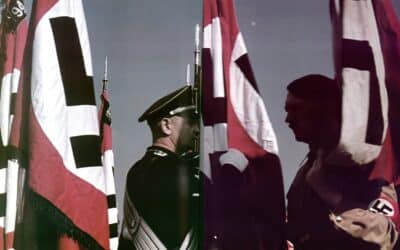
Canada has confronted this blind spot before. In 2023, Yaroslav Hunka received two standing ovations in Canada’s Parliament as “a Ukrainian Canadian war veteran from the Second World War who fought for Ukrainian independence against the Russians” and as “a Ukrainian hero and a Canadian hero,” despite having served in the 14th Waffen Grenadier Division of Adolf Hitler’s SS.
Carney insisted that “Canadians understand in our bones the importance of your struggle” and explained that the reason “there is no qualification to our commitment” to Ukraine is “because your cause—freedom, democracy, sovereignty—is our cause.”
It may be “our cause,” but the historical record is less clear that it is their cause. Zelensky has formally banned eleven opposition parties, including the Opposition Platform for Life party that was once the second largest party in the Ukrainian parliament, though they all condemned Russia’s invasion and contributed to Russia’s defence.
He has restricted freedom of information, unifying all television sources into a single source of television news, and increased the censorship powers of the state over print and online media.
The Ukrainian Orthodox Church, Ukraine’s largest denomination, has been banned by Zelensky though Ukraine’s constitution protects freedom of religion, the church ended all canonical ties with the Russian Orthodox Church in May 2022, and the Primate of the UOC expressed the church’s loyalty to Ukraine and condemnation of Russia’s invassion.
Cultural and linguistic rights for minorities have fared no better than political and religious rights and freedom of expression. Pursuing the monist interpretation of Ukraine, Zelensky has gone down a path of abolishing any hint of Russian culture. Legislation has erased the Russian language, making Ukrainian the sole language of government, schools, universities, culture, publishing and media.
It is fine for Canada to “stand in solidarity with Ukraine.” But we should not be blind to Ukraine’s struggles and challenges. If Ukraine is to avoid civil war after the war with Russia and if Ukraine is to have a chance of joining the European Union and orienting toward the west, they, too, are going to have to confront these challenges.