
U.S. President Donald Trump sat beside Finnish President Alexander Stubb in the Oval Office on October 9, 2025, and turned a meeting about icebreakers into a lecture about Spain. “You people are gonna have to start speaking to Spain,” Trump said. “You have to call them and find why are they a laggard.” He then added, “They have no excuse not to do this, but that’s alright. Maybe you should throw ’em out of NATO frankly.”
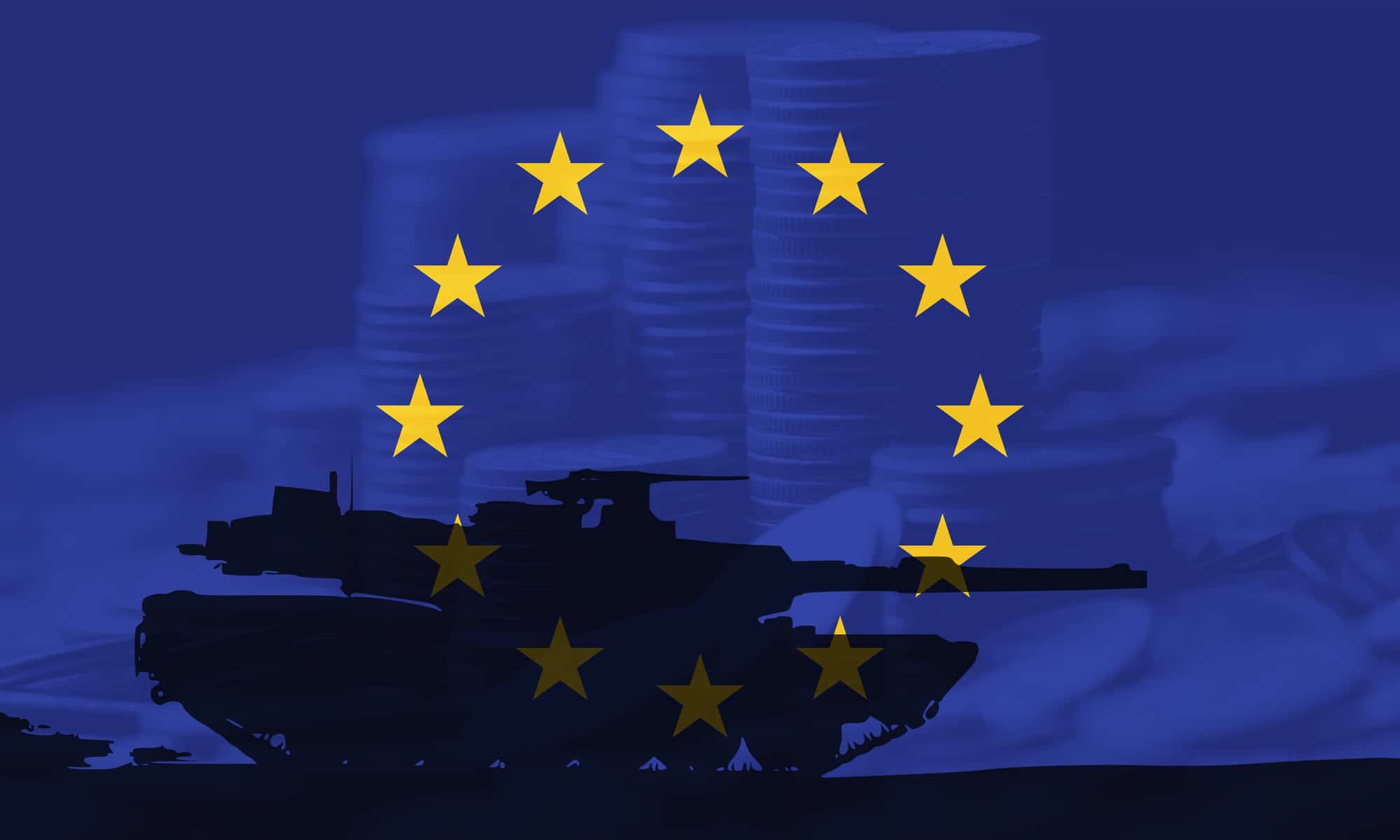
Spain committed the unforgivable sin of saying no. At the June 2025 summit in the Hague, every other ally agreed to raise defense and security spending toward 5% of GDP by 2035, the figure Trump had demanded for months. Trump took a victory lap at his closing press conference. “This will be known as the Hague Defense Commitment,” he declared, adding that “it’s a monumental win for the United States, because we were carrying much more than our fair share. Was quite unfair, actually.”
Defense Secretary Pete Hegseth laid the groundwork months earlier at NATO headquarters in Brussels. “2% is a start, as President Trump has said, but it’s not enough. Nor is 3%, nor is 4%, more like 5%. Real investment, real urgency,” Hegseth told reporters. VOA’s Carla Babb captured his follow up. “We can talk all we want about values. Values are important, but you can’t shoot values, you can’t shoot flags, and you can’t shoot strong speeches. There is no replacement for hard power.” By June 2026, Hegseth told Italian Defense Minister Guido Crosetto at the Pentagon that the 5% figure now sets a global benchmark for American allies everywhere, according to a Pentagon account.
None of this has occurred in a vacuum. Washington’s political class has hectored Europe about defense budgets for more than three decades, no matter which party held the White House. President George W. Bush traveled to Bucharest in April 2008 and, as CNBC later recounted, told his audience, “At this summit, I will encourage our European partners to increase their defense investments to support both NATO and EU operations.” He continued, “America believes if Europeans invest in their own defense, they will also be stronger and more capable when we deploy together.” On the same trip, Bush urged NATO to put Georgia and Ukraine on the path to membership, VOA’s Paula Wolfson reported, despite German and French reservations and fierce Russian objections.
Three years later, Defense Secretary Robert Gates used his farewell policy speech in Brussels to warn of “a dim, if not dismal future for the transatlantic alliance.” He predicted “dwindling appetite and patience in the U.S. Congress, and in the American body politic writ large, to expend increasingly precious funds on behalf of nations that are apparently unwilling to devote the necessary resources.” Some allies bristled, while Britain eagerly agreed. Gates delivered that sermon as NATO bombed Libya, an intervention that shattered the country and pushed waves of migrants across the Mediterranean toward Europe.
President Barack Obama turned up the pressure after Russia annexed Crimea. At the September 2014 Wales summit, allies pledged to move toward 2% of GDP within a decade. “All 28 NATO nations have pledged to increase their investments in defense and to move toward investing 2% of their GDP in our collective security,” Obama told reporters. “And this commitment makes clear that NATO will not be complacent. Our Alliance will reverse the decline in defense spending and rise to meet the challenges that we face in the 21st century.” In 2016, he told The Atlantic’s Jeffrey Goldberg, “Free riders aggravate me,” and revealed that he had warned British Prime Minister David Cameron that Britain would lose its “special relationship” with Washington unless it hit 2%. “You have to pay your fair share,” Obama told Cameron.
Trump simply stripped away the diplomatic varnish. Standing before allied leaders at NATO’s new headquarters in May 2017, he declared that “NATO members must finally contribute their fair share and meet their financial obligations, for 23 of the 28 member nations are still not paying what they should be paying and what they’re supposed to be paying for their defense.” At a February 2024 rally in Conway, South Carolina, he went further, recounting a conversation with an unnamed ally, as AP’s Jill Colvin reported. “‘You didn’t pay? You’re delinquent?'” Trump recalled asking. “‘No I would not protect you. In fact, I would encourage them to do whatever the hell they want. You gotta pay. You gotta pay your bills.'” NPR’s Steve Inskeep noted that NATO members owe each other no bills and that no evidence shows the exchange ever happened.
The tone shifts from one administration to the next. The premise never does. Every president treats European defense budgets as figures for Washington to set, audit, and enforce. That premise collapses on its own terms. Europe’s security belongs to Europeans. The continent commands an economy many times larger than Russia’s and fields two nuclear powers of its own. If Poland wants to pour 5% of its GDP into its army, Warsaw should make that call. If Spain values its welfare state more, Madrid should make that call. Spanish Prime Minister Pedro Sánchez put it plainly in a letter to NATO Secretary General Mark Rutte, as The Hill recounted:
“It is the legitimate right of every government to decide whether or not they are willing to make those sacrifices. As a sovereign Ally, we choose not to.”
As this author as previously reported, Sánchez recognizes that Spain has natural barriers that shape its unique perspective on national defense. Sánchez invoked the Pyrenees, the mountain range separating Spain from France, to make his case that Russia does not pose any form of threat to it. In March 2025, he insisted that “our threat is not Russia bringing its troops across the Pyrenees.” He went on to contend that “defense in the east of Europe has nothing to do with the security challenges we have in Spain,” adding that “we are not going to have a physical attack from Russia like some of the Baltic or Nordic countries, such as Finland, might have.”
Europeans can only exercise that right in full once the United States leaves the alliance. As long as Washington sits at the head of the table, NATO serves as a vehicle for schemes hatched in the Pentagon, in think tanks, and among the oligarchs and defense contractors who profit from every new benchmark. Trump himself told the Hague that he hoped the new money would buy hardware “made in America,” as TIME reported.
Non-interventionist critics have long argued that the Bucharest promise to Ukraine and Georgia helped set the stage for the wars that followed. All told, Europe, not America, absorbs the consequences of these adventures, from energy shocks to refugee flows to the prospect of combat on its own soil. European soldiers become cannon fodder for designs drafted in Washington.
Washington should stop mailing invoices and start packing. An American exit would force Europe to own its defense on its own terms, at whatever level its voters choose, and would free Americans from guaranteeing borders thousands of miles away. Three decades of scolding has produced only bigger targets and deeper entanglements. The sensible path forward means exiting NATO altogether.