Death, taxes, and politicians being a massive disappointment—the constants in life.
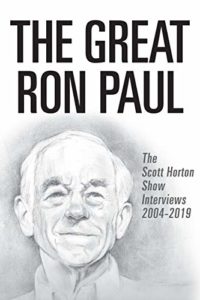
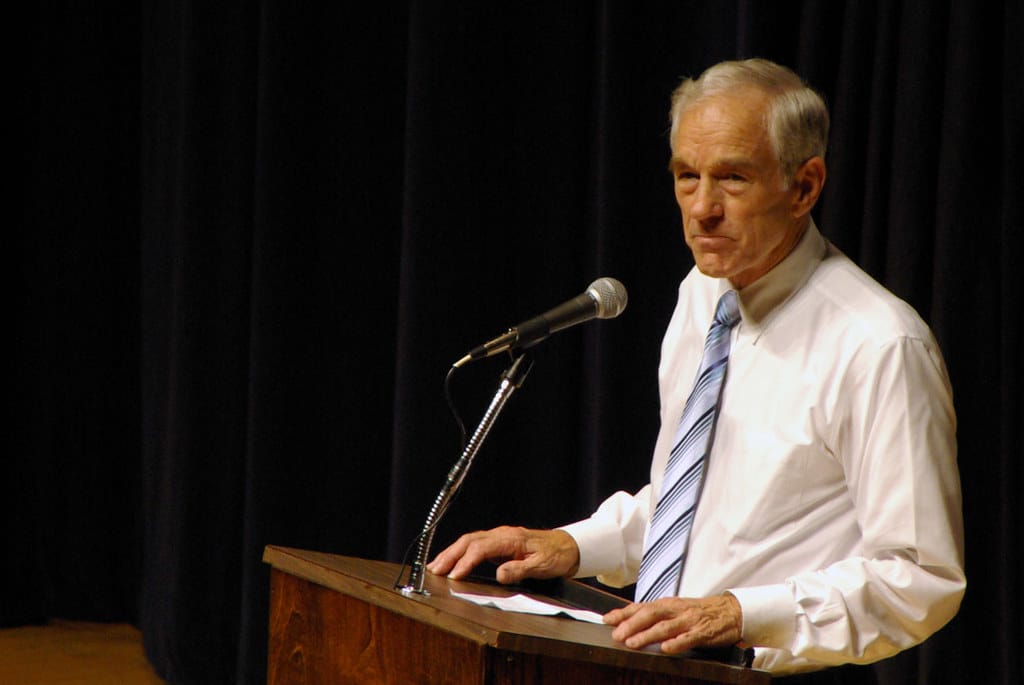
I would add one more item to that list: Ron Paul being consistent.
As Europe and Latin America faced revolutionary moments throughout the 2000s, it was Dr. Paul who remained a constant voice against U.S. intervention and engagement in foreign countries.
With Slovakia seen as one of the first cases to feature tactics later associated with the “color revolutions,” as a member of Congress, Paul provided commentary on the methods used. He summarized, “In Slovakia, NED [National Endowment for Democracy] funded several initiatives aimed at defeating the freely-elected government of Prime Minister Vladimir Meciar.”
Paul also noted how “IRI polls changed the nature of the campaign” and asked simply: “Is this democracy?”
The years to come provided only further instability in Europe, while Rep. Paul remained firm in his stances on the home front.
Starting in 1999, Ron Paul was already declaring U.S. involvement in Serbia illegitimate before the Bulldozer Revolution ever took place, calling NATO’s war “immoral” and “illegal.” Most importantly, he also declared regarding engagement in Kosovo, “If the President pursues an undeclared war and we fund it, we become partners.”
After intervention in Venezuela, Dr. Paul was similarly direct in his criticism of overt U.S. involvement, scrutiny of which—including CIA knowledge of the “coup plot” and support from NED programs—Paul provided pointed commentary.
Among his most notable statements was that the quasi-government organization NED injects “soft money” into the domestic elections of foreign countries “in favor of one party or the other.”
Paul’s philosophy on interactions with other countries was best summarized by his introduction of the Belarus Freedom Act of 2004. Through this act, Paul argued for “peaceful trade and good relations with other countries.”
Introduced two and a half years before the Jeans Revolution of 2006, the contrast with other members of Congress was stark. This included Senator John McCain (R-AZ) who provided a speech at a conference entitled “Axis of Evil: Belarus—the Missing Link,” and co-sponsored the Belarus Democracy Act of 2004.
A marked departure from Paul’s legislation, the Belarus Democracy Act called for American assistance for democratic political parties, NGOs, independent media, election observation, and professional training for members of Belarus’s “democratic forces,” while also calling for financial pressure against Alexander Lukashenko’s government.
By February 2004, Paul was stated that, “Our goal in international affairs ought to be to promote liberty…through persuasion and example, and never by force of arms, clandestine changes, or preemptive war.”
As Ukraine’s Orange Revolution unfolded, Paul provided testimony regarding U.S. funding through the United States Agency for International Development (USAID) and the Poland-America-Ukraine Cooperation Initiative (PAUCI), administered by Freedom House, to Ukrainian organizations he argued were “blatantly in favor” of presidential candidate Viktor Yushchenko.
Paul also pointed to the Ukrainian NGO International Centre for Policy Studies, which received funding through the USAID-backed PAUCI program and had been established in 1994 at the initiative of George Soros’s Open Society Institute. Yushchenko was among the members of its advisory board, while Paul noted that its English-language homepage displayed an orange ribbon.
At the same time, ICPS provided its own opinions on the election. Its website openly disputed the official results of the presidential runoff in addition to listing ongoing projects—one of which included “transferring Slovak economic reform know-how during pre-election and post-election debates in Ukraine.”
Paul stated that the Western Ukraine Regional Training Center displayed both a USAID logo and an orange ribbon on its homepage.
As demonstrators arrived for a massive demonstration in Lebanon on March 14, 2005, following the assassination of Prime Minister Rafic Hariri, Paul took to the floor of the U.S. House two days later and provided one of his best lines regarding U.S. influence in foreign affairs:
“…we never saw a sign that said, America, come save us.”
As speculation continued over who was responsible for Hariri’s assassination, Paul remained cautious:
“…we don’t really know who killed Mr. Hariri.”
When a House resolution was passed calling for “full support for the sovereignty of Lebanon and its democracy, as well as for the government of Fouad Siniora and the Cedar Revolution,” the vote was 415–2. The two dissenters were Reps. Dennis Kucinich (D-OH) and Ron Paul (R-TX).
This is not to say that Paul was unsympathetic to democratic movements themselves. Once Burma’s Saffron Revolution was underway, he noted that “Peaceful non-violent revolutions against tyranny have been every bit as successful as those involving military confrontation.”
He would further lay out his reasoning when a resolution was introduced, declaring, “I rise in opposition to this legislation not because I do not sympathize with the plight of the oppressed people of Burma,” while warning that language calling on the United Nations Security Council to “take appropriate action” could open the door to outside military intervention.
At the end of the decade, as Iran’s Green Movement had begun, another House resolution was introduced, this one supporting Iranian citizens embracing “freedom, human rights, civil liberties, and rule of law.”
The end result was a 405–1 vote, with Dr. Paul the lone dissenter. He reiterated that, “I have always questioned our constitutional authority to sit in judgment of the actions of foreign governments of which we are not representatives.”
As long as he served in Congress, Dr. Ron Paul remained one constant in an otherwise unpredictable institution.
The “color revolutions” were no different. Paul remained consistent—supporting those who truly wanted change in their own countries, while opposing attempts by the U.S. government to influence what that change should look like.