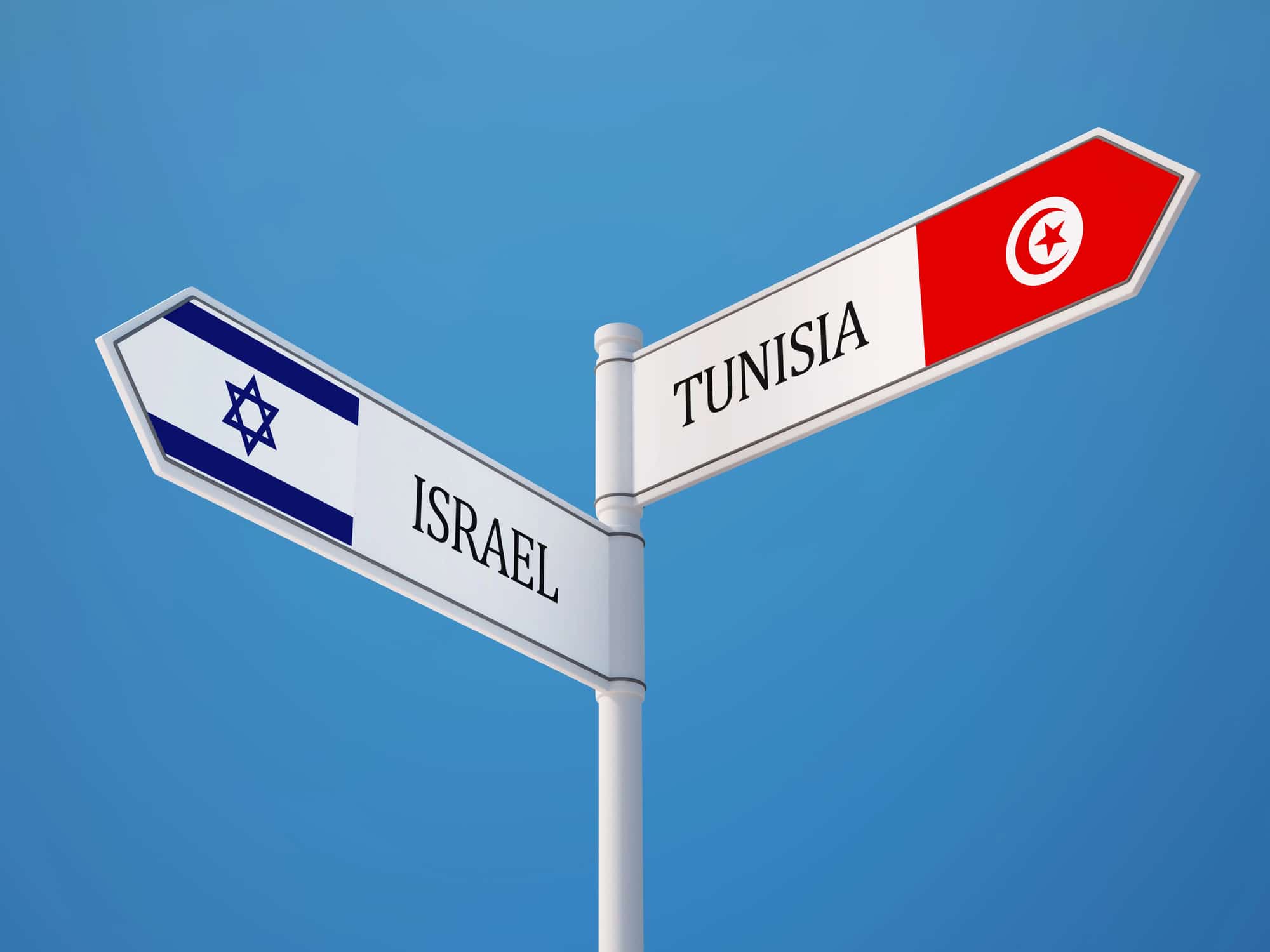
Imagine Congress debating a bill to integrate Tunisia into the National Technology and Industrial Base (NTIB). Shared military supply chains, joint research, and development, linked battlefield data, and a U.S. executive agent coordinating defense-technology cooperation between Washington with Tunis. Presented plainly, the proposal forces the reaction before the argument even begins.
The instinctive question: Why Tunisia? Arrives uninvited.
Yet that is precisely what Congress has already begun to normalize. As early as 2025, lawmakers advanced a bill to assess the feasibility of adding Israel into the NTIB, pushing the framework far beyond its original purpose of integrating the industrial bases of the United States, Canada, the United Kingdom, and Australia. That alone represented a structural leap: a move from a harmonized, treaty-bound industrial ecosystem to a bespoke political exception.
The push has accelerated. Buried in the National Defense Authorization Act (NDAA) for 2027 is the U.S.-Israel Artificial Intelligence and Defense Integration Act, a bill that would tie the two militaries together in an unprecedented way by mandating joint AI development, shared targeting systems, integrated command-and-control algorithms, and cooperative battlefield automation.
It is a deep technological fusion that the United States has never attempted with any foreign state, not even its closest treaty allies. If the NTIB proposal stretches the framework, the new changes tear through it entirely.
If the framework sounds routine in one case and absurd in the other, the issue is not the mechanics of the policy. The issue is the assumptions surrounding it.
Tunisia is not Israel, and this is not an argument that the two countries are identical. But Tunisia, for this argument, is close enough to make the comparison useful. Both are relatively small states in strategically volatile regions, both are U.S. partners, and both exist in regions where conflict, instability, and power competition shape policy choices. Tunisia’s population of roughly 12.1 million and Israel’s 9.8 million place both firmly in the band of small states whose strategic position comes from geography and alignment rather than size.
The purpose of a reductio ad absurdum is not to claim two things are literally the same. It is to test whether a policy principle holds when the familiar labels are removed.
If Congress proposed this arrangement for Tunisia, most observers would immediately ask the obvious questions: Why Tunisia, what does the U.S. gain? Why should American defense become so tightly linked to a foreign state? What happens if that state becomes involved in a regional crisis?
Those are the questions any serious policy deserves. They would surface immediately because nothing in the U.S.-Tunisia relationship has ever implied this level of integration. Tunisia receives roughly $85-100 million in annual U.S. assistance. A modest figure compared to Israel’s $3.8 billion in annual Foreign Military Financing under the 2016 Mmemorandum of Understanding (MOU). Tunisia is designated a Major Non-NATO Ally, but so are nineteen other countries.
What Tunisia doesn’t have is the designator of “Special Ally” that supporters of Israel have never been able to solidly define. That designation is doing enormous emotional work here. The entire case for unprecedented integration rests on a relationship that has never been forced to justify itself at this scale.
This is where the comparison reveals something deeper: neither Tunisia nor Israel meets the actual statutory criteria for NTIB membership. The NTIB was created in 10 U.S.C. § 4801 to integrate the defense industrial bases of the United States, Canada, the United Kingdom, and Australia–states with whom the United States shares harmonized export controls, reciprocal defense procurement, intelligence-sharing frameworks, and common legal standards for technology protection.
Neither Tunisia nor Israel participates in the Defense Production Sharing Agreement system. Neither is part of the export-control harmonization regime. Neither has reciprocal procurement statutes with the United States. And neither operates under the industrial-security frameworks that the NTIB presumes as prerequisites rather than negotiable add-ons.
The NTIB debate is no longer the endpoint. Section 224 of the 2027 NDAA goes far beyond industrial integration. It proposes joint AI-enabled targeting, shared command-and-control algorithms, and cooperative battlefield automation. The operational fusion that would effectively bind U.S. military decision-making to a foreign state’s strategic choices.
This raises a constitutional question that deserves a direct answer: If the software recommending lethal strikes is developed with another nation, who controls American use of force? When the algorithm that recommends a strike is jointly owned, the sovereignty over that decision is no longer fully American. That is entanglement of the kind the republic was designed to avoid.
If the proposed level of defense integration makes little sense for Tunisia and cannot be defended in neutral terms. Then the policy is not being driven by a clear standard and should not work for Israel. Defense integration at this level should rest on publicly defensible criteria.
The Tunisia test is simple: if the policy is sound, it should remain sound when the country name changes. If it does not, then the problem was never the logic.