
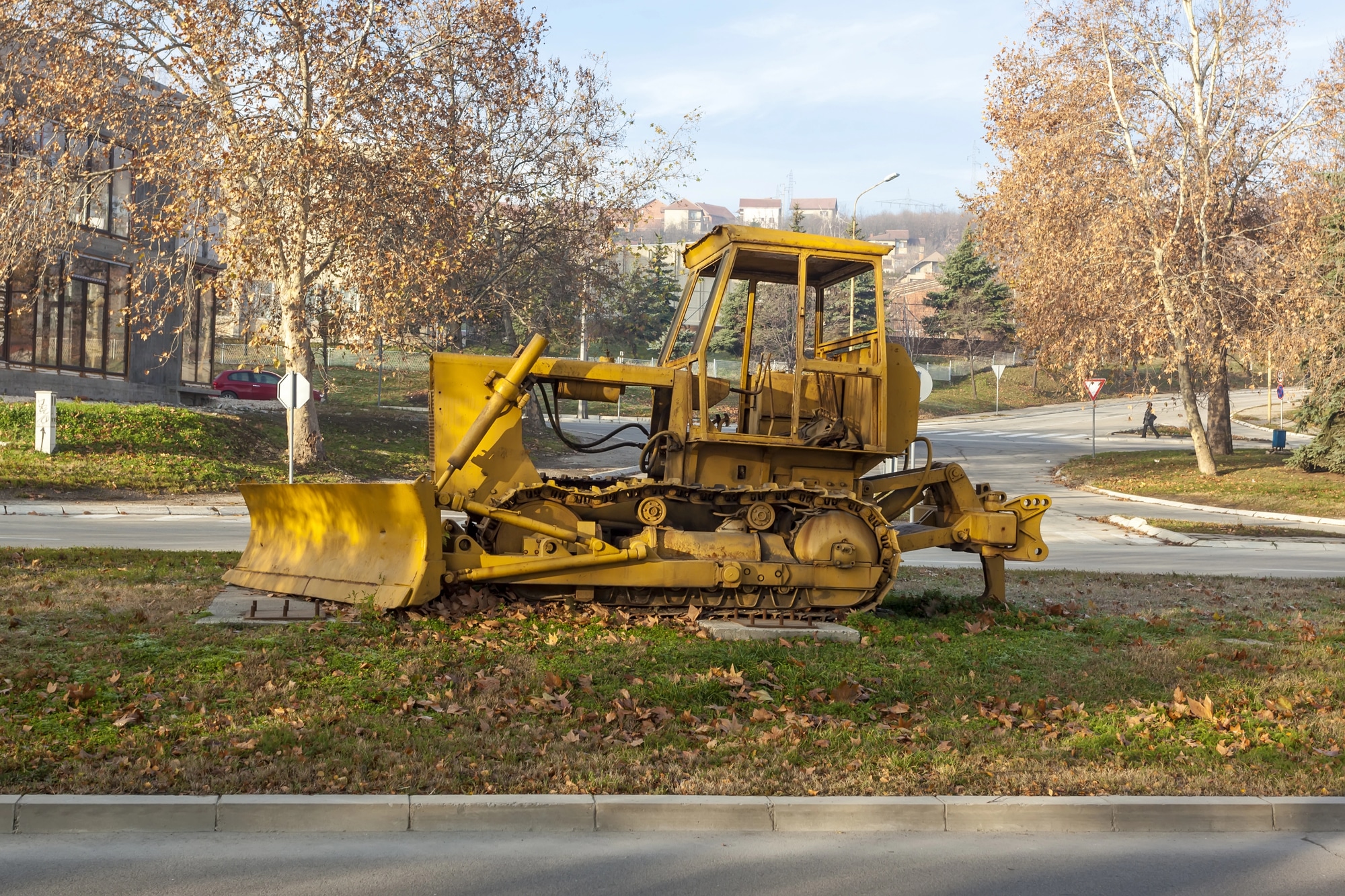
Serbia’s 2000 Bulldozer Revolution, which culminated in the overthrow of Slobodan Milošević, in many ways set the standard for what we now refer to as the “color revolutions.” It is only fitting that, 26 years later, the country is once again experiencing revolutionary fervor during an election season.
The current unrest in Serbia goes back to November 2024, when a canopy collapsed at the Novi Sad railway station, leading to sixteen deaths and sparking widespread calls for accountability.
Over the next two years, a student-led movement known as Students in Blockade (Studenti u blokadi) has spread throughout Serbia, with a focus on decentralized organization, visuals, humor, and large-scale demonstrations.
The similarities to Serbia’s 2000 movement were hard to miss.
Protesters themselves even fed into these comparisons. In Čačak—an important city during the overthrow of Slobodan Milošević—demonstrators displayed a cardboard bulldozer and declared that “Čačak has risen.”
The similarities have also been noticed by those involved in the original movement. Former Otpor activist Srđa Popović has praised the students’ “leaderless by design” organization, while highlighting their use of visuals and performances.
For Serbia’s fifth President Aleksander Vučić and his supporters, however, those similarities are viewed with a more skeptical eye. The Serbian president has accused demonstrators of being foreign agents and “terrorists” seeking to destroy the country.
Russia has made similar claims. The Kremlin has claimed the protests represent an attempted “color revolution,” while Russia’s Foreign Intelligence Service has accused the European Union of attempting to organize a “Serbian Maidan.”
Suspicions of foreign involvement were further fueled when Serbian authorities detained and expelled thirteen foreign nationals attending an NGO workshop in Belgrade, with questions asked about the organizations they represented as well as their funding sources.
Still, the movement in its initial stages differed from the one that removed Milošević in one significant way: removing Vučić was not its stated objective. Its original demands instead focused mostly on accountability for the Novi Sad disaster.
A few years later, that framing has started to change as Serbia prepares for its October 25 snap elections.
In preparation for those elections, as many as 26,000 people have volunteered to monitor polling stations, while also calling for a “student in every village.”
The students have also revealed that they have been campaigning for almost five hundred days, including door-to-door outreach and the preparation of a 250-candidate electoral list months in the making.
By mid-September, more than ten opposition groups had placed their support behind the student movement, with several abandoning their own electoral campaigns to support the Student List.
This came as the students launched a five-day tour across Serbia in September to promote the “Student Plan.”
Of note, the Student List has denied receiving international financial backing. Candidate Aleksandra Štimac has stated that the movement has been funded “exclusively through voluntary donations from citizens.”
Further details about the movement’s organization appeared in a September article from the Centre for Applied Nonviolent Action and Strategies (CANVAS), which was co-founded by former Otpor activist Srđa Popović.
In the article, CANVAS has described a network of groups aiding the movement with focus placed on logistics, safety, legal aid, and IT. This is further aided by support through encrypted communications and a response network for detained protesters.
Part of that technical infrastructure comes from IT Blokada, an organization that claims to have more than six hundred members and associates, twenty working groups, and over ten thousand donors.
In March 2026, the organization launched the Together with Students initiative, bringing together journalists, teachers, lawyers, farmers, environmental groups, and others to share their “knowledge, experience and resources” to support the student movement.
That group’s infrastructure has also reportedly been targeted by surveillance. In September, it was revealed that fourteen people connected to the movement had been targeted, including students, activists, and members of IT Blokada.
Researchers further confirmed that the phone of at least one student had been infected with Pegasus—spyware developed by the Israeli cyber intelligence Group. This would not be the first appearance of Pegasus in Serbia, with Amnesty International previously documenting its use against Serbian journalists.
Despite being “leaderless,” the infrastructure behind the movement is significant—and it has now turned its attention toward the October 25 elections.
According to CANVAS, the student movement aims to have at least two monitors at each of Serbia’s 8,300 polling stations, with a focus on receiving election materials, counting ballots, and filing official records.
By late September, Student List candidate Ilija Srdanović claimed that they had enough monitors for every polling station in the country and that their election-monitoring system had already been tested during previous local and provincial elections.
Perhaps most notably, CANVAS presented the students’ move toward electoral politics as an evolution rather than an abandonment of their original tactics. As the organization described it, “The electoral one did not replace activism and the streets. It added a new layer on top of it.”
Before voting has even begun, however, the election has already generated controversy. The Center for Research, Transparency and Accountability (CRTA), a Serbian election-monitoring organization, says it has documented seven types of violations during the candidate-registration process.
According to CRTA, these have included pressure on notaries, attempts to obstruct the Student List, and cases in which signatures for the ruling party’s list were allegedly verified without voters being present.
Notably, CRTA lists a number of Western governments and organizations among its partners, including the U.S. Agency for International Development (USAID) and the National Endowment for Democracy (NED), along with several European governments and EU institutions.
On October 5, CRTA program director Raša Nedeljkov warned that the upcoming elections were turning into a “high-risk situation.” Those concerns have come as a series of confrontations between supporters of the Student List and the Serbian Progressive Party (SNS) have been seen in Novi Sad, Grocka, Valjevo, and most recently Belgrade.
Further controversy emerged over voting abroad, with more than 100,000 citizens applying to vote overseas. Despite the increased interest, several locations have been left without polling stations, including Vancouver, where nearly 1,300 applicants will instead have to travel to Toronto or Ottawa to vote.
In response, the students called for a gathering outside the Republic Electoral Commission to file objections to the decision.
Further questions of foreign involvement have recently been raised with the introduction of the Supporting the Rule of Law, Building Institutional Justice, and Accountability Act (SRBIJA) by U.S. Senators Chuck Grassley and Richard Blumenthal. The legislation seeks to address “democratic backsliding in Serbia,” while also discussing the implementation of sanctions to “promote the country’s return to a strong democracy.”
The Student List has faced other obstacles as well. Just one day after the election was announced, three organizations with nearly identical names to the Student List were registered at the same address and under the same representative, causing further confusion.
Perhaps the largest development arrived on September 27, when Vučić resigned as president, seven months before his term was set to end. The resignation would allow Vučić to become prime minister if his political party is able to form a government following the October elections.
Less than a week later, Vučić was already campaigning for his return to government, with thousands arriving at Belgrade Arena on October 3 for his bid to become prime minister.
This came after Vučić had announced pardons for forty-nine people connected to the protests, including twelve activists and eleven of his own supporters.
On October 25, the student campaign ended with an electoral victory. With voter turnout reaching its highest level in decades and Vučić conceding defeat, the two-year campaign appears to be over.
Twenty-six years after the Bulldozer Revolution, Serbia has once again witnessed a student-led movement challenge the country’s political leadership. Whether they will ultimately be successful remains to be seen.
An additional question worth pondering is what would have happened had Vučić’s party come away victorious. Would Serbia have seen a repeat of October 2000?
To quote a famous 2005 Grammy acceptance speech, “I guess we’ll never know.”