On February 24, 2026, Donald Trump, the president of the United States now in the second year of his second term, entered the United States Congress on Capitol Hill and delivered what Ronald Reagan’s favorite speechwriter called “the Oprah State of the Union”: an entertainment opportunity with “tears, cheers” and “spectacle,” where “they handed out medals and honors like Oprah in the early 2000s: ‘You get a car! Everybody gets a car!’”
There, broadcast live from the Capitol, were the signatures of the Trump era compressed into a single speech: the controversies (immigration, transgenderism); the emotionalism (the bereaved guests, the victorious athletes); the dramas (yelling matches, ejected congresspeople); and the record-settings (the speech’s length, its ad hominem), followed, the next day, by the predictable condemnations from the pundit class (“He’s debased this country,” was the headline of the commentary on The New York Times pp-ed page). Lost in all of this hoopla and recoil, which may in fact have been the point from the White House’s point of view, was the substance of the state of the union in our 250th anniversary year.
Namely: a country powered to an astonishing degree by artificial intelligence, which, according to The Wall Street Journal, “might have accounted for as much as half of the growth in gross domestic product, adjusted for inflation, in the first six months of the year”; and also powered to an alarming degree by foreign investment from countries like Israel and Saudi Arabia and the United Arab Emirates totaling $7 to $9 trillion. Both are core parts of what amounts to Donald Trump’s actual agenda: to use tariffs, buffered by military strikes, as weapons to induce the extraction of raw materials from abroad; then to trade technology or military protection in exchange for foreign investment.
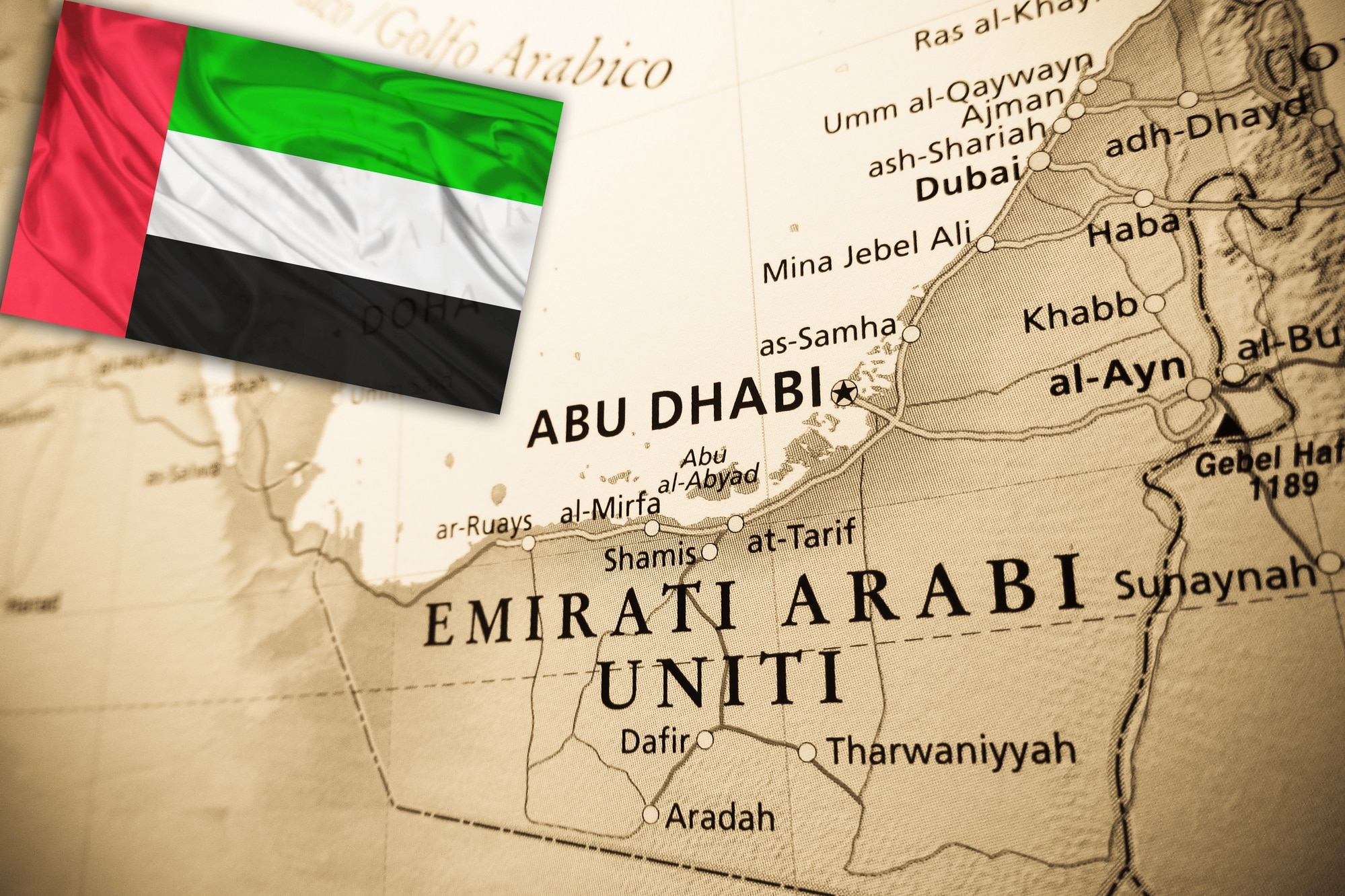
How to measure the cost of this new political economy, one without precedent in our 250-year history, whose contours remain largely unacknowledged? A place to start is with our most eager, and avid, foreign investor, the United Arab Emirates (UAE), which in 2025 committed “to deploy $1.4 trillion into the United States across strategic sectors.” This investment amounted to “$200-300 billion allocated for semiconductor fabrication plants; $150 billion for AI data center infrastructure; [and] the balance spread across energy projects and advanced manufacturing.” Specifics of this investment include “a $25 billion…initiative to invest in energy infrastructure and data centers” and “chemical production facilities” as well as a $4 billion aluminum smelter factory to be constructed by Emirates Global Aluminum, “the world’s largest producer of ‘premium aluminum,’” at the Tulsa Port of Inola in Oklahoma. Since the UAE had even before 2025 “invested over $1 trillion in US assets ranging from Chicago’s parking meters to semiconductor manufacturer[s],” this new $1.4 trillion investment means the UAE’s total investments will reach $2.4 trillion. According to the UAE Embassy, “the UAE is America’s #1 source of foreign direct investment (FDI)—and holds the third largest US trade surplus globally.”
There are obvious risks associated with aspects of this investment. “One sticking point” of the deal is reviews of the UAE’s “sensitive technology investments” by the Committee on Foreign Investment in the United States (CFIUS), an interagency committee based at the Treasury Department “authorized to review certain transactions involving foreign investment in the United States…to determine the effect of such transactions on…national security.” Nonetheless, “sources indicate [America and the UAE] are working to preempt regulatory hurdles.” Considering that analysts think it plausible that the UAE might pass on sensitive technology to America’s geopolitical rivals, “preempting regulatory hurdles” may have worse long-term effects than the anodyne language implies.
Supporting this concern is the fact that the UAE has a history of undercover maneuvers in America. Indeed, in 2022, “U.S. intelligence officials…compiled a classified report detailing extensive efforts to manipulate the American political system by the United Arab Emirates” including “illegal and legal attempts to steer U.S. foreign policy in ways favorable to the Arab autocracy.” This report, described as “remarkable in that it focuses on the influence operations of a friendly nation rather than an adversarial power,” detailed attempts by the UAE “spanning multiple U.S. administrations, to exploit the vulnerabilities in American governance, including its reliance on campaign contributions, susceptibility to powerful lobbying firms and lax enforcement of disclosure laws intended to guard against interference by foreign governments.”
But, even beyond these obvious sticking points, there are considerably more strings attached to the UAE’s investment in America than there might seem. Not only, as I reported in my immediately previous investigation for the Libertarian Institute, is American-backing enabling the UAE under Sheikh Mohammed bin Zayed al Nahyan to commit slow-and-fast-motion genocide in Sudan and the Democratic Republic of the Congo; to extract and confiscate resources from African citizens in at least fourteen other countries; to subjugate the UAE’s own citizens; and to abuse foreign workers. It is also allowing Mohammed to use his alliance with Israel, probably the closest with the Jewish state outside America’s, to solidify extractions and investments in Africa and expand its commercial and military blanket across the Middle East and into Europe and Latin America and America. In the process the UAE is quietly and steadily infringing on the sovereignty of citizens in countries in five continents. Tracing the expansion of Mohammed’s stealth empire of commerce, technology, and force reveals the unfolding, roving, and so far undiluted threat now penetrating America.
Since 2006 the Israeli-Emirati partnership at the heart of this expansion has accelerated largely out of public view. But it has been carefully traced by scholars like Elham Fakhro. In 2006 and 2009, according to Fakhro, there were the agreements between the UAE’s newly created Space Reconnaissance Center (SRC), “tasked with advancing the UAE’s aerial intelligence, data collection, and technological processing capabilities,” and “a private Israeli satellite operator that works closely with its security services.” In 2007 there was the UAE’s partnership with a retired IDF intelligence officer whose “private security company” was staffed by “retired generals from the IDF and Shin Bet.” In 2008 there was the announcement of “Security Shield,” a new project staffed by these operators to provide “fully integrated security solutions” to “protect the UAE’s utilities and its ‘vital assets’…from attack.” Running parallel to these under-the-table connections was a diplomatic alliance which “evolved around the shared goal of convincing the [Barack] Obama administration not to abandon a policy of containment toward [Iran].” Off of all of these connections came a partnership that, in the way of many partnerships linked by obvious and overriding material interests, has quickly and intensively solidified—at tremendous costs to people and nations outside it.
In Africa, Mohammed has joined the Zionists or acted in their interests in political interventions that also secured resource extractions for the Emirates, which are poor in food and minerals. In Libya, after a western intervention against Muammar Gaddafi secured by Jewish Zionists and their supporters inadvertently led to Muslim-influenced governments, the UAE became a major supporter of the rebel group the Libya National Army led by Khalifa Haftar. In recent years, the UAE has done heavy trade in illicit materials from Libya; in one report, more than “60 [tons] of Libyan gold has reportedly been smuggled into the UAE” and “Emirati officials held secret talks with Haftar to sell Libya’s oil outside of the UN approved channels.” In Egypt, when a military coup was staged in 2013 to overthrow Egypt’s first democratically elected president, the UAE supported it while a precipitating factor for the coup was preserving the Egyptian military’s security alliance with Israel; and today the UAE owns Egyptian agricultural land and has arranged to build and manage several of its ports.
In Tunisia, the UAE encouraged the same sort of successful coup as in Egypt, and afterwards “revived a $5 billion real estate project” in Tunisia and recently “complete[d] a 120 megawatt solar project” there. In Somalia, the UAE recently quietly brokered mutual recognition between Somalia’s breakaway province Somaliland, where the UAE has a claim to the country’s most important port, and Israel. And in the Democratic Republic of the Congo (DRC), the UAE has funded Rwanda, which is “arming and training the M23 militia accused of indiscriminate killing, rape and mass displacement” to extract minerals on the cheap. Rwanda has done this via firms directly tied to the UAE and to Dan Gertler, an Israeli billionaire who was sanctioned by the United States government for “opaque and corrupt mining and oil deals” which “cost the citizens of the [Democratic Republic of the Congo] more than $1.36bn in lost revenue from 2010 to 2012 alone.”
One of the takeaways for Mohammed from these involvements in Africa was the food and mineral resources which gave him the economic security to “develop” the United Arab Emirates at the expense of its own citizens—again in partnership with Israel. Indeed, since 2018, according to Elham Fakhro, the UAE has used “a centralized monitoring system that receives live data from surveillance equipment installed across the city…linking thousands of street cameras across Abu Dhabi and enabling the government to track virtually anyone in the emirate through Israeli technology.” This is the type of technology that the UAE has exported in partnership with Israel to countries like Armenia and Azerbaijan, whose populations are being increasingly herded into close living proximity and surveilled.
The other takeaway for Mohammed from Africa was that its resources gave him the economic security to join Israel and sometimes Saudi Arabia in an aggressive remaking of the Middle East. In Bahrain in 2011 there was the armed suppression by the UAE and Saudi Arabia, supported by Israel, of political resistance to Bahrain’s authoritarian government. In Yemen in 2015 there was the intervention by the UAE and Saudi Arabia via bombings and blockades after the Houthis, a Shia Muslim group, assumed control of the government. In Qatar in 2017 there was the UAE’s de facto blockade of the country in conjunction with Israel, justified by Qatar’s alleged support of the Muslim Brotherhood, the democratically elected political movement against which the Saudis and Emiratis and Israelis had supported the coup in Egypt. In Azerbaijan and Armenia in 2023 there was Israel’s decisive arming of Azerbaijani forces to defeat Armenians, which opened both countries to the UAE’s investment. And in Gaza in 2025 and 2026 there was the UAE’s convergence with Israel via “a $2.3 billion arms deal with notorious Israeli weapons manufacturer Elbit Systems,” which has been a main beneficiary of Israel’s bombardment of Gaza; and a $1.2 billion investment by the UAE to support Jared Kushner’s “Raze-and-Rebuild” plan for Gaza via Donald Trump’s Board of Peace.
All of this activity by the UAE has created an increasingly open breach with its nominal ally Saudi Arabia, as the UAE and Israel increasingly appeared to “go it alone” in “remaking” the Middle East without even the Saudis’ realpolitik regard for regional stability and religious adherence. And this Saudi-Emirati split is not by coincidence. As early as the 2010s, according to leaked American memos, “while publicly expressing close ties with Riyadh, the UAE privately regards [Saudi Arabia] as its second greatest security threat after Iran (Israel is not on the list).” Mohammed’s decade-and-a-half-long goal, in other words, has apparently been to “do the full western”: edging out Saudi Arabia as the Gulf’s reigning power via an alliance with Israel and therefore America. Effectively, he is placing his bet with colonial governments against his own region.
This bet appears to have paid off for Mohammed when it comes to his investments in America’s de facto protectorates of Europe and Latin America. At the end of 2021, the UAE committed nearly $14 billion in energy investment in Britain, on top of $1.5 billion committed earlier that year; and in 2026, the UAE “reaffirmed its role as a long-term energy and industrial partner to Europe, highlighting more than $43 billion in committed investments across the continent.” Since 2020, the UAE, via a partnership with Brazil, is expanding into Latin America “across agritech, energy transition, [financial technology], and infrastructure”—faster than any other Middle East nation except Israel. Mohammed’s bet has also paid off in America, where the UAE’s investments include sports (the NBA) and real estate (the Chrysler Building). But of course this investment in America will soon extend to energy infrastructure and factories and data centers—the latter already points of contention across the country, where citizens are mobilizing against what they see as “rising utility costs, job losses, and privacy violations.” If these problems are already occurring under American corporate management, what laws will get bypassed under the UAE’s influence?
Mohammed’s actions elsewhere give disquieting clues for America’s future under Mohammed’s influence. I have reported in my immediate past investigation for the Libertarian Institute on Mohammed’s labor and human rights abuses in Africa; and on the abuses against citizens, laborers, and western visitors inside the UAE. But less understood generally—cropping up in reportorial snippets or human rights reports or the occasional eye-catching profile, none of which ever get connected to each other—are Mohammed’s insidious incursions on western sovereignty. The depth and audacity of these incursions are illuminated by four news items which have surfaced in mainstream media sources in the past six years.
In 2020, Juan Carlos, the “scandal-plagued” former king of Spain, was confirmed to be “in the United Arab Emirates, two weeks after he left Spain for an unknown destination.” This departure and arrival occurred as “prosecutors in Spain and in Switzerland…opened investigations into a web of offshore foundations, secret bank accounts and business transactions involving people closely connected to the former monarch” and “look[ed] into whether [one] deposit was linked to a Saudi high-speed train contract that was awarded to Spanish companies.” All of this was part of what was later revealed to be “a decades-long campaign” by Juan Carlos “to restore his family’s fortunes,” in exchange for which “he offered Gulf royals recognition on the international stage.” Juan Carlos’s flight as revelations like these came to light “outraged many Spaniards and caused tensions within the country’s fragile coalition government”; “sending,” in the common perception, “the wrong message: We are not all equal before the law.” And Juan Carlos, with his offshore bank accounts and sixty-year knowledge of European politics and other deeply inside information, remains in the Emirates today.
In 2024, Juan Carlos surfaced again in the news, in a Financial Times report about the El Husseiny family, until 2023 one of the most powerful weapons contractors for the UAE. The El Husseinys had “established a mutually beneficial, if murky, relationship” with Juan Carlos in the 2010s, the decade when a “search for financial stability brought [Juan Carlos] to the UAE,” even as the El Husseinys, falling afoul of Mohammed, were plagued by legal bounty hunters on behalf of the UAE. They were pursued in British courts by proxies of Mohammed’s government in what the El Husseinys, having since been exonerated in court, call “a cautionary tale about how powerful foreign entities can abuse UK courts to harass the innocent.” Specifically, according to the El Husseinys, a bank on behalf of Mohammed “pursued a legal strategy that included filing more than 100 applications and subpoenas across nine jurisdictions.” This “included the issuance of subpoenas to illegally obtain financial records, private communication and other sensitive information.” The fundamental point at play, from the El Husseiny’s point of view, is about sovereignty:
“The court system, funded by UK taxpayers, should not serve as a vehicle for such claims [and] this episode…highlights the urgent need for legal reforms to prevent such abuse in the future.”
When necessary, the UAE trespasses further on sovereignty to snare back a roving Emirati. In 2023, Heidi Blake of The New Yorker ran a profile of Sheikhas Latifa and Shamsa bint Mohammed Al Maktoum, the daughters of Dubai’s ruling emir who is also the UAE’s second-most-powerful official Sheikh Mohammed bin Rashid Al Maktoum, and these two women’s efforts to escape what they described as an “open air prison” where they “had been ferociously beaten for defying [their] father.” Shamsa had taken her chance at freedom by escaping from her father’s estate in Britain in 2000, but found difficulty contacting the British embassy for refugee status because of the UAE’s ties to Britain and her father’s relationship with Queen Elizabeth II. Instead, Shamsa had “reached out” for help to a British security officer of her father’s who tipped off her father; she was then picked up by Emirati security on a bridge near Cambridge and returned to the Emirates, where she has since disappeared. Latifa staged an escape by boat in 2018 across international waters only to be boarded by a security team arranged by her father. Before she was abducted back to Dubai, Latifa had contacted Radha Stirling, the founder of the human rights nonprofit Detained in Dubai, and Stirling and her colleagues broadcast Latifa’s case. With the UAE’s government under pressure, Latifa surfaced in an interview with the United Nations’ High Commissioner for Human Rights, former Chilean president Michelle Bachelet, assuring Bachelet she was happily living in the Emirates, which caused the furor to die down. But Bachelet later admitted that she had misgivings about whether Latifa was telling the truth.
Shamsa’s and Latifa’s experiences might be dismissible, however uncomfortably, as the trials of the very insular and the very rich, were it not for a fourth story publicized this February by Detained in Dubai’s Radha Stirling about her successful intervention in “the traumatic story of a woman who narrowly escaped several years in Dubai prison over a false slander allegation by her ex spouse.” According to Stirling, when this woman visited Dubai on vacation, “police turned up at her door and took her into custody…she was eventually told there was a slander case against her from her ex under the UAE’s cybercrime laws.” What Stirling goes on to describe is chilling: the prosecution by the UAE government of a non-citizen at the behest of a non-citizen based on money and power.
“They showed her the ‘evidence’ but it wasn’t something she’d ever written. It was a crudely fabricated image, clearly manipulated, submitted solely to secure her arrest…[Her ex] was wealthy and most certainly had ‘wasta’ in Dubai, a term she later learned refers to social influence and connections. She was left with the strong impression that his influence extended deep into local law enforcement…This case is not unusual…Both women and men have been stunned that their ex partner from their own country and culture would be so cunning and spiteful that they would use Dubai’s laws in that way. In many cases, the spouses have no connection to Dubai but it doesn’t matter since a police case can be opened at any time. One party can just take an Emirates holiday and open a frivolous case over some text message or social media post. The next time the victim arrives in Dubai, they’ll be arrested and prosecuted.”
One reason news items this stunning don’t gain traction is that the UAE has wrapped itself these last twenty years in the garments of Enlightenment: making highly publicized pushes for religious toleration, environmentalism, and, of all things, women’s rights. These garments are fig leaves, but they are taken at face value by western interlocutors, who offer what amounts to the occasional “human rights” tut-tut inside essentially deferential profiles or articles or interviews. The New York Times’ Robert F. Worth’s lengthy profile of Mohammed in 2020, for example, was arranged via a yearlong “vetting process, which,” Worth says with astonishing reportorial passivity, “I seem to have survived.” In the profile, Worth duly noted Mohammed’s authoritarianism but nonetheless largely accepted Mohammed’s view of himself. He described Mohammed as “open and transparent”; put down any “cagey” responses by Mohammed’s advisers to Mohammed “fearing his words would be twisted and misused by his enemies”; and humanized Mohammed with tidbits like the fact that he “still talks to his mother almost every day.”
Michelle Bachelet’s interview with Sheikha Latifa amounted to another tut-tut. Though Bachelet dutifully told Hedii Blake of The New Yorker that “she was concerned about the rights of women everywhere, and she hoped that the international community would keep watch on those who occupy precarious positions as part of Dubai’s royal family,” Blake kept her eye on the fundamental fact that “Bachelet’s intervention helped to repair [the UAE’s] global standing” after the scandal visited on the UAE by Latifa. Indeed, “world leaders poured into the Dubai Expo the following spring, and the emirate was selected as the host for the COP28 climate-change summit.” What’s more, “the head of the country’s interior ministry was appointed president of Interpol”—Interpol also being, according to Radha Stirling, one of the mechanisms used by spouses looking to prosecute their exes in the United Arab Emirates. Even recent news revelations about the UAE’s involvement with Andrew Mountbatten Windsor and Jeffrey Epstein on U.K. citizens’ dime that might have raised questions about taxpayer funding and sovereignty and the UAE’s incursions on both merited only short stories in major papers, including The New York Times.
There is a reason for all of this tut-tutting signifying nothing, and the reason is Israel and America. The New York Times, which is owned by the Sulzberger family and edited by Jewish Zionists and their allies, takes Washington’s view that Mohammed “remains a rare figure in the Middle East: a shrewd, secular-leaning leader with a blueprint of sorts for the region’s future and the resources to implement it” and that “for all his flaws, the alternatives look increasingly grim.” Michelle Bachelet is in the running to be the next Secretary General of the United Nations, a nomination which U.S. opposition would effectively derail. Jeffrey Epstein and his immediate baggage including Prince Andrew has made waves and created fallout, but the alliance between the United States and Britain is strengthening over technological investment thanks in part to Trump’s apparent infatuation with the Royal Family—which is itself deeply connected to the Emiratis and to Israel.
In the background of all of the United Arab Emirates’ plays is American power. It was Trump who, in his first term, designated Yemen’s Muslim government a resistance group after President Barack Obama had refused to do so. It was Trump’s son-in-law Jared Kushner who in the last year of Trump’s term helped broker the UAE’s and Israel’s signing the Abraham Accords formally normalizing relations, in what Muslim leaders in the region called “another stab in the back to the ummah (Muslim community).” It was Trump who, in the final days of his first term, issued a sanctions waiver for Dan Gertler, the Israeli mining baron with interests in the Democratic Republic of the Congo, allowing Gertler to skate free of U.S. penalties for illicit laundering of resources. It was President Joseph R. Biden whose support of the Emiratis was the substantial disincentive for Michelle Bachelet or any other aspiring international diplomat to read between the lines of what Latifa was saying about her captivity. It was also Biden who, after Bachelet’s tut-tutting certification of approval for Latifa, “approved a multi-billion-dollar arms deal with Sheikh Mohammed’s government, declaring the U.A.E. an ‘essential partner of the United States.’” It was Trump in his second term who presided over the peace agreements between Rwanda and the Democratic Republic of the Congo as well as Azerbaijan and Armenia, both of which involved heavy American resource extraction in conjunction with the UAE. And it was Biden and Trump who provided the weapons Israel used in the last eight years to pound first Yemen and then Gaza.
Much of this American underwriting of Emirati expansion is occurring because of Jewish Zionists who staff and arbiter American corporations and media outlets and administrative agencies and elite universities. Antony Blinken, who held America’s top diplomatic post when Biden armed Israel and the Emirates, is a Jewish Zionist and the stepson of a Jewish Zionist who was a confidante of Epstein co-conspirator Ghislaine Maxwell’s father Robert Maxwell, himself a player with deep links to Israel and possible an agent of Mossad. Scott Bessent, endorsed by Jewish Zionists as a committed Zionist, is the person who is signing off on the security exemptions to the technology deals inked between the Trump administration and the UAE. Rob Speyer, the Jewish Zionist ex-owner of the Chrysler Building, one of America’s “landmark” buildings, is the realtor who allowed the UAE to acquire ownership until the UAE sold the property to another Jewish Zionist, Aby Rosen—now, Speyer may be about to re-purchase it. Silicon Valley, as I have noted in three previous reports for the Libertarian Institute last August, September, and December, is arbitered by Jewish Zionists and their Hindutva allies, and it is their sign-off that’s allowed the Emiratis to enter our defense technology sphere. Jared Kushner, for his part, has been probably the single biggest facilitator of the Emirati-Israeli-American relationship during Trump’s five years in office.
If Israel is the UAE’s gateway to America, the UAE has also imitated Israel’s tactics in fastening its foothold here. Much as Israel’s influence in America was secured by playing assiduously off of Washington’s perceived need for oil and defense tech, the UAE is inducing America to back its plays for what is purportedly our own benefit: namely, the UAE’s investment in our nation. Of course, what the UAE’s investment actually does is relieve the Trump administration of the hard work of crafting trade policies and cutting military corporate spending and curbing corporate subsidies to create a genuinely sustainable economy for Americans. And so the greed of our leadership class for quick fixes that don’t upset political donors has led to our tax dollars funding the UAE’s exploitation abroad even as we open our doors to the UAE’s influence at home.
Where does this infiltration go next? We are not yet at the point when the UAE starts to run the destabilizing plays here that it does in Africa: buying off state governments to bypass Washington, or using Washington to high-hat it to states, particularly when it comes to developing AI in ways anathema to the interests and opinions of American citizens. But, considering the Trump administration’s aims to nationalize AI policy at the expense of states and considering the Emiratis’ substantial investment in AI, we may be getting close. And, as our Founders knew, what begins with foreign extractions and stealth infringements ends with tyranny over the individual: the kind of tyranny experienced by Sheikhas Shamsa and Latifa and by the visitors to Dubai whom Radha Stirling tries to help. In this light, amidst the hoopla and backlash of our domestic politics, amidst the promises of foreign investment and foreign extractions that do not quite add up, the following comment, representative of almost numberless others, about the UAE’s marquee city at the heart of Mohammed’s roving empire, bears repeating: “Dubai is soulless and built on slavery. Let’s never forget that.”