
Reindustrialization, the Dollar, and the Limits of Tariff Politics

Reindustrialization, the Dollar, and the Limits of Tariff Politics

President Donald Trump’s call to reindustrialize the United States taps into a widely shared sense that something fundamental has gone wrong in the American economy. Manufacturing employment has collapsed, entire regions have been hollowed out, and supply-chain disruptions during the COVID era revealed how dependent the United States has become on foreign production for even basic goods. Trump’s proposed remedy—high tariffs on imports combined with subsidies and industrial policy at home—aims to reverse decades of deindustrialization by forcefully redirecting capital back into domestic...

read more
Trump’s Tariffs Made His Farm Bailouts Inevitable

Trump’s Tariffs Made His Farm Bailouts Inevitable

In the comic theater of American politics, few spectacles are as reliably absurd as the utopian promises of protectionism. Donald Trump's tariffs, hailed by their proponents as a bold strike against foreign exploitation, have instead proven to be a blunt instrument of economic self-sabotage—particularly for the nation's farmers. From his first administration to the present day these policies have not only disrupted free markets but have necessitated a cascade of government bailouts, turning independent producers into wards of the state. Such interventions are not savvy trade strategy but are...

read more

The Thirty Years’ War: Political and Religious Dimensions Considered

Introduction: The Thirty Years’ War (1618–1648) remains one of the most complex and devastating conflicts in European history, its origins debated extensively by historians seeking to classify its primary cause as either religious or political. Traditional narratives have often framed the war as a direct consequence of the Reformation and the escalating confessional divisions between Protestant and Catholic rulers within the Holy Roman Empire, a view championed by historians emphasizing the role of the Counter-Reformation, the Catholic Habsburgs’ consolidation of power, and the Protestant...

read more
Airstrikes in Nigeria and the Wider Failure of Washington’s Africa Policy

Airstrikes in Nigeria and the Wider Failure of Washington’s Africa Policy

Recent U.S. missile strikes in northwest Nigeria, ordered by President Donald Trump on Christmas Day 2025, were heralded by the administration as a decisive blow against ISIS-linked militants persecuting Christians. Yet, as investigative reporting has revealed, the operation was marred by technical failures, questionable intelligence, and dubious strategic value—exemplifying the pitfalls of America's overreliance on military intervention in Africa. At least four of the sixteen Tomahawk missiles failed to detonate, landing unexploded in fields and near civilian areas, according to Nigerian...

read more

War and the Making of the American State in the 20th Century

Introduction: From the trenches of the Western Front to the jungles of Vietnam and the geopolitical standoff of the Cold War, the 20th century transformed the United States through a succession of conflicts whose effects reshaped nearly every dimension of American life. Military history did not merely accompany the development of modern America: it drove it. Charles Tilly’s well-known dictum—“war made the state and the state made war”—captures the essence of the American experience: the United States amassed unprecedented administrative, fiscal, and coercive capacities through wartime...

read more

War and the Growth of the American State in the 19th Century

War and the Making of the American State in the 19th CenturyIntroduction:From the colonial frontier to the battlefields of Gettysburg, war has been both a crucible and a mirror for the American experiment. Historians from Charles Tilly to Allan Millett have long emphasized the centrality of warfare in the formation of modern states, arguing that “war made the state and the state made war.” Yet, in the American case, this process unfolded within a republican framework that ostensibly distrusted standing armies and centralized power. The tension between libertarian ideals and the exigencies of...

read more
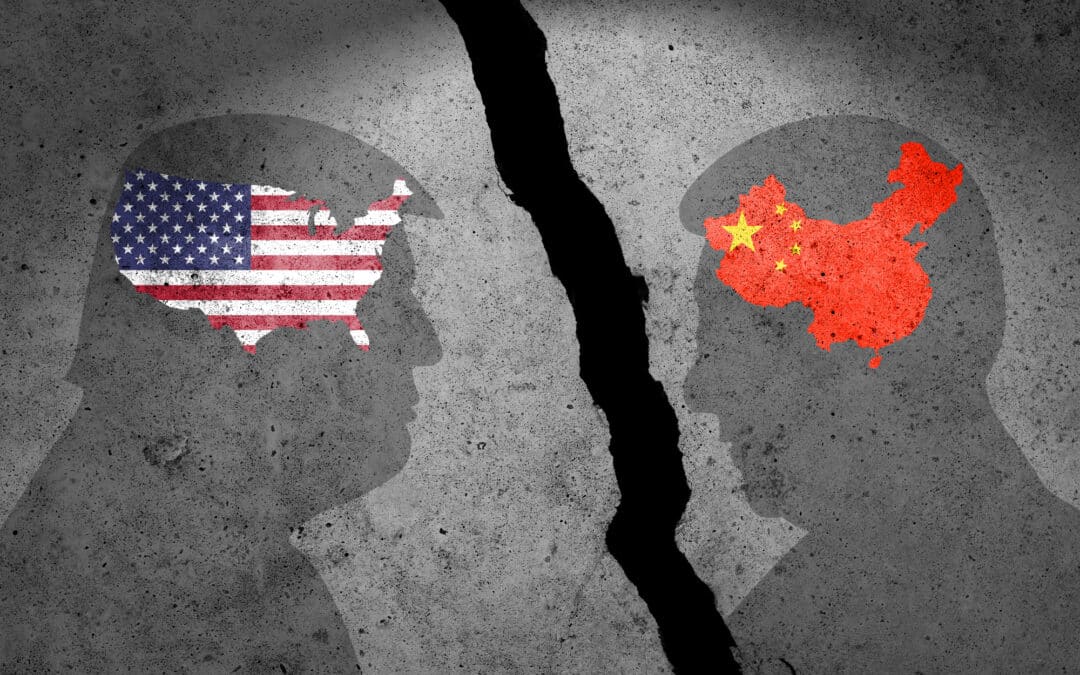
The Year Ahead in Sino-American Relations

The Year Ahead in Sino-American Relations

From trade frictions to security flashpoints, the new year ahead promises a mix of continuity and potential volatility in U.S.-China relations. While Beijing’s growth in relative power—economic, technological, and military—continues, it is not aimed at “taking over the world.” Instead, it reflects a pragmatic pursuit of stability and influence in Asia. Washington would benefit from strategic empathy, recognizing China’s core concerns to avoid counterproductive escalations that could harm both nations in the long-term. With that said, here’s what to be on the lookout for in Sino-American...

read more
DOGE’s Demise: A Predictable Post-Mortem

DOGE’s Demise: A Predictable Post-Mortem

As 2025 draws to a close, the Department of Government Efficiency (DOGE)—the much-hyped initiative led initially by Elon Musk and Vivek Ramaswamy—has quietly disbanded, eight months ahead of its scheduled sunset in July 2026. What began with bold promises of $1-2 trillion in annual spending cuts has ended not with a bang, but with a whimper: federal outlays reached approximately $7 trillion in fiscal year 2025, up from prior years, while the deficit held steady at around $1.8 trillion. No structural reforms to entitlements, no meaningful dent in the debt trajectory—all sadly predictable and,...

read more

Podcasts

scotthortonshow logosq

coi banner sq2@0.5x

liberty weekly thumbnail

Don't Tread on Anyone Logo

313x0w (1)

313x0w (1)

313x0w (1)

Pin It on Pinterest