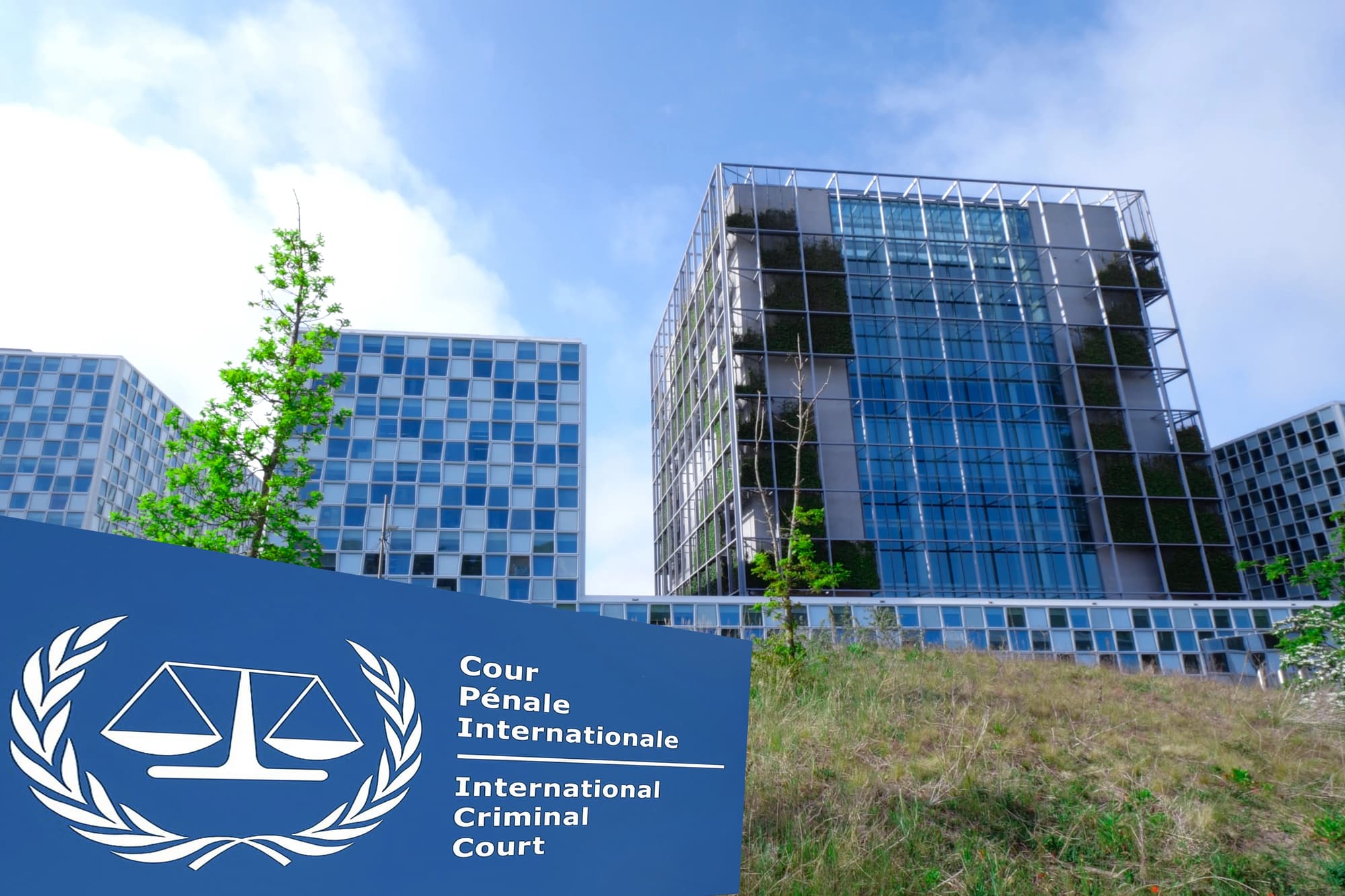
There is a law professor in the United States who, until last summer, could have been prosecuted by his own government for giving legal advice. His name is Gabor Rona. He teaches at Cardozo Law School in New York. His crime, in the eyes of the executive branch, was that the advice went to lawyers at the International Criminal Court. For that—for speech, for the transmission of ideas—the government of the United States claimed the power to freeze his assets and prosecute him under a statute meant for hostile foreign powers. In July 2025, a federal judge told the government it could not. It was the fifth time a court had said so.
The story of how an American came to face criminal penalty for legal advice is not, at bottom, a story about the Hague. It is a story about the machinery a president may now switch on at will, and what that machinery does when it is pointed at the speech of citizens.
The machinery is the International Emergency Economic Powers Act, passed in 1977. Congress wrote it for a specific and narrow purpose: to let a president respond to an “unusual and extraordinary threat” to the United States that originates, in the statute’s words, “in whole or substantial part outside the United States.” The threat must be foreign. The president must declare a national emergency to invoke the power. And even then, Congress fenced off ground the president may not enter. The law states that the authority it grants “does not include the authority to regulate or prohibit, directly or indirectly,” the importation or exportation of “any information or informational materials.” Nor may the president regulate personal communication that “does not involve a transfer of anything of value.”
That fence was not an accident. Congress built it twice, on purpose. In 1988, an amendment authored by Representative Howard Berman (D-CA) carved out informational materials from the president’s emergency reach, precisely so that sanctions could not be turned into censorship. In 1994, the Free Trade in Ideas Act widened the carve-out to cover new media and forms of personal communication. The purpose, in both cases, was to keep the emergency power away from the First Amendment. A president may freeze a hostile regime’s bank accounts. He may not tell an American what he is permitted to say, or to whom.
On February 6, 2025, President Donald Trump signed Executive Order 14203. It declared that the International Criminal Court’s investigations of the United States and Israel constitute “an unusual and extraordinary threat to the national security and foreign policy of the United States,” and on that basis invoked the emergency powers of IEEPA. The order’s own text supplies the motive. The court, it states, has created “a risk that the President and other senior elected and appointed officials of the United States Government may be prosecuted.” The emergency, in other words, is the possibility of being held to account. The threat is a courtroom.
Consider what the order actually prohibits. Under EO 14203, it is unlawful for any US person to provide “services” to a sanctioned individual. The Treasury’s Office of Foreign Assets Control has confirmed what “services” covers: submitting an amicus brief, offering legal advice, providing training, sharing analysis. These are not financial transactions. They are speech. An American lawyer who files a brief commits a federal offense. An American professor who advises the prosecutor’s office commits a federal offense. The penalties are not theoretical—IEEPA carries civil fines and criminal prison terms. This is the emergency power reaching past the fence Congress built, into the exact territory the Berman Amendment was written to protect.
The courts have seen this before, and ruled on it, and the administration proceeded anyway.
In 2020, the first Trump administration issued Executive Order 13928, a near-identical sanctions regime aimed at the ICC after it opened an investigation into American conduct in Afghanistan. Four dual-national American law professors—Diane Marie Amann, Margaret deGuzman, Gabor Rona, and Milena Sterio—together with the Open Society Justice Initiative, challenged it in federal court. On January 4, 2021, the Southern District of New York granted a preliminary injunction, holding that the services ban was a content-based restriction on protected speech that the government’s national-security claims did not justify. The Joe Biden administration revoked the order rather than defend it.
Trump revived it in 2025, and the same argument met the same fate—repeatedly. In July 2025, a federal court in Maine enjoined the government from enforcing EO 14203 against two ICC advocates on First Amendment grounds. Weeks later, Judge Jesse Furman of the Southern District of New York granted Rona and his co-plaintiff a permanent injunction. Furman found that EO 14203 “regulated protected speech based on content,” which rendered it “presumptively unconstitutional,” and that the government had produced no evidence sufficient to justify it. He noted, with some economy, that the new order used “the exact language” a court had already found likely unconstitutional the first time. “In law, as in life,” he wrote, “two wrongs do not make a right.” By the time the ICC’s own judges filed suit in late June 2026, courts had found the order unconstitutional five times over.
The constitutional objection is the obvious one, and the courts have sustained it. But there is a second objection, quieter and in some ways more fundamental, and it goes to the nature of the power itself. The plaintiffs argue that EO 14203 is not merely unconstitutional but ultra vires—beyond the statute. IEEPA requires a genuine national emergency arising from a threat that is substantially foreign. The three ICC judges who sued Trump this summer put the point directly: the order rests on “a putative national emergency that does not exist.” A court that has never charged an American, and cannot compel one, is not an unusual and extraordinary threat to the security of the United States. It is a tribunal doing the thing tribunals do. To call its existence an emergency is to drain the word of meaning—and to establish that a president may summon the machinery of economic warfare against anyone, foreign or domestic, by the simple expedient of declaring that he feels threatened.
This is the part that should trouble anyone who cares about limited government regardless of where they stand on the ICC, on Israel, on Gaza, on any of it. The emergency-powers architecture was supposed to be exceptional—a break-glass provision for genuine external danger, hedged by statutory limits and a declared emergency that Congress could review. What EO 14203 demonstrates is how little those hedges constrain a president willing to ignore them. The foreign-threat requirement becomes a formality. The informational-materials carve-out becomes a suggestion. The national emergency becomes whatever the executive says it is. And the sanctions, designed to bankrupt foreign adversaries, come to rest on the bank accounts and the speech of American citizens who advised the wrong lawyers.
The renewal tells the same story in miniature. On January 26, 2026, the president extended the national emergency for another year, as IEEPA’s parent statute requires him to do annually. The document is a formality—a paragraph asserting that the threat persists. No evidence is required. None is offered. The emergency continues because the president says it continues, and the machinery stays switched on for another twelve months, available.
In July, the administration announced it would go further still—a campaign to disable the court entirely. But the mechanism was already built, and its most revealing feature was never the reach into the Hague. It was the reach inward. A statute justified by an external emergency had been turned, within months, into an instrument for punishing the speech of Americans—and it took five federal court rulings, and counting, to keep it off them. The threat the executive branch could not tolerate was not a foreign court. It was the possibility of being held to account by law. And the first casualty of its response was the plainest constitutional right its own citizens possess: to speak, to advise, to argue, without asking the government’s permission.