
On July 29, Ukrainian President Volodymyr Zelensky met Donald Trump in the White House. Their relationship was “much better,” Zelensky said, because of the turning tide in the Russian-Ukrainian war.
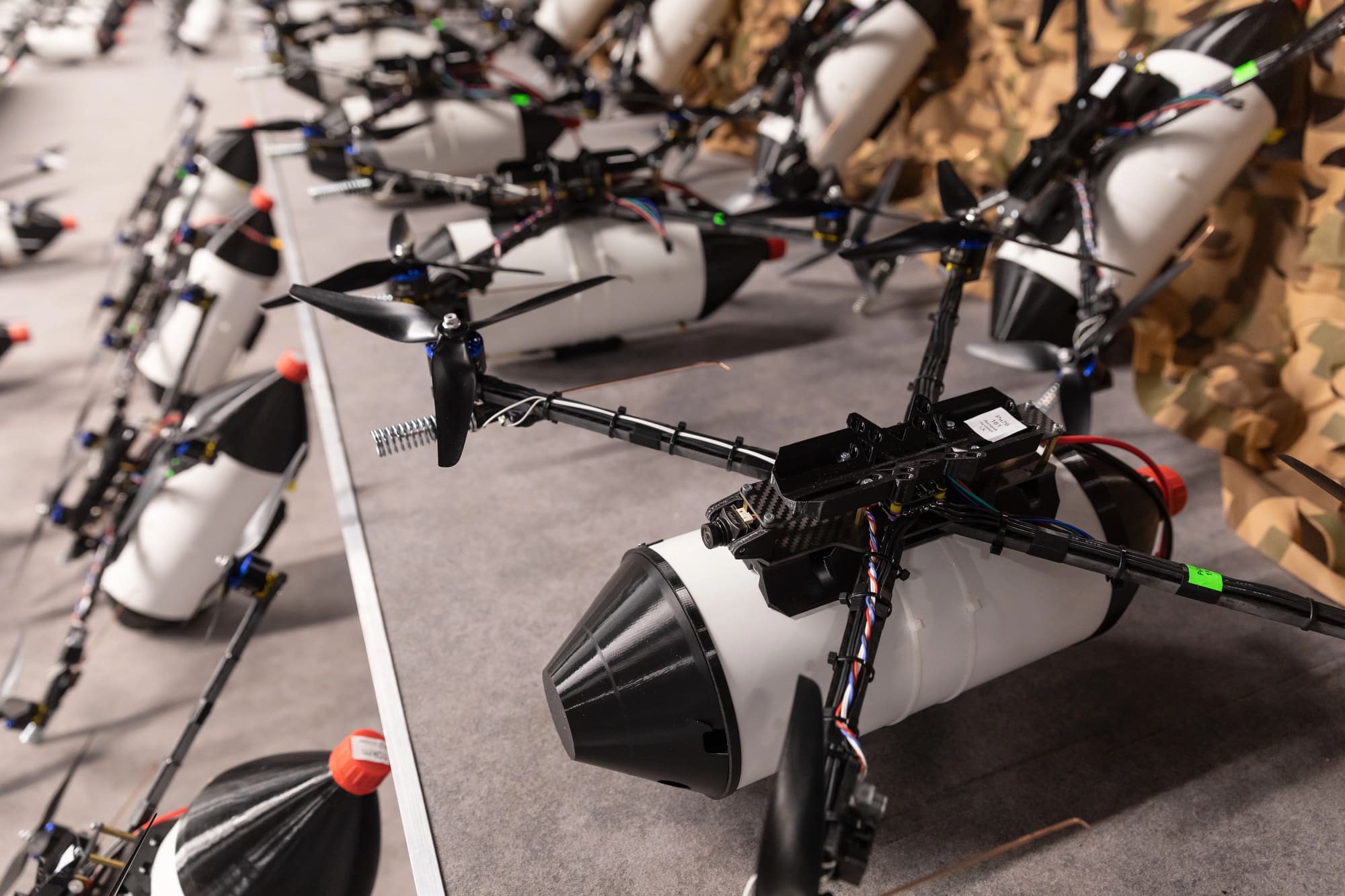
Zelensky’s narrative of the turning tide has been amplified by the media. The European and American public believe that Ukraine is now winning the war because that is what the headlines trumpet every day. And credit for the turning tide is awarded to innovations in drone technology that have allowed the Ukrainian Armed Forces to strike deep inside Russian territory.
But the much-heralded deep drone strikes bring little benefit to Ukraine’s war effort, while bringing a potentially existential risk. Like the 2024 Ukrainian advance across the Russian border into Kursk, the deep drone strikes produce a dazzling narrative of Ukraine’s potential to win the war. That narrative keeps Ukrainian morale up and Western weapons flowing in. But like the disastrous Kursk invasion, the deep drone strikes have the potential to elevate the risk of danger to Ukraine while not turning the real tide at all.
The danger to Ukraine is that as they escalate the deep strike war, Russia has escalation dominance and can escalate it much more. What’s worse, is that as Ukraine escalates, they have no ability to defend against the reciprocal Russian escalation that will follow.
So far, Russia has largely restricted the war to the eastern side of Ukraine. Deep drone strikes that become problematic for Russia could push Russia to a full war effort. Despite the media’s constant labelling of the “full-scale invasion,” it has not been. Russia has a large set of targets in Western Ukraine that it has not struck and an arsenal of advanced weapons it has not used, or barely used, at all. Ukrainian deep drone strikes risk metamorphosing the restricted Russian war effort into something full-scale. As the deep strikes menaced Moscow and other regions in Russia, the Kremlin called their “special military operation” a “war,” something it has seldom done.
The deep drone strikes have already led to painful escalation. Though intensified Russian ballistic missile strikes have seeped into the news, the Western media has been silent on a significant change in Russian strategy.
Russia has already begun to widen its targets with the painful result that Ukraine’s major ports in Odessa have been at least partially shut down. Ukrainian agrarian policy minister Taras Vysotskyi made the announcement that, as of July 23, “inbound vessel traffic to Ukraine’s Black Sea ports has been suspended due to the threat of Russian attacks.” Ukraine’s foreign minister Andrii Sybiha posted that “Today, zero vessels passed through Ukraine’s Black Sea maritime corridor.”
As a result, Ukraine has lost one third of its capacity to export grain. That will hurt, not only Ukraine, but Europe. Perhaps more importantly, Odessa’s ports are a key hub for Ukraine’s import of military goods.
The calculus is not in Ukraine’s favor. While Ukraine fires drones into Russia, Russia fires much more powerful missiles, including ballistic and hypersonic missiles, into Ukraine. The competing scale of damage is incomparable. Precision missiles are striking Ukrainian weapons factories, warehouses, military infrastructure and energy facilities.
The only item in Ukraine’s arsenal for defending against Russian ballistic missiles is Patriot interceptors, and Ukraine seems to have run out of those, leaving Ukraine defenseless against Russian missiles.
But it gets worse. Ukraine is increasingly helpless against some of Russia’s drones. Russia has introduced a new model of their Geren drone that is powered by a jet engine. The new drones reach speeds of 500-600 km/h and even as high as 750 km/h. Ukraine’s interceptor drones can only reach 300 km/h, leaving them far behind. The new drones further elude interceptors because they are equipped with radio-control modules that allow the drone to alter their route in flight.
Ukraine is inviting all of this risk with no promise of real benefit, except for the PR value of selling Europe on continuing to support it. But continuing to support it in a losing war will mean only more loss of Ukrainian lives and land.
The most tragic thing about escalating a deep strike air war that it cannot defend against is that the risk is bought with no effect on the battlefield of Donbas where the real war is being fought. While the world’s attention is fixated on Ukraine’s deep drone strikes, the Russian armed forces are threatening Ukraine’s fortress belt. The key fortified city of Konstantinovka is in imminent danger of falling and may have fallen already. The Ukrainian armed forces no longer control the city. Beyond Konstantinovka the remaining fortified cities of Kramatorsk, Slovyansk, and Druzhkivka likely await the same fate. For the first time, Ukraine is in real danger of seeing Russia achieve its key goal of capturing the whole of Donbas.
Ukraine’s deep drone strike strategy will not turn the tide on the real war. Ukraine will not even win the deep strike war: they are unable to keep pace with the escalation offensively, and they are helpless to protect themselves against it defensively. The deep drone strikes and the fiction of the turning tide are meant to keep Europe and the U.S. in the war to prolong it and prevent a Ukrainian defeat. The reality is that they may be accelerating that defeat.